
You know how fast a single story can change the mood around a stock or a whole sector.
That is what happened here.
Over the weekend, a report suggested Ford Motor Company financeF was exploring a joint venture with Xiaomi to build electric vehicles in the United States, a move that would have stunned both auto investors and Washington.
Then Xiaomi issued the quote that matters, via a post on X (formerly Twitter).
“This report about a joint venture with Ford Motor Company is completely false,” the company said, adding that it “does not sell its products and services in the United States and is not negotiating with any companies to do so.”
If you were already imagining a Ford‑Xiaomi plant in Michigan or Tennessee, that one sentence should reset your expectations.
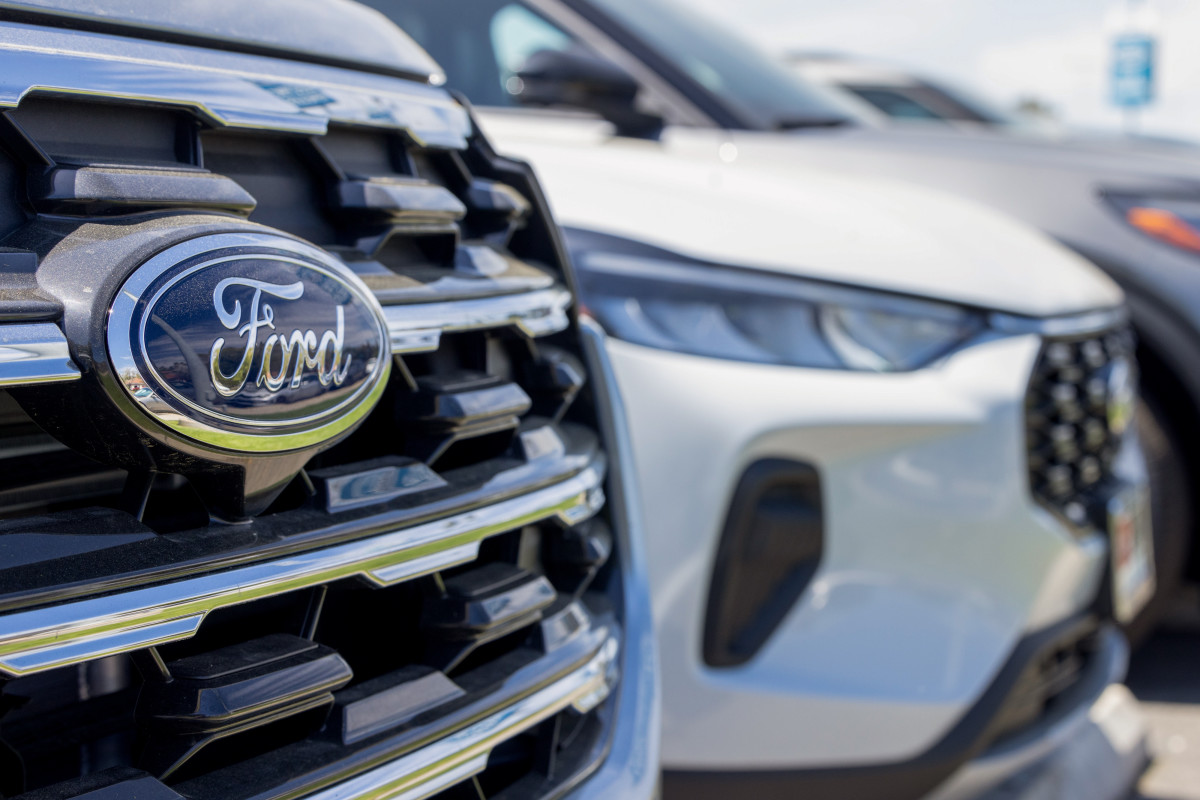 Xiaomi denies a Ford merger.
Photo by Bloomberg on Getty Images
How the Ford-Xiaomi story took off
I always like to start with who moved first.
The initial jolt came from the Financial Times, which reported that Ford had held talks with China’s Xiaomi about a possible electric‑vehicle partnership that could include building EVs in the U.S. market.
The FT said those talks were exploratory, citing people familiar with the discussions, and added that Ford had also spoken with other Chinese manufacturers, including BYD, about potential cooperation.
Ford did not sit on that.
The company said the reported Xiaomi discussions were “completely false,” according to a summary from CnEVP/ost, which both quoted Ford’s on‑the‑record denial. Ford denied holding joint‑venture talks with Xiaomi, even as it noted broader industry interest in Chinese EV technology, as reported by EV.com.
More Automotive:
- Tesla investors may miss game-changing move
- Key auto parts and services company files Chapter 11 bankruptcy
- Top-rated analyst drops curt 8-word take on Tesla stock
- U.S. car maker wins 2025 sales race with 2.8 million vehicles sold
- Ford turns a setback into a win
That left Xiaomi in an odd spot.
Many investors and EV watchers already knew that Ford CEO Jim Farley had imported a Xiaomi SU7 to the U.S. and called it “pretty impressive,” as covered by CnEVPost. It was easy to connect that admiration to the FT story and assume something bigger was brewing.
Xiaomi’s denial snapped that link.
What Xiaomi’s denial really tells you
On the surface, Xiaomi simply said, “This report is false.”
When I read the full wording, I see something more deliberate.
By adding that it “does not sell its products and services in the United States and is not negotiating with any companies to do so,” Xiaomi went beyond the narrow Ford rumor and tried to kill any talk of an imminent U.S. entry altogether.
Related: Ford recalls multiple car and SUV models due to fire danger
Xiaomi used the same statement while outlining its car strategy in Europe and the United Kingdom, and it highlighted plans to expand investment in the U.K. after generating about 1 billion yuan in revenue there last year, China Daily reported. That is not the tone of a company secretly preparing a U.S. beachhead.
Here is how I read that if you own or are watching the stock.
- Xiaomi wants you to focus on Europe and other overseas markets where tariffs and politics are less hostile.
- The automaker wants to distance itself from any storyline that suggests it’s using a U.S. partner to sneak around 100% tariffs on Chinese‑built EVs.
- It does not want a rumor to front‑run whatever long‑term U.S. strategy it may eventually adopt.
That is a very different posture than “We can’t comment on market speculation.”
The EV politics you can’t ignore
If you care about the auto sector, you already know Chinese EVs are the elephant outside the room in the U.S.
Washington has slapped a 100% tariff on Chinese‑built electric vehicles, effectively blocking direct imports into the U.S. market, as CnEVPost and other EV trade outlets have noted in their coverage of European and American policy.
That kind of barrier means any real Xiaomi, BYD, or Nio presence in the U.S. would almost certainly require local manufacturing, a licensing deal, or a joint‑venture structure.
That is why the FT report felt plausible enough to move sentiment.
Ford has explored EV partnerships with multiple Chinese manufacturers as part of a broader scramble by legacy automakers to tap cheaper Chinese batteries and software, the Financial Times reported. The rumored Ford–Xiaomi tie‑up has been discussed alongside reports of Ford talking to BYD, making it look more like a pattern than a one‑off, CnEVPost pointed out.
At the same time, top industry voices are not shy about how far Chinese EVs have come.
Nvidia CEO Jensen Huang has called Chinese electric vehicles “very competitive” and warned that they could dominate global markets if trade barriers fall, according to CnEVPost’s write‑up of his comments. Farley’s decision to personally import and drive a Xiaomi SU7 is another sign that Detroit executives take Chinese EV engineering seriously, EV.com reported.
I see a strange split.
- Executives in Detroit and Silicon Valley admire the cars.
- Politicians in Washington see them as a threat.
That is the backdrop for any rumor about a Ford-Xiaomi partnership, and it is why both sides moved quickly to shut this one down.
What this means for you and your money
Let me bring this back to your decisions.
If you own Ford, this episode shows you two things.
First, management does not want the market to think it is about to outsource its U.S. EV future to a Chinese partner in a way that could blow up politically. Ford’s denial was as firm as Xiaomi’s, and outlets such as CnEVPost and AASTOCKS treated it that way.
Second, the company is clearly interested in Chinese tech at an engineering level, or Farley would not be importing and driving a Xiaomi SU7 and talking about it publicly, as EV.com and CnEVPost have noted.
If you are watching Xiaomi, I would not trade it off a U.S. rumor at all.
The company only announced its auto push in 2021 and launched the SU7 in 2024, so its first job is proving it can mass‑produce and sell cars at home and in friendlier overseas markets, according to CnEVPost’s timeline coverage. The focus on new investment in the U.K. makes more sense for this stage than trying to crash into the U.S. against a 100% tariff wall, China Daily reported.
As a consumer, your near‑term reality does not change.
You will not be able to walk into a Ford dealer later this year and choose a U.S.‑built Xiaomi sedan. The tariffs, the politics, and both companies’ own words say that is off the table for now.
What you can do is watch how often U.S. executives name‑check Chinese EVs and how regulators respond. When those two lines finally cross, that is when your options in the showroom will really change.