
When asked why they can’t afford a house, many Americans would probably respond that home prices or mortgage rates are too high.
Don’t get me wrong: Rates and prices are definitely serious issues for many homebuyers. But in my years of reporting on the housing market, I’ve learned that there is one oft-overlooked factor majorly hurting home affordability: a lack of housing supply.
And the real estate technology company Zillow just revealed how hurtful the undersupply truly is for Americans.
A Zillow report has revealed that a national housing shortage is the main reason behind the housing affordability crisis.
In fact, the U.S. needs to build 4.7 million homes to fix the existing shortage, according to another Zillow study. To keep up with future demand, we need even more housing.
“Like any market, real estate is a function of supply and demand,” Corey Burr, senior vice president at TTR Sotheby’s International Realty, told TheStreet. “The supply of housing in the U.S. has not kept up with demand for many years.”
How housing shortages hurt affordability
Supply and demand. A tale as old as time.
When there are more buyers than homes for sale, there is more demand than supply. This creates competition, so the “supply” — housing — becomes more valuable.
The Zillow report points out that housing undersupply hurts sellers as well. Although a seller may be thrilled to receive more money for the house they sell, most of these people are also buying a home. And the high cost of housing means they, too, must pay a lot for their next house.
Related: Mortgage rate news lands Americans in strange situation
“The most powerful driver of the affordability crisis remains a simple problem without a simple solution: There aren’t enough homes for everybody who needs one,” Chief Economist Mischa Fisher wrote for Zillow.
Inventory is already low, and the problem reaches a new level when homes are listed on private networks. Some homeowners list their homes privately (rather on the public Multiple Listing Service, or MLS) because they believe it benefits them. They can choose which types of buyers see their listing.
Private listings result in the public not having access to those homes, so inventory is even more limited. They also hurt underrepresented groups. A Zillow case study of Chicago’s real estate market showed that private listings were more common in majority-white neighborhoods and contributed to racial segregation, even if unintentionally.
The result? Homebuyers of color have even fewer housing options. This limits a significant portion of potential buyers’ access to existing inventory.
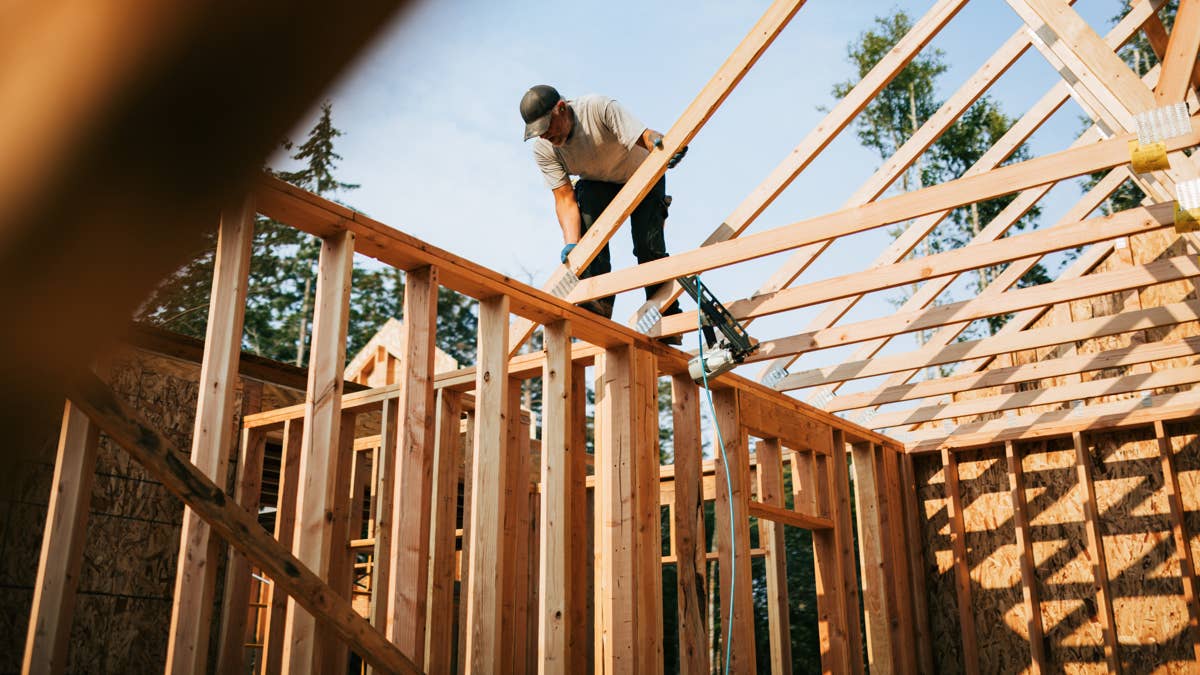 The U.S. needs to build 4.7 million homes to meet the current housing demand.
Zillow identifies possible solutions for shortages
So, how does the U.S. build 4.7 million homes to meet the current housing demand? And how can it continue to build homes to keep up with future demand?
The Zillow report states that the most effective way to fix the housing shortage crisis is a policy change.
For example, the company advocates for government policies that address restrictive zoning. For example, certain zoning laws might prohibit the building of manufactured or modular housing, or specify that only single-family homes can be built on residential land.
“The main culprit for this lack of supply and poor affordability is ill-conceived government policies in many jurisdictions across the country,” Burr told TheStreet. “Poor zoning regulations, high transfer and recordation costs for buyers and sellers, high yearly property taxes, and a tax system that forces many seniors to stay in their houses well beyond the functional use of the house for them in order to avoid capital gains taxes, has created a bottleneck in the industry.”
More on housing affordability:
- Redfin uncovers new problem for homebuyers
- Zillow flags surprising shift spreading fast in U.S. housing market
- Dave Ramsey sends message about mortgage payments
Zillow also supports policies that would make accessible dwelling units (ADUs) more accessible. Currently, strict permit requirements and local bans on ADUs keep them from being built in certain areas.
With updated regulations, homebuyers could buy ADUs as their primary residences without needing to buy the entire property. Homeowners could also qualify to build ADUs, then allow family members to live in them.
“Federal, state, and local governments need a better, comprehensive approach to real estate because owning a house is at the core of The American Dream,” Burr stated.
Homebuyer strategies for affording a home
Yes, it’s up to government entities to improve the housing supply shortage. But expecting all potential homebuyers to wait until the government steps up is unrealistic. So, here are some ways to take home affordability into your own hands.
- Get quotes from multiple mortgage lenders. Apply for mortgage preapproval with several lenders to compare types of loans, interest rates, and lender fees. Buyers who get quotes from more than one lender can save $600-$1,200 per year, according to Freddie Mac.
- Search for a temporary rate buydown program. Some lenders offer programs that allow you to pay for a lower mortgage rate at the beginning of your term. Burr used a 2/1 buydown as an example. “If a loan program has a rate of 6.25%, the rate in Year 1 would be 4.25% and, in Year 2, 5.25%,” he explained. “Years 3-30 would be 6.25%. This reduces the outlay of money for a buyer in the first two years.”
- Buy discount points. Instead of a temporary buydown program, you can permanently lower your mortgage rate by paying for “mortgage discount points” at closing. Compare each lender’s options and costs for discount points.
- Apply for down payment assistance.DPA programs provide grants, zero-interest loans, and low-interest loans to help you afford a down payment. Few borrowers who qualify for down payment assistance actually use it, so ask lenders about your DPA choices.
- Consider an adjustable-rate mortgage (ARM). Unlike a fixed-rate mortgage, an ARM changes your rate periodically. ARMs also usually charge lower rates during their initial fixed-rate period. “These loans are particularly effective if a buyer does not think [they] will live in a property longer than the initial term of the mortgage so that there is no concern about where the rate might adjust to after the initial term,” Burr said.