
Grand Theft Auto VI is almost here, and I’ve got a problem. My PlayStation 5 already has plenty of games and not enough storage to accommodate that 210GB requirement.
So I went looking online for a compatible 2-terabyte drive. The WD Black SN850X with a heatsink stood out. I remember that when I was looking to play Cyberpunk 2077 during Black Friday 2024, the same PS5-ready model was advertised for about $134.
To my astonishment, a current Best Buy listing prices it at more than $419.99. That’s more than three times as much for extra space to play video games.
It’s also a reminder that the AI boom doesn’t exactly stop at Wall Street. Data centers are slugging it out for memory and storage capacity, creating pressure that reaches everyday tech buyers. For Micron Technology (MU), however, tight supplies have translated into stronger prices and profits.
Now, as CoreWeave’s earnings spark a rebound in AI stocks, five-star KeyBanc analyst John Vinh sees another catalyst that could help Micron well beyond the latest rally.
KeyBanc sees another major catalyst for Micron stock
Vinh believes a strong recovery in ordinary cloud servers could potentially drive Micron stock higher.
In a recent research report covered by Barron’s, Vinh pointed to October cloud-computing growth of 2% month over month and 12% year over year, describing it as a “return to strong traditional server growth.”
More Micron:
- BofA sees 80% upside for Seagate stock, but Micron shares look cheaper
- Micron stock gets stunning $3,000 call despite 6% plunge
- Micron helps revive U.S. metal refining as China dominates supply
Servers need DRAM, the working memory Micron sells, even if they’re not running the newest AI models. Micron could therefore benefit from traditional data-center upgrades while AI accelerators will continue to drive demand for premium high-bandwidth memory.
Vinh reiterated an Overweight rating and a $1,750 price target and boasts a five-star designation on TipRanks.
Moreover, the analyst also sees Q4 DRAM prices jumping 15% to 20%, another potential boost to manufacturers when buyers are scrambling for supply. Micron’s own results support the shortage thesis. Fiscal Q4 sales jumped to $54.23 billion, up from $11.32 billion a year earlier.
Meanwhile, CEO Sanjay Mehrotra expects industry memory supplies to remain constrained through 2027 and 2028.
“We continue to see tight memory conditions,” Mehrotra told analysts during the company’s September earnings call.
For shoppers like me who need a new drive, that’s bad news. For a company selling scarce memory chips, it helps explain the optimism.
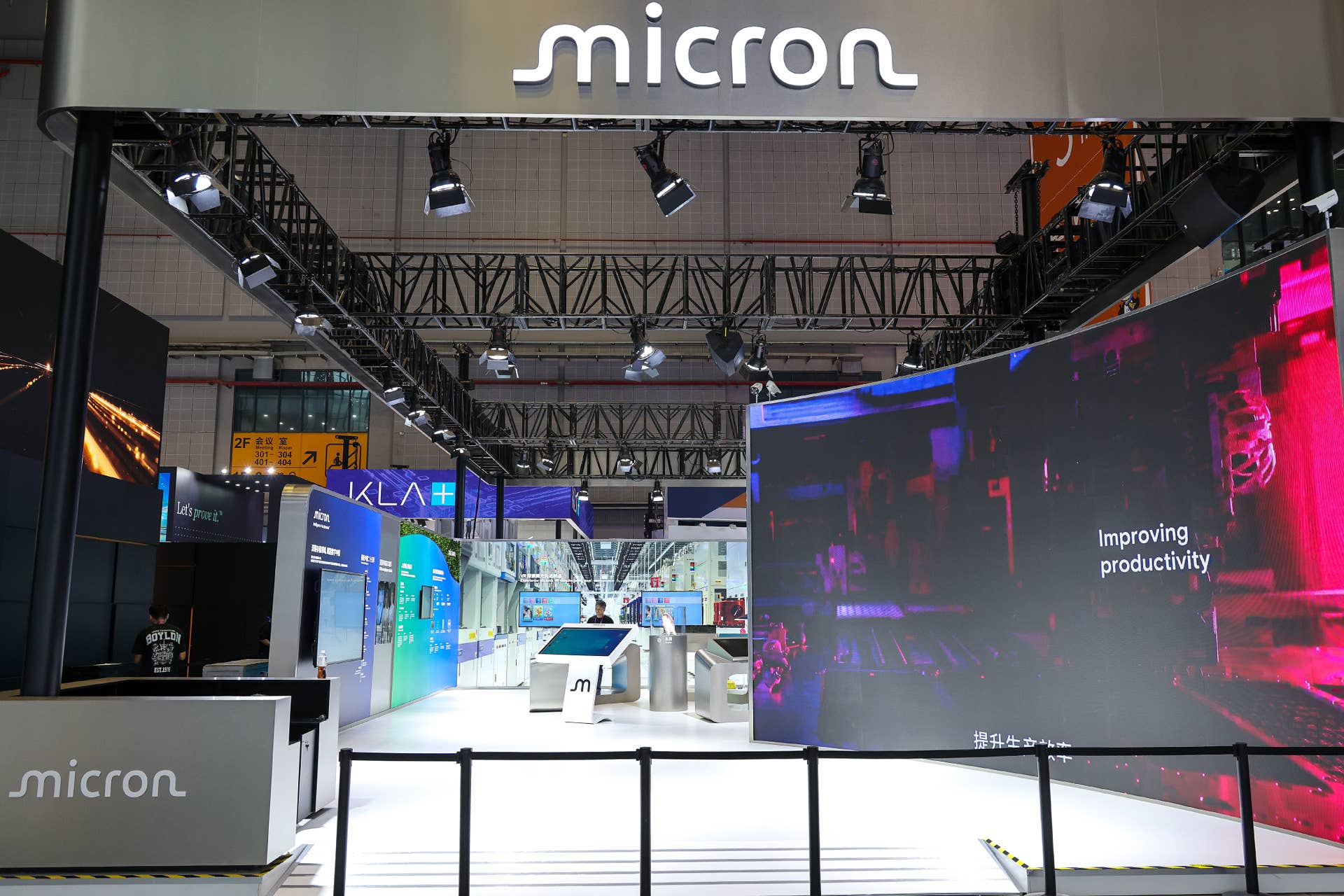 KeyBanc sees recovering server demand supporting Micron as CoreWeave earnings lift shares.
CoreWeave earnings give memory stocks a new reason to rally
The timing of the call is interesting, as on Nov. 10, AI cloud provider CoreWeave (CRWV) reported superb quarterly sales of $3.66 billion, up 168% from a year ago.
Its revenue backlog reached $132.5 billion, while management raised its full-year sales outlook to $13 billion to $13.3 billion. CoreWeave is also planning $37 billion to $39 billion in capital spending this year.
CEO Michael Intrator called it a “breakout quarter” on the earnings call, adding that qualified customer demand through 2027 was around 10 times the computing capacity CoreWeave could supply.
CoreWeave’s expansion is great news for memory makers like Micron. AI data centers need more than just Nvidia chips. They need memory and storage, and CoreWeave’s spending signals healthy demand for both.
On the morning of Nov. 11, Micron jumped 9% as investors reconsidered the recent sell-off. SanDisk, Western Digital, and Seagate also rose at a superb pace, showing that the rebound is spreading across memory and storage stocks.
There’s a major catch, though. CoreWeave says it expects about $9 billion in customer deposits and prepayments over the next three months to efficiently finance expansion.
Its success still depends on turning massive infrastructure spending into durable cash flow.
Micron’s massive price target leaves investors with one question
Vinh’s $1,750 target would have implied roughly 141% upside from Micron’s $725.11 Nov. 10 close. After the rebound, shares marched toward $790; the implied gain remained around 120%.
That said, the valuation case is still aggressive but not based primarily on excitement.
Vinh values Micron at six times projected fiscal 2028 earnings, while the shares recently traded near the four times consensus fiscal 2027 earnings. At the same time, the company’s three-year median multiple was roughly nine times.
Micron looks cheap, but all that changes if AI spending slows down or memory prices fall. Investors need to continue to monitor chip prices, server demand, and profit margins.
Also, Micron expects about $61.5 billion in quarterly sales, a sign of how strong demand has become. Meanwhile, gamers like me may keep paying more for PS5 storage ahead of GTA VI.
For Micron investors, the hope is that this memory boom has further to run.
Related: Jim Cramer questions his famous Nvidia investing rule
