
Contrary to the popular belief that physical bookstores and print books are dying, the latest industry data paints a different picture.
In 2025, print formats accounted for 50.6% of publishers’ revenue, versus 14% that came from digital formats, according to the Association of American Publishers. At the same time, physical retail revenue increased 7.2% to $6.7 billion.
In 2025, far more Americans had read a print book (64%) than an e-book (31%), although readership of printed copies has declined over the last decade, while e-book readership has grown, the Pew Research Center noted.
But on college campuses, the picture looks different. The latest data shows that digital is now the preferred course-material format, ahead of print.
Some 37% of college students prefer digital course materials, compared with 32% who prefer print, making digital the preferred format for the third consecutive year, a 2026 National Association of College Stores (NACS) survey of 11,177 college students revealed.
To adapt to these shifts, a major name in the U.S. higher-education space had to make a difficult decision and close 68 physical stores in a single quarter.
Barnes & Noble Education shutters 68 locations
Barnes & Noble Education, which operates more than 1,050 physical and virtual campus bookstores, recently reported fiscal 2027 first-quarter financial results, revealing revenue of $290.6 million, up $2.4 million year over year.
“The increase in revenue was primarily driven by growth in BNC First Day programs, partially offset by the impact of store closures, including exits from certain less profitable locations,” the company stated in a press release.
First Day Complete is the company’s institution-wide program that gives students required course materials, both physical and digital, at a discounted price, with the cost billed through the college as a course fee or included in tuition.
The college bookstore giant also reported closing 88 stores during the 13 weeks ended Aug. 1, 2026, while opening 34. Of those 88 closures, 68 were physical locations, while 20 were virtual, according to the company’s official Form 10-Q filing with the Securities and Exchange Commission (SEC).
Based on the document, 40 of those closures were tied to two multi-campus contracts.
While the bookstore giant didn’t disclose which contracts, one potentially relevant development is Kentucky Community and Technical College System’s decision to move its campuses to BibliU beginning in 2026.
Barnes & Noble Education Q1 closures key highlights:
- Net reduction: 54 stores (45 physical, 9 virtual)
- Total footprint fell from 1,116 to 1,062
- Physical footprint fell from 647 to 602
Gross comparable store sales, a metric that excludes closed stores, rose $10.7 million, or 3.7%, year over year.
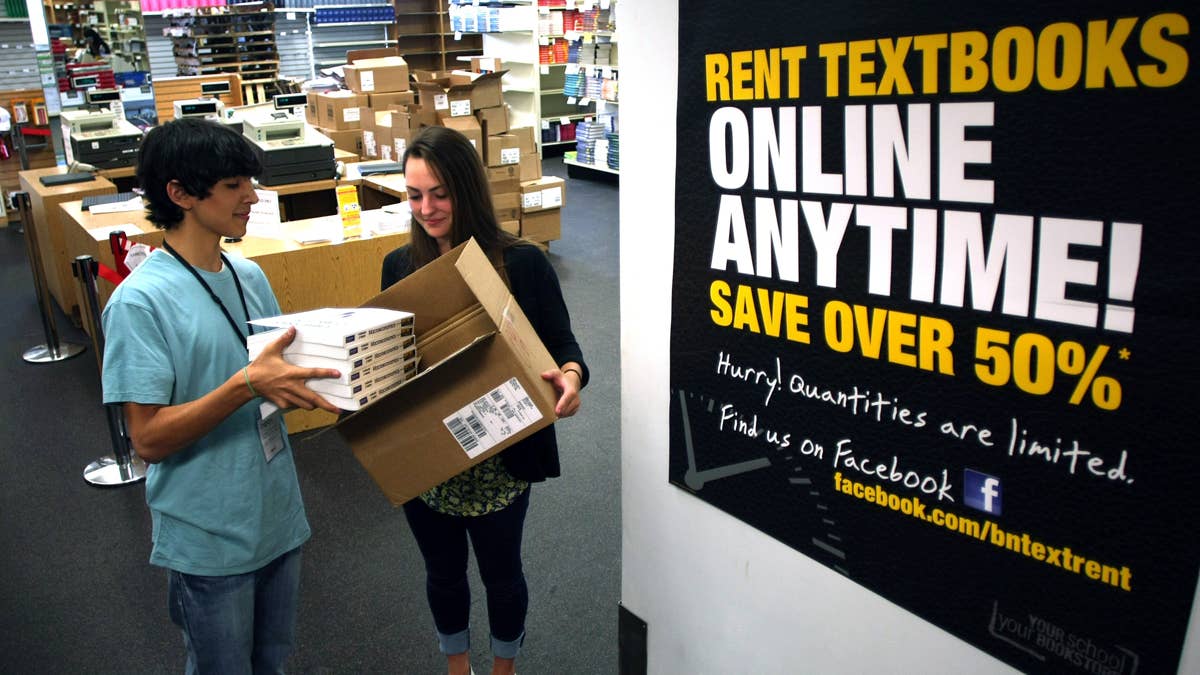 Barnes & Noble Education closed 68 locations in a single quarter.
Barnes & Noble Education store closures are part of a shifting strategy
“Store closures are the result of both lost accounts due to competitive dynamics and proactive decisions to close underperforming stores, including one of the multi-campus contracts,” Barnes & Noble Education stated in its Form 10-Q filing.
The latest data suggests college bookstores are changing as students increasingly access course materials online, in digital formats, and through institutional programs.
BNC First Day revenue increased 9% to $124.7 million, as noted in the filing, suggesting that while the company is shrinking its store footprint, it is also growing its affordable-access business.
According to its quarterly report, the company continues to generate strong momentum in First Day Complete.
In fall 2026, First Day Complete will be offered across 263 campuses, covering more than 1.43 million eligible students, about 26% more than in fall 2025. Because of the program’s seasonality, its financial impact will be reflected mainly in the second and subsequent quarters, the company said.
What Barnes & Noble Education store closures mean for students
Students increasingly shop online: 62% of those who buy course materials buy at least some from their campus store, and more reported buying from it online than in person, NACS found.
Students’ top reasons for preferring digital include not having to “carry a physical book around,” access on multiple devices, the ability to copy, paste, or print, easier navigation and reading, and immediate access after purchase.
Affordability is another reason access programs matter.
Related: 101-year-old grocery chain closes 27 stores
College students spent an average of $338 on required course materials during the 2025-26 academic year, according to NACS, roughly half the $701 average recorded in 2007-08. NACS also found that 54% of students were satisfied with course-material access programs that provide materials at below-retail prices.
That helps explain the appeal of First Day Complete, which also shifts the bookstore’s role toward institution-wide distribution.
Programs like this, and growing demand for digital materials, mean fewer stores don’t automatically translate into a smaller student reach, though lost accounts do shrink it.
How Barnes & Noble Education became a college bookstore giant
Barnes & Noble Education traces its roots to 1965, when Leonard Riggio opened the Student Book Exchange in New York City’s Greenwich Village. In 1968, he opened the first on-campus, contract-managed bookstore at Queensborough Community College, according to Barnes & Noble Education.
In 1971, Riggio acquired the Barnes & Noble trade name. The company went on to expand its college bookstore business across the U.S., building a large network of campus stores over the following decades.
The college business became a separate company in 2015, when Barnes & Noble completed the spin-off of Barnes & Noble Education. At the time, the company operated 724 campus stores serving colleges and universities and more than 5 million students and faculty, according to its SEC filing.
Today, the company operates a very different business, with physical bookstores representing only part of its model as it expands digital course materials and programs such as First Day Complete.
