
Three Utah politicians lost their seats this summer because of a data center proposal that became the state’s most volatile political issue.
Kevin O’Leary’s Stratos Project was pitched as the world’s largest AI data center campus, covering 40,000 acres near Utah’s Great Salt Lake.
Instead of breaking ground, the Shark Tank star is contending with voter fury, a defamation lawsuit, and unresolved questions about environmental harm.
O’Leary told MS NOW in an August interview that his team failed to communicate basic project details, saying his company “really screwed this up.”
That admission followed months of fierce resistance, including environmental warnings from university scientists, packed commission hearings, and primary defeats for the project’s backers.
Utah voters ousted every Stratos backer on the ballot
Utah Senate President Stuart Adams lost his Republican primary on June 23, 2026, to challenger Stephanie Hollist after championing the fast-tracked data center approvals.
Adams had served in the Legislature for more than 20 years as one of the state’s most powerful elected officials, The Salt Lake Tribune reported.
His defeat marked the first time a sitting Utah Senate president lost a primary election in the state’s modern political history.
Two Box Elder County commissioners who voted to advance the Stratos Project, Lee Perry and Boyd Bingham, also lost their Republican primaries that election night, KSL reported.
Adams’ race would almost certainly have been uncompetitive without the data center controversy, Damon Cann, a political science professor at Utah State University, told KUER.
What the Stratos campus would demand from Utah’s desert basin
The facility was designed to consume up to nine gigawatts at full capacity, more than doubling Utah’s peak energy demand, the Deseret News reported.
O’Leary’s team planned to power the campus with its private natural gas plant, drawing fuel from the Ruby Pipeline crossing northern Utah.
More Kevin O’Leary:
- Shark Tank’s Kevin O’Leary reveals one asset that could outperform gold
- Kevin O’Leary raises stark concern about inflation
- Kevin O’Leary spots a real estate play hiding in plain sight
Robert Davies, a physics professor at Utah State University, calculated that the finished facility would release roughly 16 gigawatts of thermal energy into the surrounding desert.
“This would be one of the largest single-site heat sources on the entire planet, and that includes volcanoes,” Davies told the Christian Science Monitor.
Davies estimated the campus could raise nighttime temperatures by 12 degrees Fahrenheit in Hansel Valley, which would suppress the ecosystem’s condensation cycle.
A Deseret News-Hinckley Institute of Politics poll conducted May 15–18, 2026, found that 53% of Utah voters opposed the project at its original scale.
A follow-up poll conducted June 16–22, 2026, found opposition had climbed to 60%, with Republican opposition rising from 36% to 49%.
Nearly seven in 10 voters in the May poll said the economic benefits of new data centers did not outweigh the costs to natural resources.
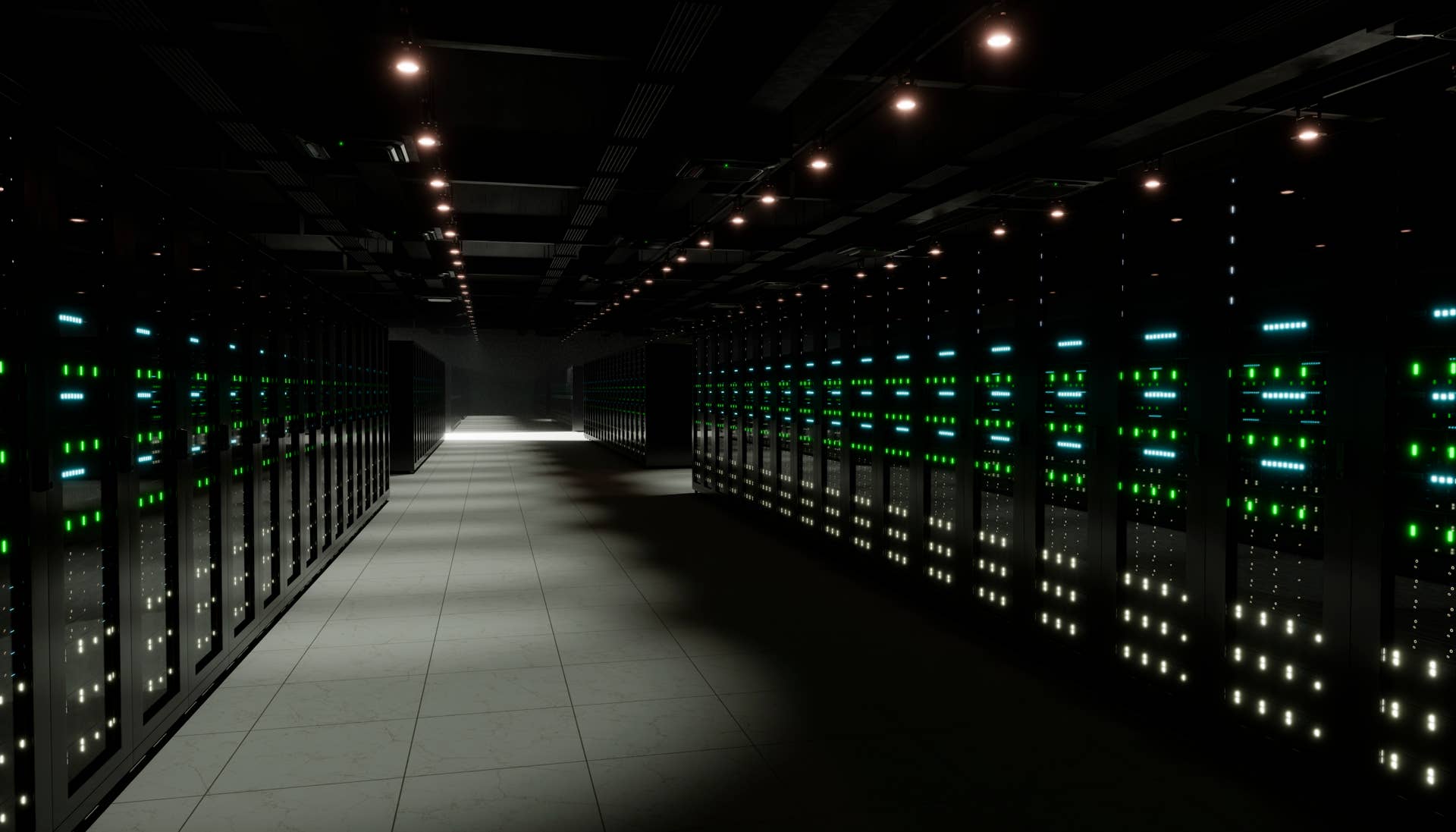 A proposed Utah AI data center could have consumed more power than the state’s peak demand while reshaping the surrounding desert environment.
aire images / Getty Images
O’Leary cut the project’s footprint but still cannot answer core questions
O’Leary agreed to cut the project from 40,000 to 20,000 acres under pressure from Adams and Gov. Spencer Cox, the Deseret News reported.
First-phase permit applications were capped at one gigawatt at the governor’s request, a fraction of the original 7.5 to 9 gigawatt build-out plan.
He also pledged to minimize water consumption, redirect excess water shares to the Great Salt Lake, and launch a public website with project updates.
Yet the reporter who conducted the August interview noted that O’Leary could not answer basic questions about power generation or water use.
O’Leary said his company would produce plans for a one-gigawatt demonstration facility so critics could extrapolate the site’s impacts
A defamation lawsuit compounds the legal pressure on O’Leary
Two Utah political organizations and their founders filed a defamation suit against O’Leary and Fox News in federal court in July, Fortune reported.
The plaintiffs allege O’Leary falsely accused them on national television of acting as proxies for the Chinese Communist Party during media appearances in May.
Gabrielle Finlayson, founder and senior partner of the Utah political consulting firm Elevate Strategies, said in a statement announcing the filing that O’Leary’s national television appearances had erased years of professional reputation-building in a matter of weeks.
I spent years building my reputation, my business, and the trust of my community. In just weeks, Kevin O’Leary tore it all down with lies. When someone with that reach weaponizes a massive public platform in an attempt to silence you, there must be accountability
O’Leary’s attorney dismissed the suit as a “cash grab,” noting that O’Leary posted a clarification saying he had no evidence linking the groups to China.
The Stratos backlash reflects a national confrontation reshaping the AI buildout
O’Leary’s experience in Utah fits a broader confrontation between AI developers and the local communities they need to host their massive computing infrastructure.
Gallup, in a survey conducted in March and released in May, found that 71% of Americans oppose construction of an artificial intelligence data center in their area, with nearly half expressing strong opposition.
About 75 major data center projects worth $130 billion were blocked or delayed in the first quarter of 2026 because of local resistance, according to Data Center Watch.
Despite the political and legal fallout, O’Leary told MS NOW he still plans to submit permit applications and intends to build the data center.
What O’Leary’s struggle signals for the AI infrastructure race
Davies’ analysis raised questions that O’Leary conceded he cannot yet resolve, telling MSNOW that his team must produce the facts that residents are demanding.
The pattern of canceled projects and voter backlash suggests community resistance is becoming a financial variable that investors in AI infrastructure did not foresee.
AI developers are finding it harder to ignore the gap between where they are spending and where they have earned local trust to build.