
Americans are still buying shoes, but what they choose to buy is changing. That shift is creating challenges for the 148-year-old company behind Famous Footwear, which has closed 18 stores and opened nine across its retail businesses in the first half of 2026.
The closures come at a time when footwear spending remains resilient in some categories and shopping centers are still attracting visitors. The company’s latest results reveal why that doesn’t necessarily translate into stronger sales for every retailer.
If you shop at Famous Footwear, expect a different mix on the shelves: The chain isn’t going away, but its assortment is shifting.
What Famous Footwear shoppers may see soon
The chain still operates 814 stores, and the company says it is shifting its assortment toward fashion footwear.
Famous Footwear parent company Caleres says fashion has been meaningfully outperforming lifestyle athletic products in recent weeks. It also said Famous Footwear’s comparable sales were flat from the start of the third quarter through Labor Day, after falling 5.9% in the second quarter.
That is an early sign the slide may be slowing, though the company still expects Famous Footwear sales to decline for the full year.
Where the 18 closures came from
Famous Footwear accounted for 14 of those 18 closures, but it also opened seven stores during the same period.
Caleres’ Brand Portfolio business includes footwear labels such as Sam Edelman, Allen Edmonds, Naturalizer, and Vionic, as well as Stuart Weitzman, which the company acquired in August 2025. During the first six months of the year, Brand Portfolio closed four stores and opened two, resulting in a net reduction of two stores.
Across both businesses, closures outnumbered openings by nine, leaving Caleres with 988 company-operated stores at the end of the second quarter, down from 997 at the end of 2025.
The second quarter also brought a change in direction for Famous Footwear. The chain opened six stores and closed four, adding two net locations. That followed a first quarter in which it opened one store and closed 10. Brand Portfolio opened two North American stores and closed four during the quarter.
When I analyzed Caleres’ official documents, it was clear that the footwear chain is not retreating. Rather, it is adjusting its store footprint in response to consumer behavior.
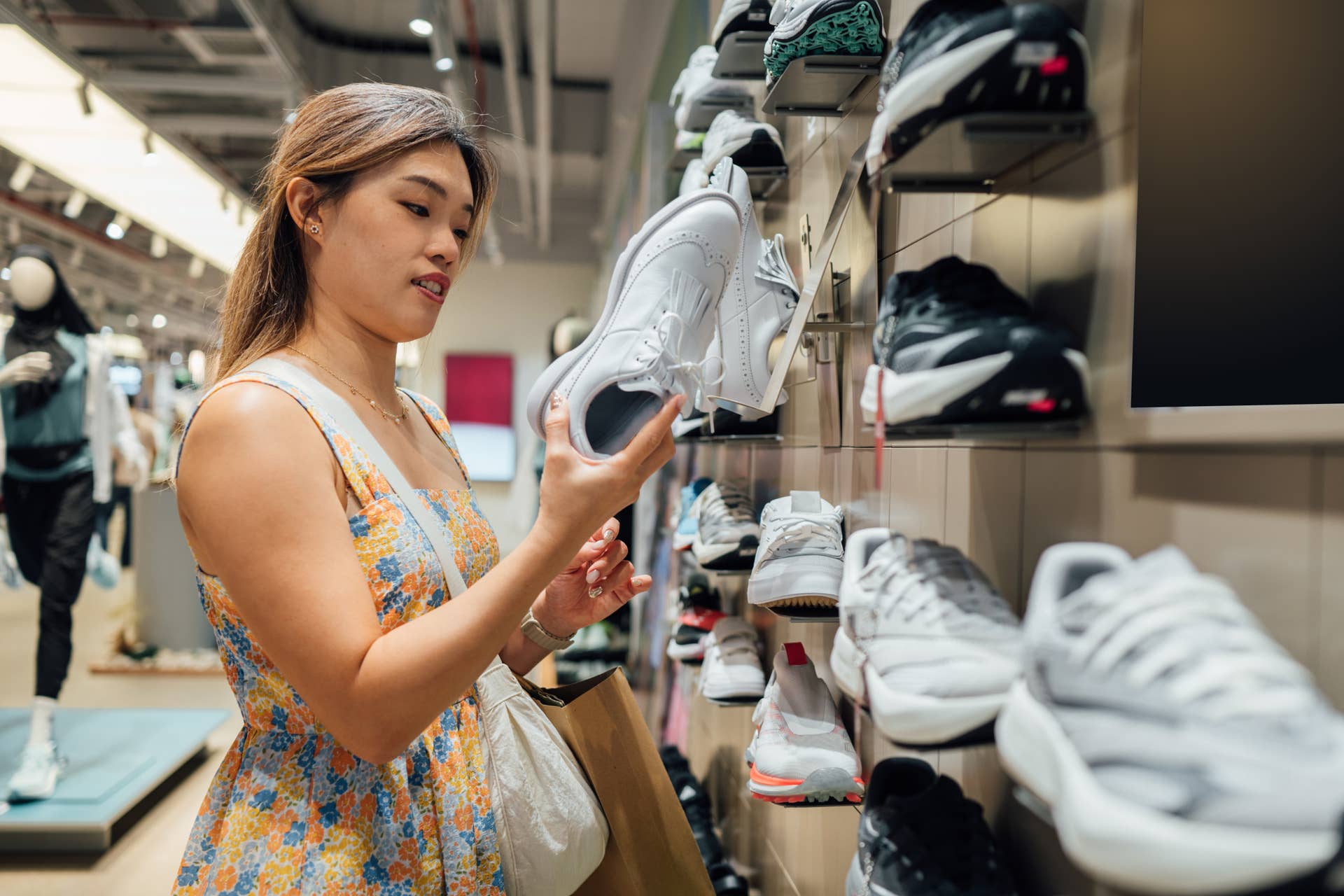 Famous Footwear closed 14 stores as budget shoppers retreat.
Overall sales are growing, but Famous Footwear faces pressure
Caleres reported consolidated net sales of $695.5 million in the second quarter, up 5.6% from a year earlier. For the first half of fiscal 2026, net sales increased 7% to approximately $1.36 billion, according to the company’s Sept. 9 earnings release.
However, Famous Footwear did not share in that growth.
The chain’s second-quarter sales fell 6.3% to $374.4 million, while comparable sales declined 5.9%. First-half sales decreased 4.6% to $693.7 million, with comparable sales down 4.3%.
Comparable sales measure changes in sales at stores open long enough to be compared across periods, helping separate underlying retail performance from changes in the number of locations.
Caleres attributed Famous Footwear’s second-quarter weakness to lower store traffic, a later back-to-school season and softness in lifestyle athletic footwear.
“At Famous Footwear, results were below our expectations,” Chief Executive Officer Jay Schmidt said in the earnings release.
Schmidt said the company was adjusting its product assortment to reflect changing consumer demand, placing greater emphasis on fashion footwear.
That strategy contrasts with the performance of Brand Portfolio. The segment’s second-quarter sales rose 23.6% to $340.6 million. The acquisition of Stuart Weitzman contributed to the increase, although Brand Portfolio sales also grew 8.2% excluding the acquisition.
This data reveals that Caleres’ overall sales growth shouldn’t be misinterpreted as recovery across all of its business segments. While the company improved overall, its Famous Footwear business continues to battle weaker sales and lower store traffic.
Footwear shoppers are spending, but choosing carefully
Americans spent $121 billion on footwear last year, and the U.S. imported about six pairs of shoes per person, according to the FDRA.
Caleres’ results come as consumers continue to spend on footwear while becoming more selective about what they buy.
According to Circana’s Aug. 17 footwear-market report, U.S. footwear sales rose 1% in dollar terms during the first half of 2026 compared with the same period a year earlier. The number of units sold declined, however, with higher average selling prices helping to offset weaker demand.
Performance footwear was a stronger category, with sales rising 6% in dollar terms. Running shoes were particularly resilient, with both dollar sales and units increasing 13%.
“Consumers remain highly intentional about their footwear purchases,” Beth Goldstein, Circana’s footwear and accessories industry advisor, said in the report.
Goldstein said the strongest growth came from categories combining comfort, versatility and performance. Circana also reported that nearly half of consumers were delaying purchases or choosing lower-priced alternatives because of price increases.
The findings suggest that footwear demand is not moving in one direction. Consumers continue to buy shoes, but the categories, styles, and price points they favor are changing.
For retailers, that can create pressure, even when the broader market records modest growth. Products that fail to match shoppers’ priorities may struggle, while brands that offer the right combination of comfort, style, performance, and value can continue to gain sales.
Caleres has reduced its Famous Footwear store count since the end of 2021
Famous Footwear has experienced a longer-term reduction in its store network.
At the end of 2021, the chain operated 894 stores. By Aug. 1, 2026, that number had fallen to 814, a net reduction of 80 locations, according to Caleres’ SEC filings.
I previously reported on Caleres’ store strategy in TheStreet’s June coverage of the company’s store closures and its shift toward higher-priced footwear. At the time, Famous Footwear had 812 stores, 82 fewer than at the end of 2021.
The number of company-operated Brand Portfolio stores increased to 174 on Aug. 1, 2026, from 118 on Aug. 1, 2025. At the same time, the number of total company-operated Famous Footwear stores dropped to 814 from 830 a year ago, according to its latest quarterly filing with the Securities and Exchange Commission.
The jump in Brand Portfolio locations largely reflects Stuart Weitzman, which Caleres acquired on Aug. 4, 2025, two days after the prior-year comparison date. The brand’s 62 company-operated stores (21 in North America and 41 in East Asia) are included in the Aug. 1, 2026, count but not the Aug. 1, 2025, one.
Related: 61-year-old bookstore chain closes 68 stores in 3 months
Mall traffic is growing, but not every retailer benefits
The latest shopping-center data also challenges the assumption that physical retail is uniformly losing customers.
In its September 2026 Mall Index, published Oct. 6, Placer.ai reported year-over-year visit increases across all three shopping-center formats it tracks.
Visits rose 5.6% at open-air shopping centers, 5.5% at indoor malls and 4.1% at outlet malls.
However, the report noted that calendar timing helped boost September’s year-over-year comparisons. Labor Day fell on Sept. 7 in 2026, placing the entire three-day holiday weekend in September, whereas part of the 2025 holiday weekend fell in August.
The findings follow positive traffic trends in August, when visits rose 6.6% at open-air centers and 5% at indoor malls, while outlet mall visits declined 2.7%, according to Placer.ai’s August Mall Index.
While the data suggests shopping centers continue to attract visitors, it is important to understand that traffic alone does not guarantee stronger sales for every retailer.
Inflation-pressured consumers are dropping mall impulse buys to prioritize personal well-being, health, and longevity, according to McKinsey.
Caleres previously highlighted that its luxury and premium brand segments, such as Stuart Weitzman and Sam Edelman, are seeing strong growth, while a more affordable chain struggles as accelerated inflation squeezes everyday consumers, according to the first-quarter 2026 earnings call.
Caleres is not alone, as other retailers are also feeling the impact of this consumer behavior shift.
I recently reported about Genesco (the powerhouse behind Journeys) quietly shuttering 202 stores between 2023 and mid-2026. Then, there’s Freebird’s pullback, Foot Locker, which closed hundreds of Champs locations, and JD Sports, which announced the structural winding down of 175 Hibbett stores.
The pressure isn’t limited to mall chains. Angeline Ong, senior investment analyst at IG Group, said in an Aug. 21 Reuters report that even Walmart, which has gained from wealthier households shopping down, is struggling to keep average spending growth rising.
What this means for Caleres and Famous Footwear
Caleres expects consolidated net sales to increase by a low-to-mid-single-digit percentage in fiscal 2026. It expects Famous Footwear sales and comparable sales to decline by a low-to-mid-single-digit percentage, while for Brand Portfolio, the retailer is projecting a sales increase of low double digits, according to its latest earnings guidance.
The company is therefore pursuing different strategies across its businesses: building on the strength of its brand portfolio while working to improve Famous Footwear’s performance.
