
Growing up, pharmacies were truly local. They were run by pharmacists who were trusted members of the community, and hyper-localized, with only one or two locations in neighboring towns.
That all changed, however, in the 1980s and 1990s, as major pharmacy chains like CVS and Walgreens began acquiring smaller operators, and grocery stores and national mass merchants like Walmart got into the business.
According to the National Institutes of Health, the number of independent pharmacies shrank from over 40,000 to about 21,000 between 1980 to 2000.
Pharmacy customers consolidated further as CVS and Walgreens opened more and larger stores, often competing directly in neighborhoods.
However, major changes in how pharmacies make money have led CVS and Walgreens to retreat in recent years, closing over one thousand locations. The smaller margins, which were straining profits, even led Rite Aid to shutter all of its 2,000 stores in 2023.
Those closures have created pharmacy deserts, areas with little access to personalized care once provided by independents before they were forced out. It’s also created an opportunity, given CVS Health’s decision to open new, smaller store formats in markets once served by rivals such as Walgreens and Rite Aid.
CVS gets back to basics with localized pharmacies
At its peak, Walgreens operated over 9,560 stores in the U.S. in 2018, and CVS operated nearly 9,900, including store-within-store locations. Now, there are about 7,991 Walgreens, according to ScrapeHero, and, according to CVS Health‘s quarterly SEC filings, it operates about 9,000 retail stores.
Combine those closures with Rite Aid’s bankruptcy, and it’s gotten harder to fill prescriptions in person in thousands of communities.
Also read: TJMaxx, Marshalls appear to have a customer problem
CVS Health thinks it may have a solution. It’s in the process of opening tiny 3,000-square-foot pharmacies embedded in currently underserved communities. The locations are primarily pharmacy only, with very limited over-the-counter or front-of-store product offerings.
Earlier this month, CVS Health opened its newest small-concept pharmacy in Roxbury, Massachusetts, just outside Boston.
“We are reimagining how pharmacy care is delivered by creating locations designed around the needs of the communities we serve,” said Sid Tenneti, Senior Vice President and Interim President, Pharmacy and Consumer Wellness, CVS Health.
In addition to prescriptions, most smaller locations offer immunizations.
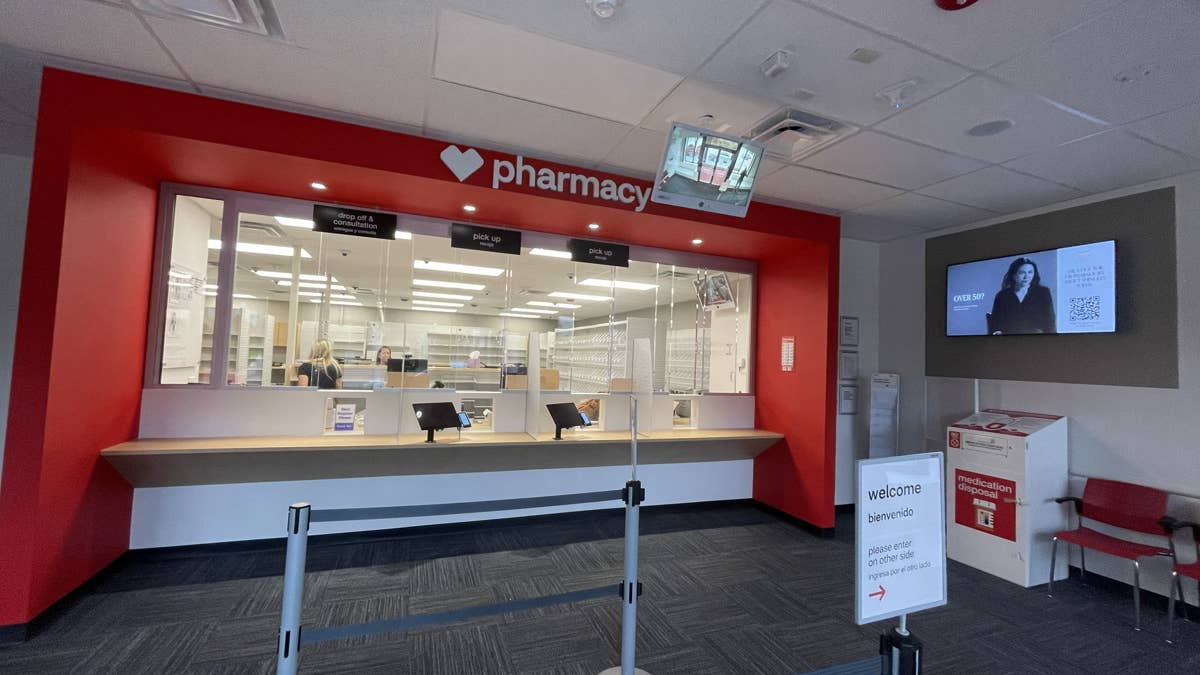 CVS Health is opening small pharmacy-only stores in communities currently underserved by rivals.
A CVS Health small market pharmacy store in Roxbury, MA
A massive market in need of transformation
IBISWorld pegs the U.S. pharmacies market at $739.4 billion in 2026, up 3.5% growth in 2026 alone.
The industry tailwinds supporting growth include an aging baby boomer population, which has driven higher chronic disease prevalence, thus driving demand for long-term prescriptions.
Medicare Part D adoption and increased Medicaid enrollment have supported both generic and brand-name prescription volumes, and recently launched, highly popular GLP-1 treatments for obesity are also boosting foot traffic.
More Retail:
- Target tackles a frustrating problem for shoppers
- America’s biggest RV seller closing more stores
- Costco helps members solve a key problem, but at a cost
With less competition due to closures, smaller stores could allow CVS Health to better target those demand drivers at a lower cost, thanks to reduced inventory and lower rent payments.
CVS Health plans to open 20 of its small-format stores this year, and it already has locations in Birmingham, AL; Chicago, IL; Detroit, MI; Houston, TX; and Washington, D.C.
If these stores see the foot traffic and profit expected, more stores could arrive in 2026. Of course, Walgreens isn’t likely to ignore the trend either. It’s opened about 100 smaller stores in some communities for the same reason, suggesting this trend may reshape the pharmacy market yet again.
