
Every fast-food price has a breaking point. Charge a dollar too much, and the regular who came in three times a week starts coming in twice.
For most of the past five years, chains tested that line and kept pushing. Menu prices climbed, and customers mostly paid. Then lower-income diners, the people who keep drive-thrus busy on a Tuesday night, started pulling back.
That pullback has turned value into the main event in fast food. In 2026, the contest is about which chain can sell something cheap that customers actually want, without wrecking its own margins.
Taco Bell’s answer this fall is a $2 quesadilla with a crunch inside it.
The Yum Brands (YUM) chain launched the Crunchadilla and Creamy Sriracha Chicken Nacho Fries on Oct. 15, according to Tasting Table. Both are limited-time items.
Inside Taco Bell’s $2 Crunchadilla
The Crunchadilla is a small quesadilla built around a familiar Taco Bell trick. It folds half a crispy Mexican Pizza shell inside a grilled flour tortilla, with grilled white-meat chicken, a three-cheese blend, and reduced-fat sour cream, according to Brand Eating.
Customers pick Creamy Jalapeño Sauce for the Classic version or Creamy Sriracha Sauce for the spicier one. The suggested price is $2, though Brand Eating found it at $2.29 at a Los Angeles location.
The item is not brand new to everyone. Taco Bell tested a $2 Classic Chicken Crunchadilla in Oklahoma City starting in November 2025, EURweb reported at the time, citing the chain’s announcement.
A year later, the test has gone wide.
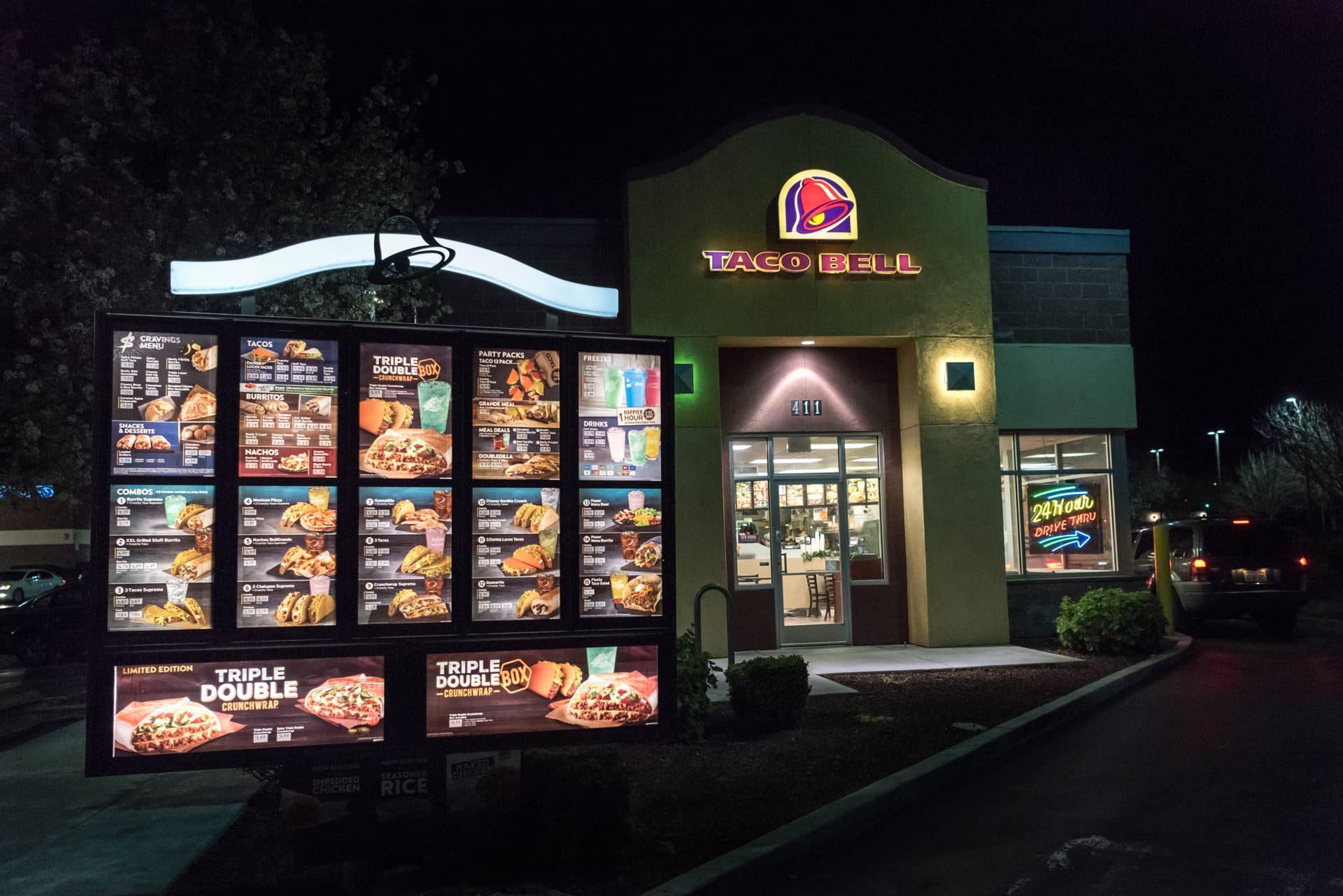 Taco Bell has added a $2 Crunchadilla and $5.49 Creamy Sriracha Chicken Nacho Fries for a limited time.
Nacho Fries upgrade comes at a higher price
The second item is a bigger, pricier play on one of the chain’s best-known sides. Taco Bell made Nacho Fries a permanent menu item earlier this year, and this version turns them into something closer to a meal.
The new fries come topped with slow-roasted chicken, pico de gallo, a three-cheese blend, nacho cheese sauce, and Creamy Sriracha Sauce. They cost $5.49, or $5.99 in Los Angeles, Brand Eating reported.
More Restaurants:
- Domino’s Pizza may have a franchisee problem
- Chipotle’s problems will take more than Starbucks rumors to fix
- Hooters closes dozens of restaurants after bankruptcy, and entire states are going dark
The early verdict favors the fries.
A Tasting Table reviewer said the Crunchadillas were not revolutionary, suggested skipping them and noted the sriracha version turns soggy in delivery.
On the fries, the reviewer was blunter, writing, “I would definitely pick up the Creamy Sriracha Chicken Nacho Fries again,” Tasting Table reported on Oct. 16.
Here is where the menu gets interesting. Taken on their own nutrition labels, the two items deliver very different value for your money.
Taco Bell’s new items, by the numbers
- Crunchadilla (Classic): 280 calories and 15 grams of protein for $2, according to Brand Eating.
- Creamy Sriracha Chicken Nacho Fries: 500 calories and 13 grams of protein for $5.49, Brand Eating indicated.
- Pre-outbreak momentum: Taco Bell’s same-store sales rose seven percent in the second quarter, according to Nation’s Restaurant News.
- The dip since: Same-store sales were running down two percent early in the third quarter after a July cyclospora outbreak, Nation’s Restaurant News noted.
In my analysis, the Crunchadilla is the better deal by a wide margin. At $2, you get about 7.5 grams of protein per dollar and 140 calories per dollar. The Nacho Fries deliver about 2.4 grams of protein and 91 calories per dollar.
Put another way, two Crunchadillas cost $4, which is $1.49 less than one order of fries and gives you more than twice the protein.
Why the McDonald’s pricing debate matters here
The timing is hard to miss.
Morgan Stanley analysts recently flagged pricing power as a negative for McDonald’s (MCD), arguing its value proposition has weakened, TheStreet reported on Oct. 19. The firm described the fast-food backdrop as “soft,” with concerns about low-end consumers still in play.
McDonald’s pushed back.
Related: Chipotle takes on Taco Bell with new value play
CEO Christopher Kempczinski has said its base menu prices beat competitors on beef, chicken, drinks, and breakfast. He also acknowledged that the U.S. lacks a true entry-level offer, and the company tested 10 items under $3 in the second quarter, according to the same TheStreet report.
That gap is exactly where a $2 Crunchadilla sits. Taco Bell has spent the year leaning into cheap entry points, including the luxe value menu it rolled out in January.
Taco Bell had real momentum before the summer. CEO Chris Turner said the chain “entered Q3 in its strongest position ever,” on Yum’s July earnings call, Nation’s Restaurant News reported on July 30. He pointed to value, broader menu innovation, and what he called “cultural relevance.”
Then came the outbreak. The cyclospora cases linked to Taco Bell hit traffic just as the chain was rolling.
A $2 item gives lapsed customers a low-risk reason to come back. That makes this launch a recovery move as much as a menu move.
Your local price may run higher than $2
The $2 sticker is a suggested price. Franchised restaurants set their own prices, so what you pay depends on where you live.
Brand Eating’s Los Angeles numbers show how fast the gap opens. The Crunchadilla cost 14.5% more there than the suggested price, and the Nacho Fries cost 9.1% more. Buy one of each, and you pay $8.28 in Los Angeles versus $7.49 at the suggested prices.
That 79-cent difference sounds small. Repeat it every week for a year, and it adds up to about $41, for the same two items.
Delivery widens the gap further, since delivery apps add service and delivery fees on top of the menu price. If you want the $2 price, my advice is simple. Order in the app for pickup, compare it against the in-store board, and skip delivery for anything with a crunchy shell.
Fall menu points to the next fast-food value fight
Limited-time items are a test of what customers will pay for. A $2 Crunchadilla that sells well tells Taco Bell that cheap, filling, and familiar still wins traffic. A $5.49 side that sells well tells it that customers will still trade up when the food earns it.
Taco Bell is betting both can be true at once. For you, the smarter move is to treat the cheap item as the deal and the expensive one as a treat.
The real scorecard arrives with Yum’s third-quarter results. If Taco Bell’s same-store sales climb back above zero, expect more $2 items from the chain, and expect rivals to chase it.
Related: Applebee’s menu adds items as customer foot traffic slumps
