
Elon Musk has spent years selling investors on rockets, satellites and electric cars. His newest pitch is about something far less flashy: warehouses full of servers that other companies are lining up to rent. That shift is now showing up in the numbers, and SpaceX earns more from artificial intelligence than from anything else it does.
For one chipmaker in particular, that is welcome news. Musk used SpaceX’s latest earnings call to clarify which hardware will power the next phase of his AI buildout. It was not a passing mention. The name he kept coming back to was Nvidia.
SpaceX’s AI business takes center stage
SpaceX reported third-quarter revenue of $14.6 billion on Oct. 20, 2026, up 161% from a year earlier, while its AI unit, now called Super Intelligence, grew ninefold to $7.56 billion. Revenue came in well above analysts’ expectations, and shares climbed about 8% in extended trading after the release.
Also read: Bank of America sends SpaceX stock investors strong signal
The quarter also marked a turning point on the bottom line. SpaceX posted $4.4 billion in net income, its first profitable quarter since going public. The AI surge was driven by new cloud agreements, the August purchase of the coding platform Cursor, and growing adoption of Grok.
The AI segment has now outgrown the businesses that made SpaceX famous. Super Intelligence brought in more revenue than Starlink and the rocket business combined, and 84% of the quarter’s capital spending went toward it. Spending still topped revenue, though the gap narrowed. That is a remarkable shift for a company built on reusable rockets.
Wall Street noticed quickly. Bank of America lifted its outlook on the stock on Oct. 22, citing a quarter in which the AI arm posted its first operating profit and surpassed the Starlink connectivity business, TheStreet reported. The bank’s optimism rests on results that beat forecasts across the board.
Renting out computing power is paying off
Much of that growth comes from leasing capacity to other AI developers. Anthropic agreed to pay SpaceX $1.25 billion a month through May 2029 for compute across its Colossus clusters. Either side can exit the deal on 90 days’ notice after an initial period.
Google signed a similar agreement in June, committing to pay $920 million a month from October 2026 through June 2029 for access to roughly 110,000 Nvidia GPUs and related hardware. That is a lot of Nvidia silicon earning rent for SpaceX.
Musk argues SpaceX has a built-in edge in building this capacity. He compared assigning his rocket team to data centers to “the New York Yankees playing in Little League.” He also said even older Nvidia H100 chips are now renting for more than they did when they were new. He added that SpaceX could rent out its compute several times over if it said yes to every request.
That pricing power is already feeding into guidance. SpaceX expects first-quarter 2027 revenue of $33 billion to $37 billion, and its finance chief said prices for new capacity were running slightly above the top of the range discussed a quarter earlier. That outlook is more than double the company’s latest quarterly sales.
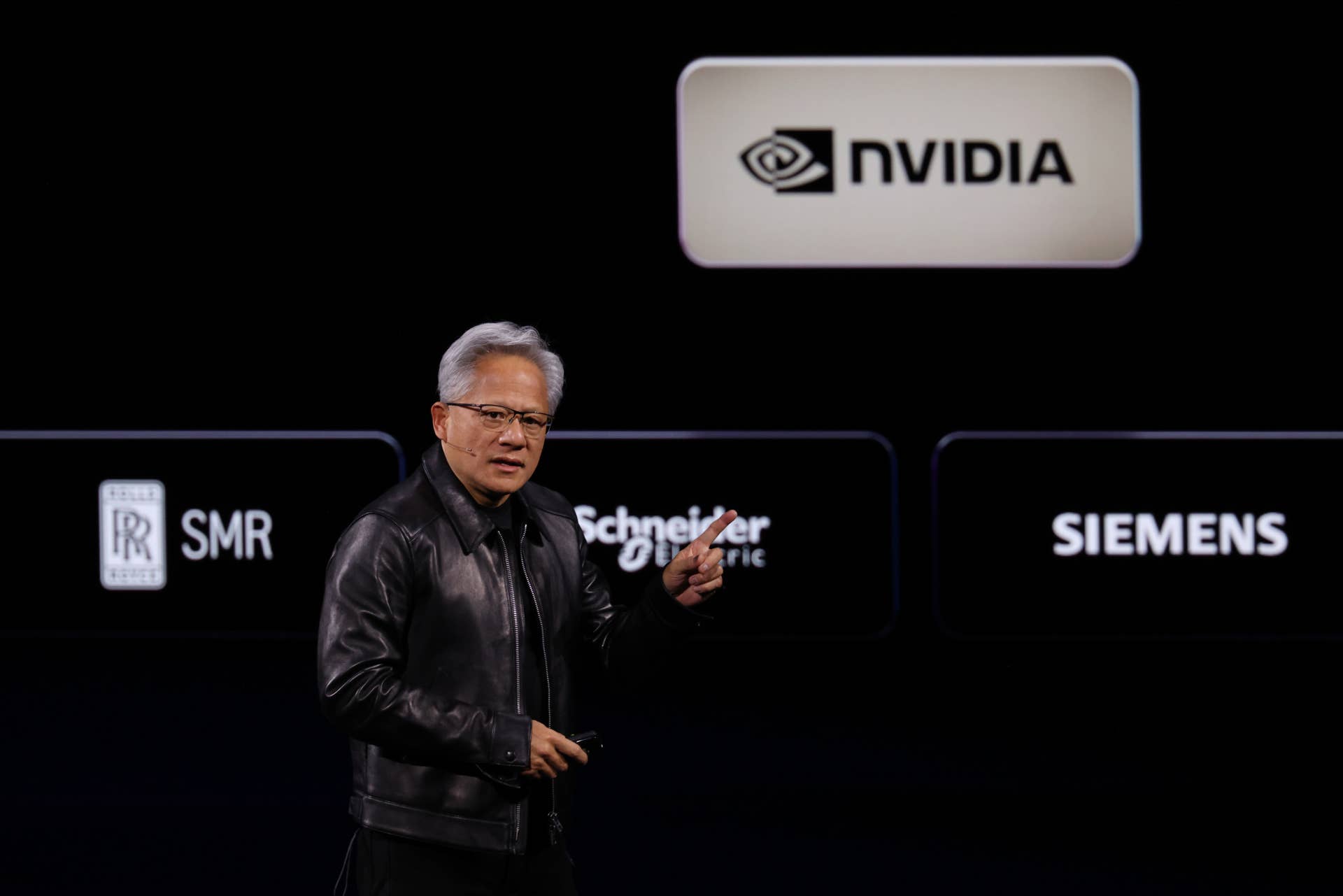 Nvidia’s finance chief has also pointed to strong growth ahead. CFO Colette Kress said in August that Nvidia expects revenue to grow 70% in fiscal 202.
Colossus II will lean heavily on Vera Rubin
The detail that matters most for Nvidia came when Musk described the next phase in Memphis. In the earnings call, he said SpaceX’s new compute next year will be primarily Vera Rubin, with plans for a training cluster of 440,000 Vera Rubin computers by the end of the second quarter. He added that he expects a shortage of AI computing power to last a long time.
Those are complete systems rather than standalone chips, and full systems carry a bigger price tag than chips alone. Vera Rubin, a platform built from 1.3 million components, is designed to deliver 10 times the performance per watt of Grace Blackwell, according to TheStreet, which reported in March that the platform had entered full production.
More Elon Musk:
- SpaceX CEO Elon Musk has 7 words for Delta Airlines after snub
- Elon Musk just handed Nvidia investors another big win
- Billionaire investor makes stunning $15 trillion Musk call
That buildout lines up with Nvidia’s own forecasts. CEO Jensen Huang said in March that he sees at least $1 trillion in orders for Blackwell and Vera Rubin through 2027. That was double the commitment in demand he had cited a year earlier. Big commitments like SpaceX’s are what that projection depends on.
Nvidia’s finance chief has also pointed to strong growth ahead. CFO Colette Kress said in August that Nvidia expects revenue to grow 70% in fiscal 2028, well above the 44% expected by analysts, while noting that the outlook reflects supply constraints. She added that customer forecasts indicate growth will double next year.
What this means for Nvidia investors
Musk is aiming far higher. He told investors SpaceX’s annual recurring revenue could reach $500 billion to $1 trillion by the end of 2027, though analysts project full-year 2027 revenue closer to $110 billion based on LSEG data. Even the lower estimate would require a huge expansion in computing capacity.
Either way, the hardware has to come from somewhere, and Musk has made clear where he plans to get it. Huang has said Vera Rubin is already in production, and Nvidia expects partners to offer Rubin-based products in the second half of 2026. That timing lines up neatly with Musk’s plans for next year.
Risks remain. SpaceX’s spending still outpaces its revenue, and Nvidia itself expects supply to stay tight. Still, when one of the most aggressive builders of AI computing power names Vera Rubin as the backbone of its next expansion, Nvidia shareholders have good reason to pay attention.
Related: Elon Musk sends a strong memo to SpaceX and Tesla stock investors
