
Stopping at a gas station for a fill-up, coffee, or snacks has long been part of Americans’ daily routines. But those habits are changing, and some of the country’s most recognizable convenience stores are facing a new challenge.
Customers are making fewer trips, even as retailers expand their food menus, mobile apps and loyalty programs to give shoppers more reasons to return.
Convenience store transactions fell 4.5% during the first half of 2026 compared with a year earlier, according to data from the National Association of Convenience Stores (NACS) presented at its annual industry show and as reported by C-Store Dive.
This roughly means more than 1,100 fewer transactions per store on average. Visits to fuel pumps have also declined, with consumers becoming increasingly likely to skip the store even when stopping for gas.
Higher fuel prices have added to the pressure on household budgets, encouraging shoppers to reconsider unnecessary trips and purchases.
For convenience store chains such as Wawa, Sheetz, and 7-Eleven, the challenge is no longer simply attracting customers to the gas pump. It is convincing them that stopping inside to shop or ordering through an app is worth their money.
And a new customer satisfaction study suggests some chains are doing better than others. Let’s take a look at what some of the major convenience chains are doing to get higher scores.
Also read: Spectrum faces new customer problem after Cox acquisition
Meijer beat Wawa, Sheetz in customer satisfaction
Midwestern retailer Meijer emerged as the highest-rated convenience store operator in the 2026 American Customer Satisfaction Index (ACSI) Convenience Store Study, released earlier this month.
Meijer’s satisfaction score rose to 82 out of 100, up from 78 in 2025, the only one in the top spot.
Wawa and Sheetz, meanwhile, each dropped two points to 80, tying with QuikTrip for second place. Kwik Trip, last year’s leader, fell five points to 79.
But despite Meijer’s improvement, the general satisfaction across the convenience store industry slipped to 75 from 76.
The study, based on 9,475 completed surveys, identified declining mobile app quality and store conditions as major weaknesses.
Mobile app quality fell to 80 from 84, even as convenience stores increasingly rely on digital ordering and rewards to encourage repeat purchases.
This contrasts with what retailers expect and what they deliver to their users.
While they are being encouraged to use loyalty apps to save money, customer satisfaction with those apps is declining.
Why convenience stores are betting on loyalty rewards
Loyalty programs are becoming an important way for retailers to maintain repeat business as consumers grow more selective about where they shop.
The ACSI study found that 65% of convenience store loyalty members visit their primary store at least once a week, compared with 46% of nonmembers.
Rewards members also reported higher satisfaction, with an overall experience score of 77 versus 73 for nonmembers.
The biggest difference was in promotions, which members rated 8 points higher than shoppers who didn’t participate.
And the value of those programs varies considerably across major convenience store chains. I compared loyalty rewards and discounts across five major convenience stores to create this table.
Which gas station offers best discounts and rewards program?
I looked at Meijer, Wawa, Sheetz, 7-Eleven, and Quik Trip to analyze loyalty awards. Data sources included Meijer mPerks, Wawa Rewards, Sheetz Rewardz, 7Rewards, and QT Pay.
Store
Rewards and discounts
What shoppers should know
Meijer Express
Earn 10 mPerks points per eligible $1 spent; redeem 1,000 points for 10 cents off per gallon.
Grocery purchases can help earn fuel rewards, but points expire after about three months.
Wawa
Earn 10 points per eligible $1 spent in-store and 5 points per gallon of fuel.
Food, beverage and fuel rewards are available, but redemption values and restrictions vary.
Sheetz
Earn 5 points per eligible $1 spent, plus an everyday 3-cent-per-gallon fuel discount.
Additional rewards depend on accumulated points, promotions and membership tiers.
7-Eleven
New 7Rewards members can get 11 cents off per gallon for their first seven qualifying fills.
The introductory offer expires after seven fills or 90 days; an everyday discount of at least 5 cents per gallon follows.
QuikTrip
QT Pay offers 5% off eligible in-store and app purchases, plus fuel savings.
Customers must link a checking account to use QT Pay.
Meijer has an advantage that some traditional convenience store operators cannot easily replicate. Customers can earn rewards on qualifying grocery purchases and redeem accumulated points for fuel discounts at Meijer Express stations.
QuikTrip takes a different approach, offering an immediate percentage discount on eligible purchases through QT Pay instead of requiring customers to accumulate points. The trade-off is linking a checking account to the service.
Meanwhile, Wawa shoppers have questioned whether their accumulated points still offer the same value.
In a May discussion on Reddit’s r/Wawa community, customers complained that some food rewards required more points than before, including a breakfast burrito, which users said had increased from 500 to 750 points.
These individual reports do not automatically establish the extent of customer dissatisfaction, but they highlight an important concern with points-based programs.
Even if shoppers continue earning points at the same rate, changes to redemption requirements can reduce the value of those points.
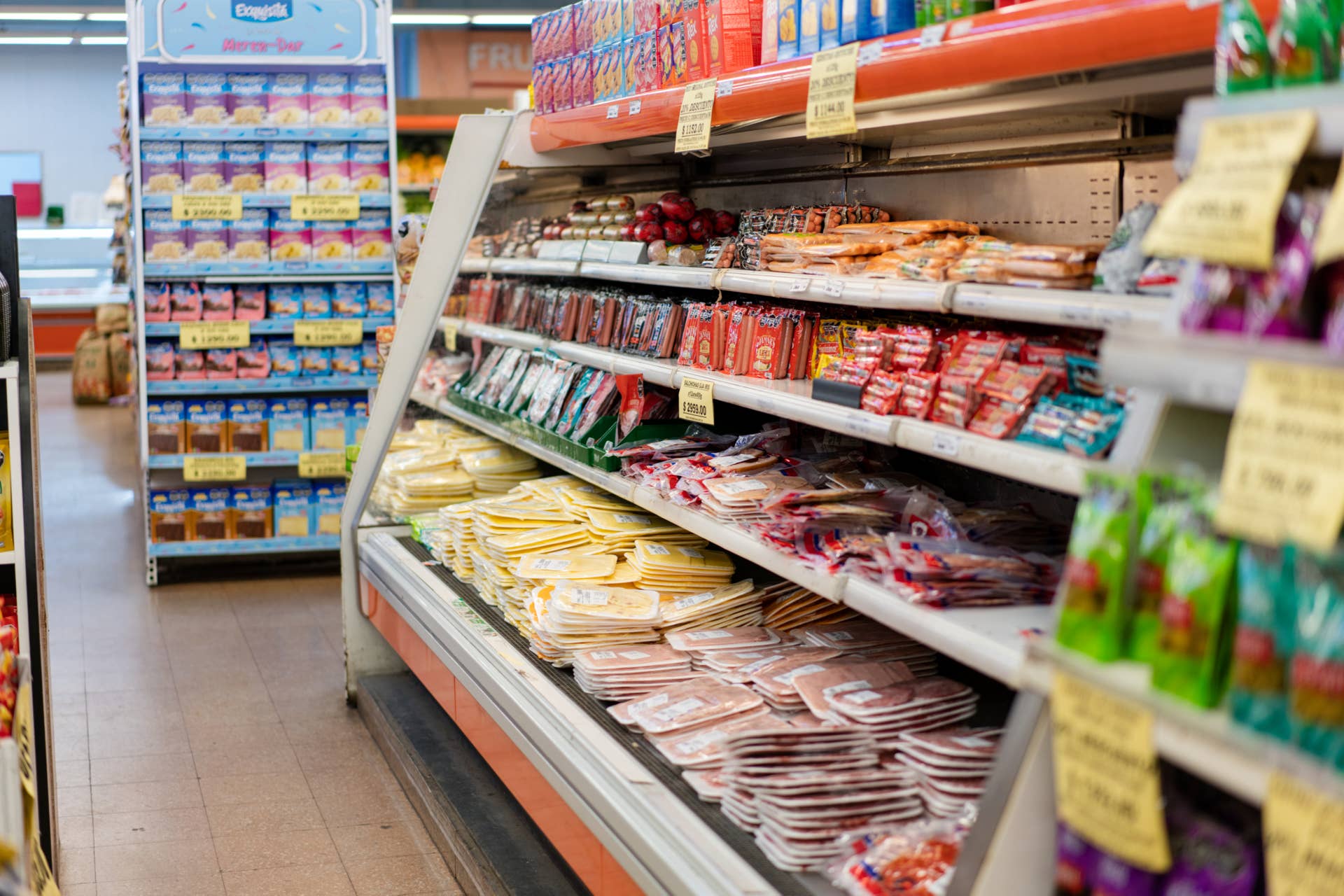 Convenience stores are competing for loyalty.
7-Eleven looks beyond gas stations to win customer orders
Convenience stores are also looking for ways to reach customers who don’t want to make a separate trip.
7-Eleven, for example, offers delivery through its 7NOW platform and third-party services such as Uber Eats, allowing customers to order snacks, drinks, groceries, and prepared foods without going into the store.
Uber Eats also allows shoppers to bundle orders from a nearby convenience store or another participating business into a single order, without paying a second delivery fee.
The multi-store ordering feature was introduced in 2023, illustrating how convenience stores can compete for purchases that might otherwise go to supermarkets or restaurants.
I think this was genius because as a consumer, I don’t want to pay $4 for a soda can when I can buy a 2L cold drink bottle for the same price by clubbing my order with a convenience store.
7-Eleven has also expanded its subscription strategy through Gold Pass, which costs $9.95 per month or $95 annually.
Members receive benefits including seven eligible free drinks per month, additional fuel discounts, and zero delivery fees on qualifying orders, although other charges may still apply.
The approach mirrors a wider shift across retail.
On Oct. 20, Walmart introduced a combined Walmart+ and Sam’s Club Plus membership for $120 annually, bundling fuel savings, delivery benefits, and other shopping perks.
The announcement underscores how major retailers are increasingly using memberships to encourage customers to make more of their purchases within a single shopping ecosystem.
For convenience stores, however, loyalty rewards alone may not be enough.
The ACSI study shows that while rewards members report higher satisfaction, customers are becoming less pleased with the apps and store experiences that support those programs.
For shoppers, the consideration goes beyond the lower prices that come with a loyalty program. The actual savings depend on how frequently they shop, which rewards they redeem and whether the benefits outweigh the extra steps required to use them.
