
Ollie’s, Five Below, and Dollar General’s CEOs have all shared a similar read on consumers during recent earnings calls. They echo comments from Lowe’s and Home Depot’s leadership.
It’s part of a troubling trend that shows that at least some American consumers continue to struggle financially. Multiple recent surveys back up their broad idea, which multiple CEOs have said directly, that consumers are focusing on “needs not wants.”
“Consumers are not abandoning holiday spending, they’re becoming increasingly purposeful about where and how they spend,” said Kiara Barrett, head of global thought leadership at Circana. “Throughout 2026, we’ve seen shoppers shift toward a new definition of value, one that extends beyond price alone. “
That matches the findings of a study from EY Parthenon.
“Approximately 72% of consumers say they still have room to pull back dining, beauty and personal care, and apparel spending without meaningfully affecting their day-to-day lives, highlighting discretionary spending as an ongoing pressure valve for household budgets,” the research firm shared in its August consumer sentiment report.
Ollie’s Bargain Outlet CEO sees consumers trading down
Ollie’s Bargain Outlet CEO Eric Van der Valk offers the most recent example of citing consumer behavior as a drag on sales. He talked about it during Ollie’s second-quarter earnings call in September.
“Lower income customers are prioritizing needs over wants, shopping closer to need, and in many cases, delaying discretionary purchases where they can, while higher income customers continue to trade down in search of value,” he said.
Net sales for the chain rose by 9.1%, driven by new store openings, while same-store sales were down 1.8% year-over-year, according to the chain’s Q2 earnings release.
van der Valk shared more insight on his chain’s customers.
“The consumer remains resilient, but increasingly selective in how they choose to spend,” he added.
He noted that the chain was positioned to be a value on both ends.
“Our assortment spans both the consumable products that customers need and the discretionary products that they want,” he said.
Five Below and Dollar General see the same trend
“Our core customer, they are clearly prioritizing needs over wants,” Five Below CEO Joel Anderson said during the chain’s first-quarter 2025 earnings call.
Five Below delivered total sales growth of 11.8%, but posted a comparable sales decline of 2.3%, he shared during the call.
“Consumers were more discerning with their dollars, increasingly buying to need. We saw this in the types of products they purchased, choosing more items in our version of consumable categories such as candy, food and beverage, beauty, and HBA,” he added.
Dollar General CEO Todd Vasos, commented on similar things during his company’s September second-quarter earnings report.
“Coming out of Q2, obviously, the customer is strained. We see that, and the customer obviously is feeling it every day. And we’ve always said, we reserve the right to go in and do what we believe is necessary for our core consumer as well as any trade down consumer that we see coming in,” he said.
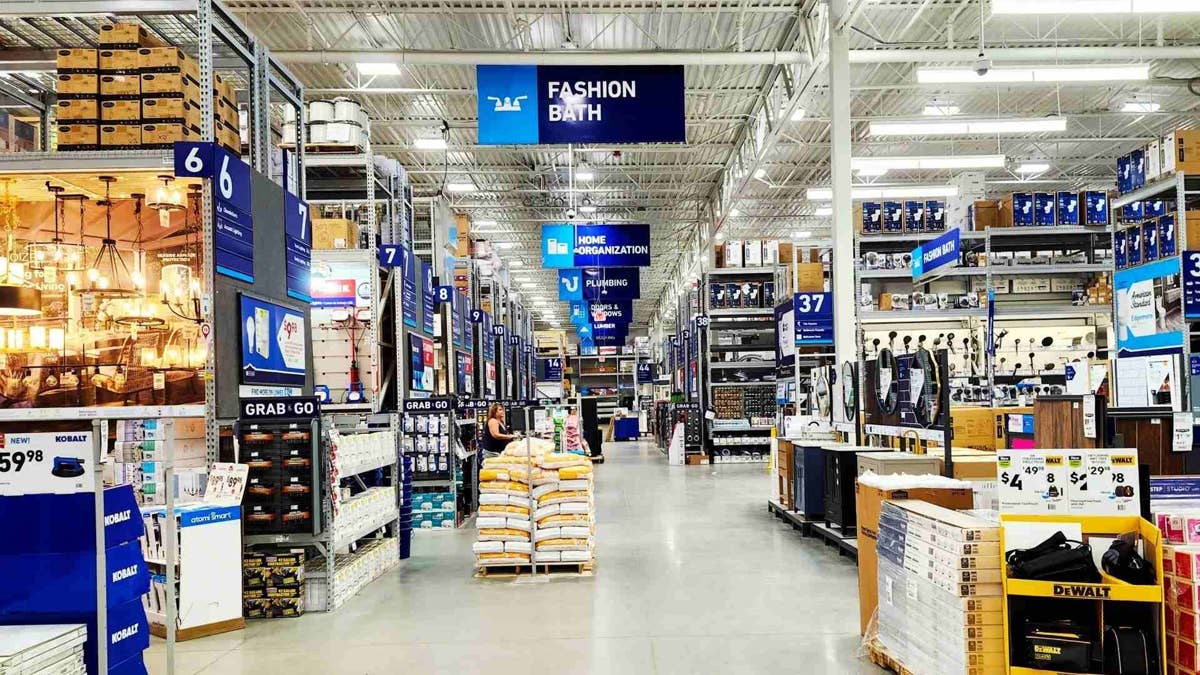 Lowe’s has seen consumers cut back on discretionary projects.
Shutterstock
Home Depot and Lowe’s see a similar trend
Both Home Depot and Lowe’s executives commented on consumers putting off some projects during their most recent earnings calls.
“Larger discretionary projects remain under pressure,” Home Depot Executive Vice President of Merchandising Billy Bastek said during the chain’s second-quarter earnings call.
Lowe’s CEO Marvin Ellison blamed the cutbacks squarely on one thing during his company’s second-quarter earnings call.
“Elevated fuel prices combined with broader economic uncertainty have influenced household budgets. Customers continue to tell us that they are being cautious about their spending and prioritizing where and when they invest in their homes. As a result, discretionary DIY demand remains under pressure,” he said,
Gas prices remain high
“The national average for a gallon of regular gasoline fell 6 cents in the last week to $4.27,” AAA shared on Oct. 22.
But, high crude oil prices are preventing steep declines at the pump.
“Currently, the price for a barrel of crude oil is nearing $100 per barrel amid instability in the Strait of Hormuz. This month is poised to set a record as the most expensive October ever for gas prices following similar records set in August and September of this year,” the agency said.
- Oct. 22 National Average: $4.27
- One Week Ago: $4.33
- One Month Ago: $4.47
- One Year Ago: $3.06
“The hit to real disposable income from higher gas prices tends to weigh in particular on spending on cars and discretionary goods and services,” Goldman Sachs economist Jessica Rindels wrote in an April note.
Shoppers are being more careful
“Consumers haven’t stopped wanting things. They’ve just gotten better at talking themselves out of buying them,” RTM Nexus CEO Dominick Miserandino told The Street.
He thinks that consumers have shown restraint because they know they have bills to pay.
“People still want the new television, the nicer shoes and the weekend getaway, but unfortunately, the electric company and the grocery store get first dibs on their paycheck. When housing, insurance and groceries take up more of the budget, everything else has to earn its place in the shopping cart,” he added.
It’s a situation, he noted, that’s hitting some retailers harder than others.
“Consumers are still shopping, but they’re giving themselves fewer reasons to buy. That’s a tough environment for retailers that depend on impulse purchases, because consumers aren’t necessarily losing their appetite for spending. They’re just running out of room to indulge,” Miserandino shared.
Maurie Backman, a freelance retail and personal finance with over 20 years of experience, thinks it comes down to people simply not having the cash for extras.
“Given high costs, consumers have to make tough choices. That could mean maxing out the budget on essentials and skipping extras. It will be interesting to see how far consumers are willing to stretch themselves as the holidays approach. Some folks may be cutting back now to make room for added spending in late November and December,” she told TheStreet.
Related: Walmart gets aggressive when it comes to holiday sales
