
Another round of 13Fs has landed, and I figured Jim Simons’ old firm would be a tough act to follow.
Renaissance Technologies nearly dumped its entire Nvidia (NVDA) stake while disclosing $2.24 billion in combined Micron Technologies (MU) and SpaceX holdings (SPCX).
Then I opened George Soros’ firm’s filing. One share count made me go back and check the previous quarter.
For those unfamiliar, Soros is a legendary investor, making his name betting against the British pound in 1992. His Quantum Fund compounded at nearly 32% annually from 1969 through mid-2000, as reported by the New York Times.
Behind those massive bets was an idea he called reflexivity. According to him, investors’ beliefs can change the very businesses and economies they’re betting on. As Soros put it, “financial markets always present a distorted picture of reality.”
Dawn Fitzpatrick now runs the show as CEO and chief investment officer, and the firm’s latest filing made me look twice at a comeback that’s been building for months in Intel stock.
The chipmaker was up around 62% for the year by Nov. 13. But what caught my eye about the $340 million stake is that the firm bought in a quarter when Intel was going the other way.
Soros’ firm loaded up on Intel while the stock slid
Intel’s comeback has been nothing short of extraordinary, with the stock up more than 50% for the year, buoyed by strong demand for its processors powering AI servers.
However, in the quarter when Soros Fund Management built its stake, the stock actually fell around 14% from June 30 to Sept. 30, as the firm increased its holdings from 100,000 shares to 2.83 million. The position grew from $14 million to $340 million because the firm held more shares, 13F.info noted.
More Intel:
- Bank of America pulls its Buy on Intel as the comeback slips
- Jim Cramer issues ‘falling knife’ warning on top chip stock after Intel’s outlook
- Intel CEO reveals a PC problem as Goldman cuts stock target
Perhaps Intel’s Oct. 29 earnings report showed why investors could see a comeback without a clean recovery.
Q3 sales jumped 21% to $16.5 billion, with Data Center and AI sales up 78% to $7.3 billion. At the same time, though, Client Computing and Physical AI sales fell 5% to $8.1 billion, and Intel forecast Q4 sales of $15 billion to $16 billion, below what it had just reported.
The server business was growing fast. The rest of the turnaround wasn’t moving at the same speed.
CEO Lip-Bu Tan put it this way in a Yahoo Finance interview: “It’s a multi-year turnaround, and I’m in the middle of it, but I think I feel called to do this.”
So clearly there’s still work to do for Intel, but it seems the Wall Street’s finest have a ton of conviction in its snapback over the next few years.
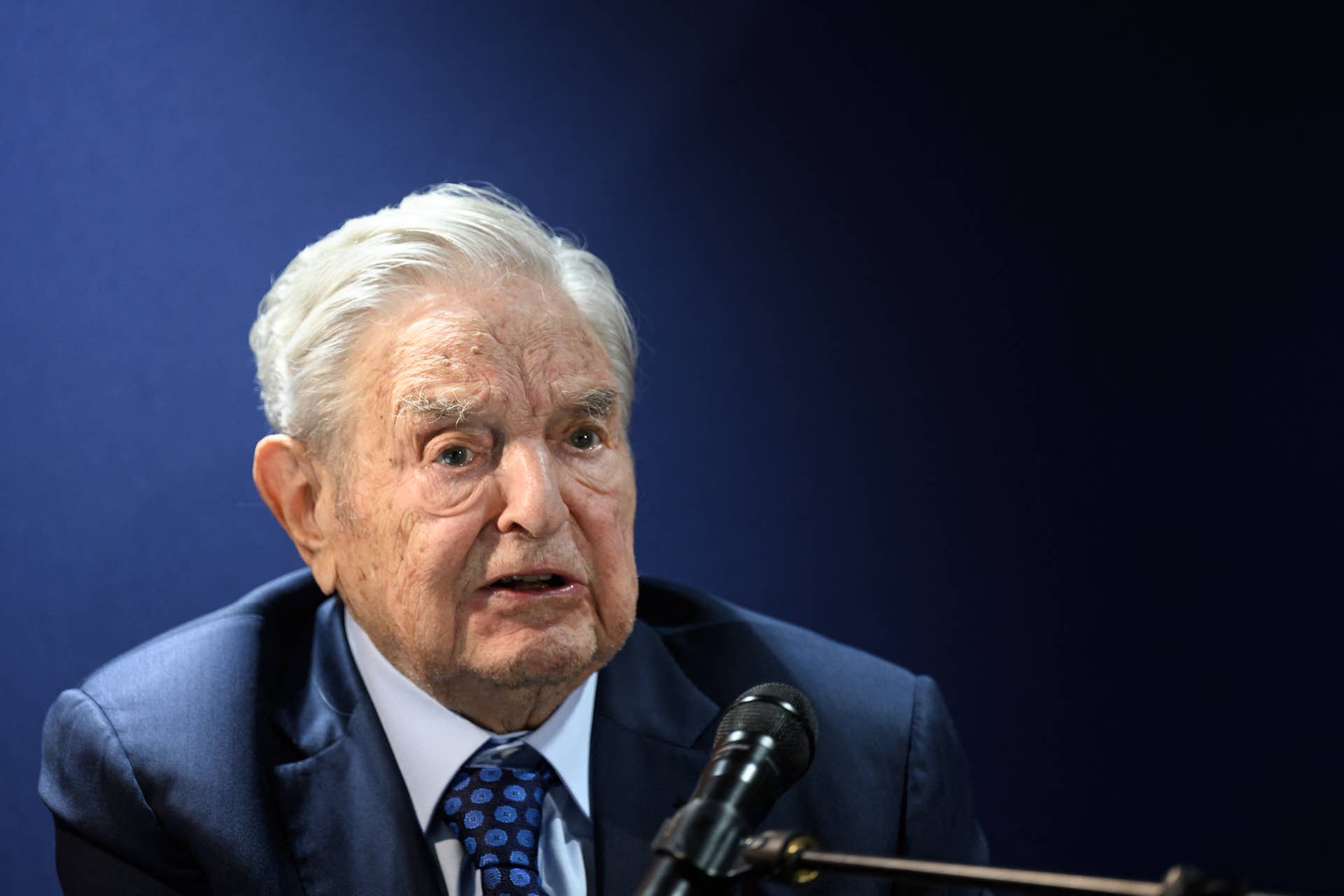 George Soros’ firm reported a $340 million Intel stake in its 13F.
FABRICE COFFRINI / Getty Images
Beyond Intel, Soros’ firm ended Q3 with $181 million in Datadog and Meta
Datadog was perhaps an even bigger headline than Intel.
Soros Fund Management upped its stake from 9,662 Datadog (DDOG) shares to 258,747, a nearly 27-fold increase that left it with a $70.9 million stake at quarter-end. Additionally, it nearly septupled its Meta Platforms (META) share count, from 21,776 to 151,505, ending September with a position valued at $109.9 million, as reported by 13F.info.
Much of the hype around Datadog stems from the rise of agentic AI and “AI at work.”
Someone needs to figure out why an application is slow, why an AI agent is failing, or if it’s doing something it shouldn’t. Datadog sells the software that enables teams to effectively spot and fix those problems.
In August, it posted 36% revenue growth and said customers were already using its tools to monitor and secure AI applications. Then, after the quarter closed, Datadog reported $1.20 billion in Q3 sales, above the high end of its August forecast.
On the flip side, Meta’s case is behind with the ad business it already has. In July, the company reported that it had shown 14% more ads than a year earlier and charged 12% more per ad on average.
Selling those ads at higher prices allows Meta to charge its customers for better recommendations rather than for using its apps. Its October results, though, showed the other side of the bet.
Revenue jumped 26% to $64.6 billion, yet Meta reported negative free cash flow of $2.12 billion after capital spending and finance lease payments. So the big question now is whether Meta can justify the buildout, given the incredible CapEx requirements.
The other trades make it hard to read this as a blanket bet on AI. The firm added to Micron and reported new positions in MarketAxess and SK Hynix depositary shares, but cut its Nvidia share count by about 19%, retaining a $196.1 million common-stock stake.
It also trimmed Apple and ON Semiconductor, while Electronic Arts and Nebius dropped out of the filing.
What to watch before buying Intel’s comeback
I believe the firm’s Q3 13F is an excellent starting point for research, but not exactly a buy list.
For Intel stock investors specifically, there’s a lot riding on the next earnings report. I’d look past server revenue and check data center operating profit and companywide free cash flow. If server sales keep climbing but cash flow doesn’t improve, it would be wise to look at what Intel’s spending on factories and whether the PC slump is still eating into the gains.
Moreover, it’s important to apply a different test to each AI stock. For Datadog, you need to watch if customers spend more as they put AI applications into production. For Meta, compare the extra cash its ads generate with what it spends on infrastructure.
Before buying any of them, it’s imperative to ask what growth the stock price already assumes and what happens to earnings if that growth falls short.
Related: Intel CEO’s warning offers a 2027 signal for Micron investors
