
Record 401(k) balances in Fidelity’s Q2 2026 retirement analysis are the clearest sign yet that American savers have stopped fighting the discipline Warren Buffett has preached for decades.
The quarter’s standout numbers: a 14.4% combined contribution rate, 81% match capture, and participants who stayed invested through the early-year drawdown point to a stronger culture of long-term investing.
Also read: Fidelity says $1 million won’t save your retirement
Average balances across 401(k)s, 403(b)s, and Individual Retirement Accounts (IRAs) reached record highs in the second quarter of 2026, according to Fidelity’s analysis of 25.8 million participants.
The headline numbers tell a behavioral story: steady contributions, full match capture, and participants who did not sell during the volatility.
Fidelity’s record savings rate nears the firm’s 15% benchmark
Fidelity’s second-quarter (Q2) 2026 retirement analysis reported that the combined employee and employer contribution rate held at 14.4%, within striking distance of the firm’s 15% benchmark for someone saving from age 25 through retirement at 67.
That rate combines a 9.6% average employee deferral, the highest the firm has ever recorded, with an average employer contribution of 4.8%.
More than 81% of 401(k) participants saved enough during the quarter to capture their employer’s full matching contribution, Fidelity confirmed, a direct measure of whether workers are leaving money on the table.
Sharon Brovelli, President of Workplace Investing at Fidelity Investments, said in the Q2 release that disciplined saving habits and employer plan design are shaping stronger retirement outcomes nationwide.
<strong>The combination of record account balances, strong savings behaviors and effective plan design tells an encouraging story about how Americans are approaching retirement,</strong>
The analysis found that savings behavior extended beyond workplace plans, with IRA contributions jumping 36% from the same quarter a year earlier.
Millennials drove the strongest gains of any generation, posting a 26.1% year-over-year increase in average 401(k) balances as younger workers leaned into their employer plans, Fidelity reported.
Buffett’s 2013 directive for his wife’s trust defines the index fund approach
The approach Fidelity’s record-setting savers followed mirrors a directive Buffett outlined in his 2013 letter to Berkshire Hathaway shareholders.
He directed the trustee of his wife’s trust to allocate 90% to a very low-cost S&P 500 index fund, with the remaining 10% to short-term government bonds. He suggested Vanguard’s fund specifically.
More Retirement:
- Vanguard flags a retirement fear built into 401(k) plans
- Social Security just changed for anyone nearing retirement
- Suze Orman has a serious retirement warning for 2027
His reasoning centered on decades of evidence showing that most professional managers fail to beat a broad index. Buffett argued that the trust’s results would likely surpass those of pension funds, institutions, and individuals who rely on high-fee managers.
Buffett had already made the same case publicly years earlier, agreeing in 2007 to a $1 million wager that an S&P 500 index fund would outperform a handpicked basket of hedge funds over the following decade.
The Vanguard S&P 500 (VOO) fund gained a compounded 7.1% annually over the 10 years of the bet, while the five fund-of-funds averaged roughly 2.2%, Buffett reported in his 2016 letter to Berkshire shareholders.
S&P Global’s SPIVA (S&P Indices Versus Active) scorecard has extended that picture every year since. The most recent SPIVA U.S. Scorecard showed 67% of actively managed large-cap funds trailing the S&P 500 in the first half of 2026, and over the 15-year stretch ending in December 2025, the underperformance rate climbed to roughly 90%.
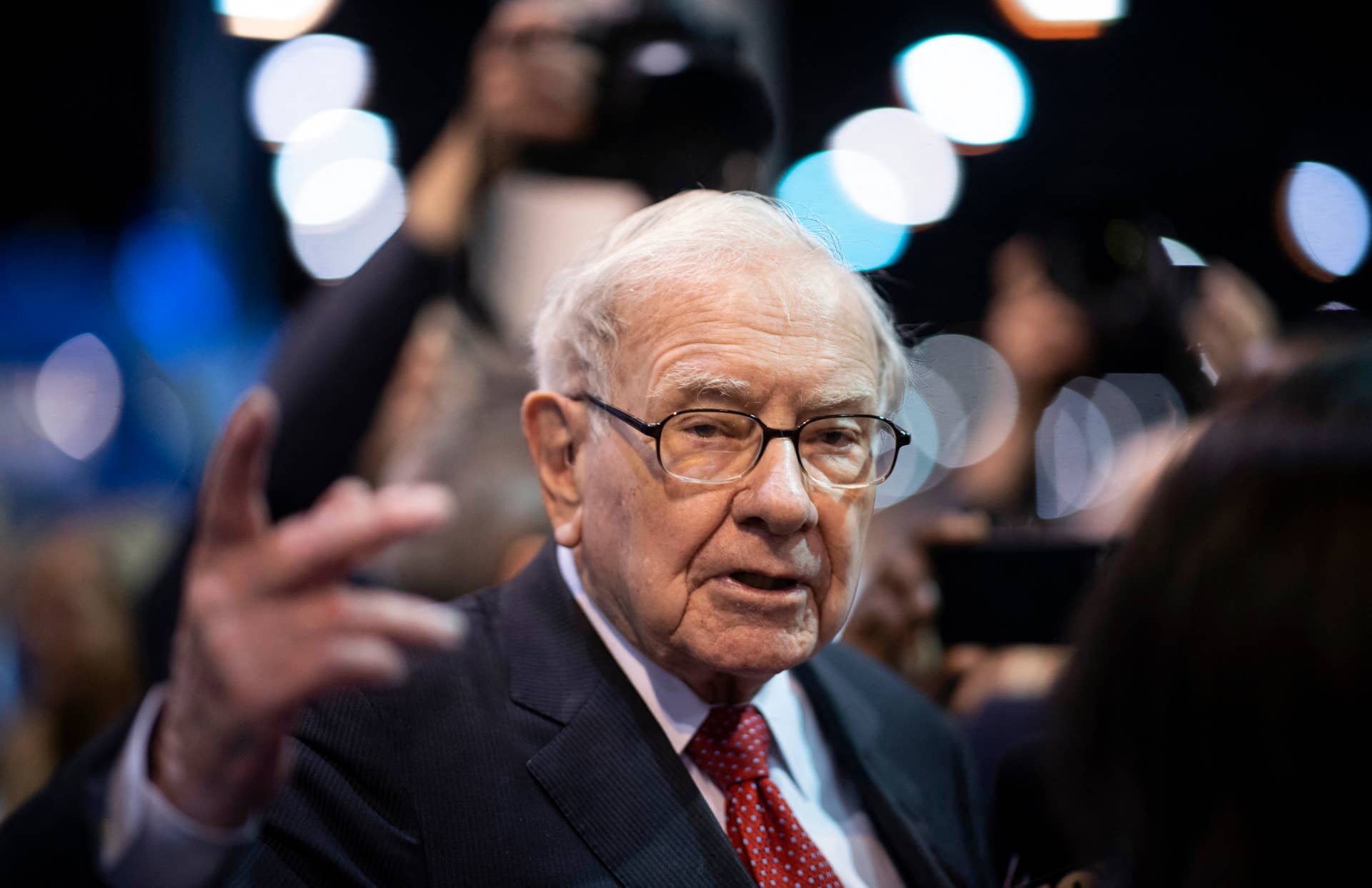 Warren Buffett’s 90/10 portfolio strategy highlights why low-cost S&P 500 index funds can outperform actively managed investments over time.
JOHANNES EISELE / Getty Images
Fidelity’s Q2 balance data and the match gap that persists
Even with a record 81.2% match-capture rate, roughly 18.8% of eligible participants still did not contribute enough to capture their full employer match, Fidelity’s Q2 analysis showed.
More than 85% of 401(k) plans that the firm administers offer some form of matching contribution, making unclaimed match dollars one of the most common retirement missteps the firm tracks, Fidelity noted.
The most common formula at Fidelity-serviced plans provides a dollar-for-dollar match on the first 3% of salary, then 50 cents per dollar on the next 2%.
On the investment side, younger workers are shifting toward Roth 401(k) accounts, with 21.9% of Generation Z and 20.1% of Millennial participants choosing the after-tax option, Fidelity stated.
That choice locks in tax-free withdrawals in retirement, a benefit that grows more valuable the longer the account compounds.
How to act on Fidelity’s data and Buffett’s index fund framework
For workers below the 15% combined target, Fidelity recommends raising the contribution rate by 1 percentage point with each pay raise to close the gap gradually.
Pairing that saving discipline with a low-cost S&P 500 index fund, the allocation Buffett’s 2013 letter named specifically, gives savers both the behavior Fidelity’s data rewards and the allocation SPIVA’s long-run scorecard has validated in every annual update.
The savers who combined steady contributions and full match capture are the ones posting the highest balances in Fidelity’s quarterly tracking, the Q2 analysis confirmed.
Related: Fidelity discloses major shift in retirement investing
