
Goldman Sachs is betting that the worst of the tech rout has made stocks worth buying again. The bank expects the S&P 500 to climb to 8,700 over the next 12 months, more than 14% above its last close, arguing that cheaper valuations after the recent selloff should keep returns positive even as profit growth cools.
Wall Street could use some good news. On November 5, a Democratic sweep in the midterms sent the S&P 500 down 4.4%, while the Nasdaq Composite had its worst session since April 2025, sliding into correction territory as traders worried the AI buildout would slow and become pricier.
Also read: Citigroup CEO offers bold S&P 500 prediction
Jed Ellerbroek of Argent Capital Management called it “the capitulation phase for the data center capex beneficiary stocks,” but said “the magnitude of the moves is outsized,” as reported by Fox Business. Goldman sees the selloff differently, treating the drop in valuations as an entry point rather than a warning sign.
Why Goldman thinks cheaper stocks can keep climbing
Valuation sits at the heart of Goldman’s case. The S&P 500 was last trading at around 17.7 times its 12-month forward earnings, well below its recent peak of more than 23 times.
Peter Oppenheimer and his team see that reset as an opening rather than a warning. In the bank’s 2027 outlook, they wrote that “equities have de-rated sharply,” and that with more attractive valuations, stocks should keep rising, though with plenty of volatility along the way, Yahoo Finance reported.
Goldman Sachs also expects the wider backdrop to help, pointing to positive but slower economic and earnings growth along with lower bond yields and inflation. “From here, we expect equities to generate positive returns, albeit with higher volatility than in recent years,” the bank said in its November 12 note, according to Reuters.
The picture looked very different earlier this year. Earlier this year, Goldman held a year-end target of 7,600 while the index traded near 21 times forward earnings, above its 10-year average of about 19.1 times. Today’s multiple sits below that long-run average, a sign of how much froth the selloff has already squeezed out, according to FactSet.
Earnings growth is set to slow as AI spending peaks
There is a catch. Goldman thinks profit growth will cool sharply next year, with growth rates in global markets likely to at least halve in 2027. In the U.S., the bank sees earnings growth dropping to 11% from 36%, citing slower hyperscaler capital spending as a likely reason, Reuters reported.
The bank links that slowdown directly to the AI cycle. “Our economists expect a slowing in nominal GDP growth rates in 2027 as the AI investment boom peaks,” the strategists wrote, adding that “fading US tariff effects and easing AI-related supply pressures” should help bring inflation down, as reported by Yahoo Finance.
Not every strategist is as cautious on profits. CFRA’s Sam Stovall has projected S&P 500 earnings growth of about 31.7% for 2026, easing to around 16.8% in 2027, which would still be well ahead of Goldman’s estimate.
Goldman also sees some relief coming from energy prices. The bank expects Brent crude to fall from around $100 a barrel at the end of 2026 to $78 by the end of 2027, which would take some pressure off consumers and companies alike.
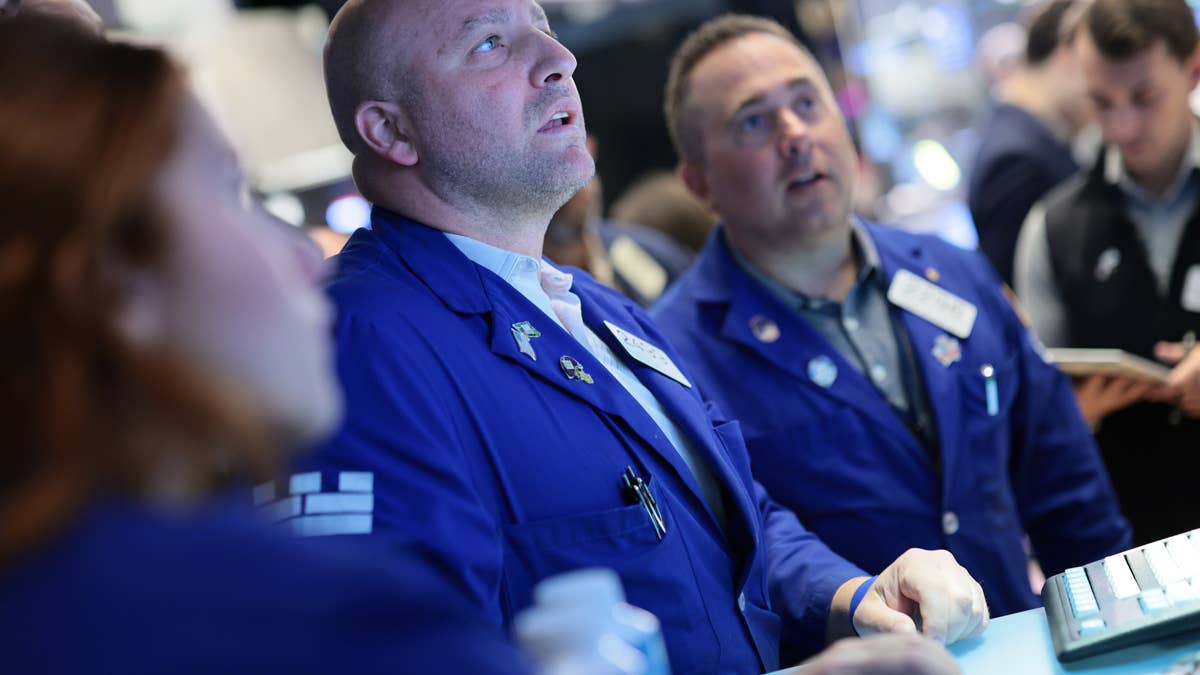 Goldman Sachs is betting that the worst of the tech rout has made stocks worth buying again.
Michael M. Santiago / Getty Images
Midterm shock and Nvidia turmoil rattle the AI trade
The midterm results hit the AI supply chain first. Data-center and power stocks slid after Democrats won control of Congress, while hyperscalers such as Amazon and Microsoft rose.
“The hyperscalers already have data centers, so those assets are more valuable now because there’s not going to be an overbuild of data centers,” said B. Riley Wealth’s Art Hogan. Siebert Financial’s Mark Malek put it more simply: “The AI buildout will become more expensive, not disappear,” according to Reuters.
More Wall Street:
- Arista Networks stock gets fresh backing from Jim Cramer and Wall Street
- Oracle stock sinks as Wall Street confronts a $20 billion AI problem
- Wall Street just got a candid look at who is winning the AI race
The damage spread quickly. The Nasdaq 100 lost $2.3 trillion in market value in the November 5 selloff, and Bank of America began questioning whether its forecast for global data-center spending through 2028 was too optimistic.
The bank estimates Texas accounts for roughly 30% of planned U.S. data-center capacity that has not yet broken ground through 2028, and the state’s governor-elect has proposed pausing new projects, as reported by TheStreet.
Nvidia has added its own layer of worry after longtime CEO Jensen Huang quit following reports of alleged extramarital affairs. The chipmaker now trades at about 11.7 times its 12-month forward earnings estimates, its lowest level since October 2011, based on FactSet data.
Debt is another pressure point for the AI boom. Bank of America’s Michael Hartnett has warned that the buildout leans heavily on borrowing, and that if spreads on hyperscaler bonds widen sharply, forced selling could ripple across markets. Few investors seem worried, with most respondents in BofA’s October fund manager survey expecting a soft landing or no landing at all.
Where Goldman wants investors to be next year
So where does Goldman want money to go? The bank still likes the U.S. and Japan, takes a neutral stance on Asia and emerging markets and is wary of Europe. It is also steering investors toward more stable, defensive sectors, naming healthcare and utilities.
Bank of America is far more guarded. Its bull case puts the S&P 500 above 8,000 on what it calls “insatiably buy-the-dip flows,” while its bear case sees the index below 7,000 as central banks hike into a slowdown. Hartnett’s team plans to stay risk-off until oil drops below $70 a barrel, the 10-year Treasury yield falls under 4.5%, and the dollar starts to weaken, as reported by Yahoo Finance.
Hartnett’s Bull & Bear Indicator has sat in sell-signal territory since May, and he has told clients that “extreme bull positioning says reduce risk exposure.” Goldman, by contrast, sees the selloff as a chance to lean in, as long as investors are ready for a bumpier ride.
Related: Jim Cramer has a strong take on Nvidia’s next chapter
