
Strength training isn’t just for bodybuilders anymore. For many athletes, including tennis players, runners, and triathletes, weight training is an unavoidable part of building power and preventing injuries.
Despite bodybuilding regaining popularity and Americans still spending billions on health and wellness, major gym chains are quietly trimming their U.S. footprints.
As I recently reported, Planet Fitness appears to have a new customer problem as it battles slower membership growth and prepares to close five locations. Meanwhile, Anytime Fitness has seen its U.S. franchised location count decline for three consecutive years while shifting its focus to international expansion.
Now, another iconic fitness giant is quietly closing doors. Gold’s Gym, the legendary brand once synonymous with the golden era of bodybuilding, is shuttering multiple U.S. clubs as individual operators struggle to make the math work.
Gold’s Gym confirms new round of 2026 closures
Founded in 1965 by Joe Gold in Venice Beach, California, Gold’s Gym earned the nickname “the Mecca of Bodybuilding” and became famous through icons like Arnold Schwarzenegger and Lou Ferrigno and the 1977 film Pumping Iron.
The fitness giant’s latest closure decision concerns its members in Tennessee. Gold’s Gym confirmed on its website that its Downtown Chattanooga club at 210 W. 4th Street will permanently close on Dec. 15.
Read more: Costco makes a tough store closure decision
Members were given weeks of notice and told to visit other Chattanooga-area locations instead.
The Chattanooga shutdown is not an isolated incident. According to a report tracking the brand’s footprint, at least four Gold’s Gym locations across three states have closed or changed hands in 2026, reports Inc. Magazine.
The confirmed closures and handoffs include:
- Chattanooga, Tennessee: 210 W. 4th Street (closing Dec. 15, 2026)
- Waco, Texas: 250 N. New Road (changed hands to a new operator in August 2026)
- New Braunfels, Texas: 651 N. Business Interstate Highway 35, Suite 900
- Yukon, Oklahoma: 12701 N.W. 10th Street
In New Braunfels, the closure came after rival budget chain Crunch Fitness moved to take over the 42,000-square-foot shopping center space for a $6 million renovation, according to MySA.
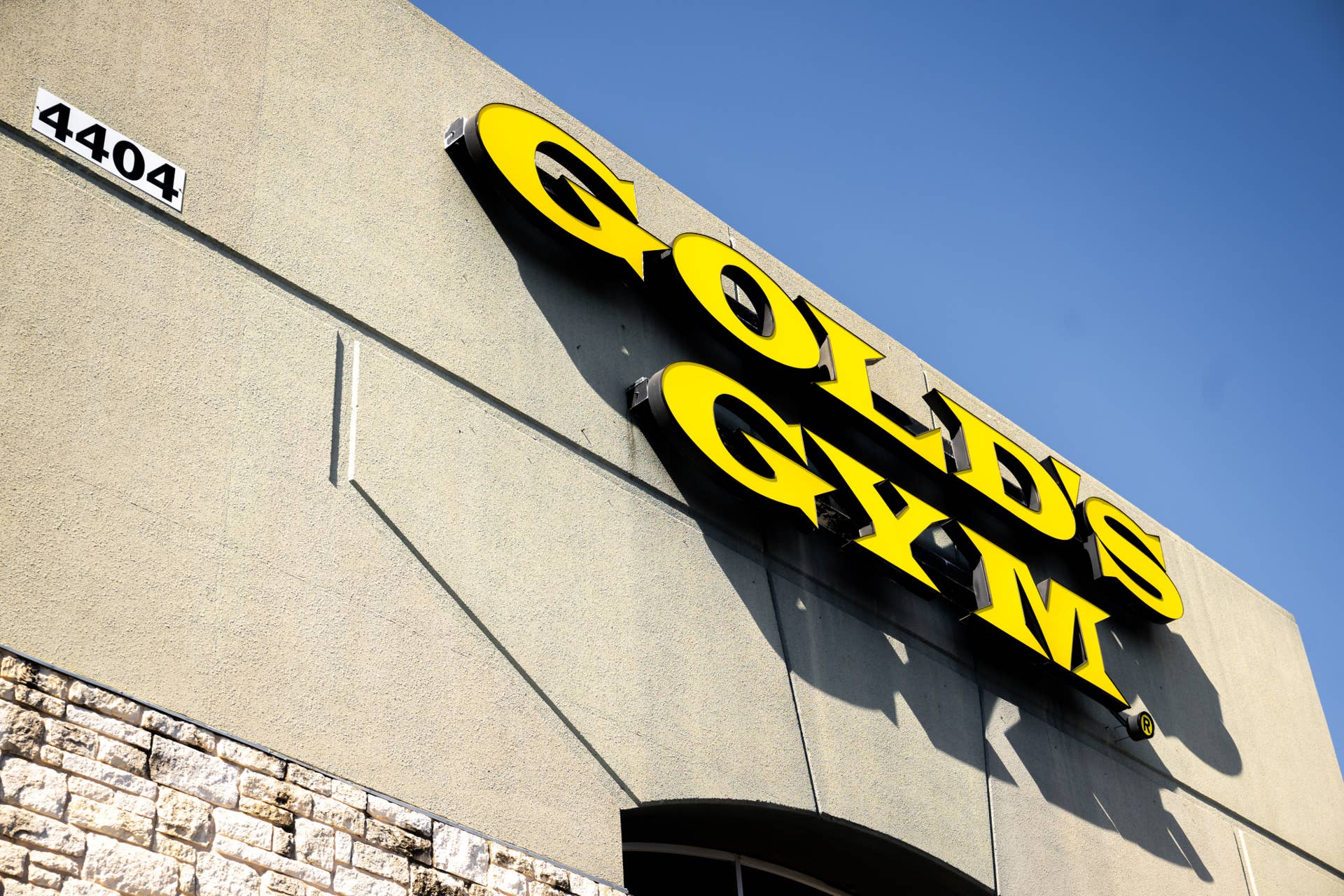 Gold’s Gym is closing its location in Downtown Chattanooga, Tennessee.
From Venice Beach icon to Chapter 11 bankruptcy
After the hit docudrama “Pumping Iron,” Gold’s Gym expanded rapidly, eventually growing into a global empire with more than 700 locations across six continents.
However, over the years, the brand faced many challenges, some of which have directly impacted its finances.
In May 2020, prolonged lockdowns during the Covid-19 pandemic pushed Gold’s Gym to file for Chapter 11 bankruptcy protection in Texas. As part of that restructuring, the company permanently closed roughly 30 company-owned gyms, according to Gold’s Gym’s restructuring statement.
Later that year, German fitness conglomerate RSG Group bought Gold’s Gym at a bankruptcy auction for $100 million, according to Business Wire.
Under RSG Group, the brand has shifted its strategy, shrinking its overall footprint. What was once a 700-plus gym network now sits at just under 600 clubs globally, with fewer than 200 locations remaining in the United States, reports Austin Fit Magazine.
There are only 68 company-owned and operated outlets worldwide, according to the outlet.
In late 2025, Gold’s Gym even divested 23 Southern California locations to competitor EoS Fitness, retaining its original Venice flagship, per SGB Media. Though the company recently signed a 15-unit development deal to return to Los Angeles and Orange County, the U.S. system remains in flux.
Franchisees face a costly real estate trap
While corporate leadership focuses on long-term brand transformation, individual gym operators are bearing the immediate financial pain.
Opening a Gold’s Gym requires an initial investment of $1.7 million to $4.5 million, including a $40,000 franchise fee, against an average annual club revenue of $1.9 million, according to Austin Fit Magazine.
That steep upfront cost means franchisees typically face a slow path to turning a profit.
“One of the things they care about most is speed to break even—the speed to profitability when it comes to building that membership base,” CEO Brad Reynolds told Austin Fit Magazine.
More Retail:
- Struggling home goods chain closing more stores
- Verizon makes changes to be more like T-Mobile used to be
- Home Depot drops generous offers as customers grow harder to win
Franchise attorneys warn that gym owners often get caught in a legal mismatch between their franchise agreement and their commercial real estate lease, reports Inc. Magazine.
“Ultimately, when a gym closes, the brand’s obligations terminate rapidly, while the franchisee’s liabilities endure,” says Anthony Lopes, managing partner at Lopes Law LLC.
Lopes noted that retail leases frequently include continuous-operation clauses. Shutting the doors early can trigger a lease default even if the owner is current on rent, leaving franchisees personally on the hook for years of lease payments, financed equipment, and prepaid member refunds.
Additionally, franchise litigation attorney Jeffrey M. Goldstein pointed out that rapid shifts in a brand’s regional footprint, like selling off two dozen California gyms, can erode local marketing support and brand awareness for the remaining franchisees nearby, reported Inc. Magazine.
What Gold’s Gym and other fitness chain closures mean for consumers
The struggles at Gold’s Gym highlight a wider squeeze happening across the fitness industry.
Americans are not abandoning exercise. Roughly 82 million people planned to spend $60 billion on fitness in 2026, according to the Health & Fitness Association. However, inflation-weary consumers are becoming much pickier about where their monthly dues go.
A September 2026 YouGov survey found that 13% of wellness-minded Americans reduced or canceled their gym memberships over the past year to save money. Meanwhile, 26.9% of fitness participants told the Sports & Fitness Industry Association that out-of-pocket costs are directly impacting their workouts.
While overall gym participation remains strong, traditional big-box gyms are losing momentum. Traditional gym cancellations rose 8% year over year in the first half of 2026, while new sign-ups dropped 9% and check-ins increased just 1%, according to the Health & Fitness Association.
Meanwhile, boutique studios moved in the opposite direction, with cancellations falling 6% and check-ins jumping 27% over the same period, according to ABC Fitness.
For traditional operators, keeping members coming through the door is an uphill battle. Industry benchmarking from the Health & Fitness Association shows that fitness clubs retain an average of 66.4% of their members annually, meaning roughly one in three cancels every year, per ABC Fitness.
In fact, gym-only members are 56% more likely to cancel than members in group or community-led formats. At the same time, 60% of gym operators say the cost of acquiring new members is rising, according to Xplor Fitness & Leisure’s 2027 growth report.
As a result, mid-tier gyms are getting squeezed from both ends. Industry analysts describe a “K-shaped” market in which low-price chains like Crunch Fitness and Planet Fitness and premium operators are pulling ahead, according to Athletech News. Boutique studios are also commanding more per member, with ABC Fitness reporting average monthly spend of $69 at studios versus $17 at enterprise gyms.
For everyday members, these closures are a reminder to look closely at the fine print before signing long-term contracts. Because many Gold’s Gym locations are independently owned franchises, refund policies and transfer rules can vary widely when a local club shuts down.
Paying month-to-month, or confirming in writing how prepaid dues are handled if a location closes, offers the best protection if your neighborhood gym suddenly locks its doors.
Related: TJ Maxx, Marshalls CEO makes holiday price promise rivals will hate
