
Elon Musk’s ambition to combine Tesla and SpaceX is moving closer to a potential deal. But the biggest question is not whether the companies can merge. It is how much existing Tesla shareholders would receive.
Five directors are negotiating a potential $3.5 trillion merger that would combine Musk’s electric-car, robotics, artificial intelligence, and aerospace companies.
The Financial Times reported Tuesday, Nov. 24 that three Tesla directors and two SpaceX directors are overseeing negotiations, with advisers working on financial models for a potential all-stock merger.
One of the world’s most valuable businesses may result from the proposed merger. But rather than being an agreed-upon acquisition price, the $3.5 trillion amount represents a possible value.
That distinction is important for Tesla (TSLA) shareholders, whose investments could be converted into shares of a much larger business with different growth prospects, capital requirements, and voting rights.
Because Musk owns both businesses, the discussions also pose a unique corporate governance difficulty.
Tesla’s five negotiators face a difficult assignment
The Financial Times reports that Jack Hartung, Kathleen Wilson-Thompson, and board chair Robyn Denholm are Tesla’s negotiating directors.
Roelof Botha and Randy Glein are SpaceX’s representatives.
According to the publication, Evercore is advising Tesla, while Morgan Stanley and Goldman Sachs are advising SpaceX. To ascertain each company’s contribution to the merged firm, the consultants are developing financial models.
A merger is being considered, as the boards have previously openly recognized.
In Tesla’s third-quarter SEC filing, the automaker said an independent committee had been established to explore expanding its relationship with SpaceX, potentially through a business combination.
Tesla emphasized that no deal was certain and that any arrangement would require the committee’s recommendation and shareholder approval.
In its own quarterly report, SpaceX offered a similar caution.
As a result, the corporations must make a decision that goes well beyond simply merging two well-known brands.
They have to decide whether the financial gains justify the price each group of shareholders would pay.
Tesla’s merger could raise a $375 billion question
How much Tesla stockholders should get in a possible stock-for-stock swap is the most important question.
More Tesla:
- Tesla stock sellers should pump their brakes, 5-star analyst says
- Bank of America resets Tesla forecast as Robotaxi miles double
- Tesla wants to sell a car with no steering wheel this year
There is a huge potential difference.
In an October Reuters analysis, Wall Street investors and analysts offered widely differing expectations for the premium Tesla shareholders might receive, ranging from little or nothing to approximately 35%.
A hypothetical 25% premium would add $375 billion to the projected acquisition value at Tesla’s approximately $1.5 trillion valuation mentioned in that article.
That amount would rise to $525 billion with a 35% premium.
These are not negotiated proposals; they are examples. When an agreement is achieved, the firms’ values will determine the exact exchange ratio.
The distinction is significant since an all-stock merger modifies the surviving company’s ownership structure.
All else being equal, Tesla stockholders would typically receive a larger portion of the merged company if they paid a higher price.
The negotiating committees must thus perform a challenging balancing act to secure favorable terms for their shareholders without jeopardizing the merger’s financial viability.
Elon Musk’s voting power creates another complication
The proposed transaction raises an exceptionally complex ownership issue.
Musk owned almost 85% of SpaceX’s voting power via super-voting shares, compared to about 20% at Tesla, according to an October Reuters story.
According to analysts quoted by Reuters, Musk may get between 57% and 58% of the merged company’s voting power under certain possible merger arrangements.
Nevertheless, their approximations rely on speculative exchange ratios. There has been no announcement about the ultimate ownership arrangement.
Therefore, a merger may alter both what Tesla stockholders own and their level of control over business choices.
Another potentially important barrier is the vote of shareholders.
Reuters reported that Tesla would need approval from a majority of its outstanding shares, not merely a majority of votes cast. That means abstentions and uncast ballots could make approval more difficult.
Any merger would also need approval from SpaceX’s major shareholder.
The governance issues may prove just as significant as the actual value.
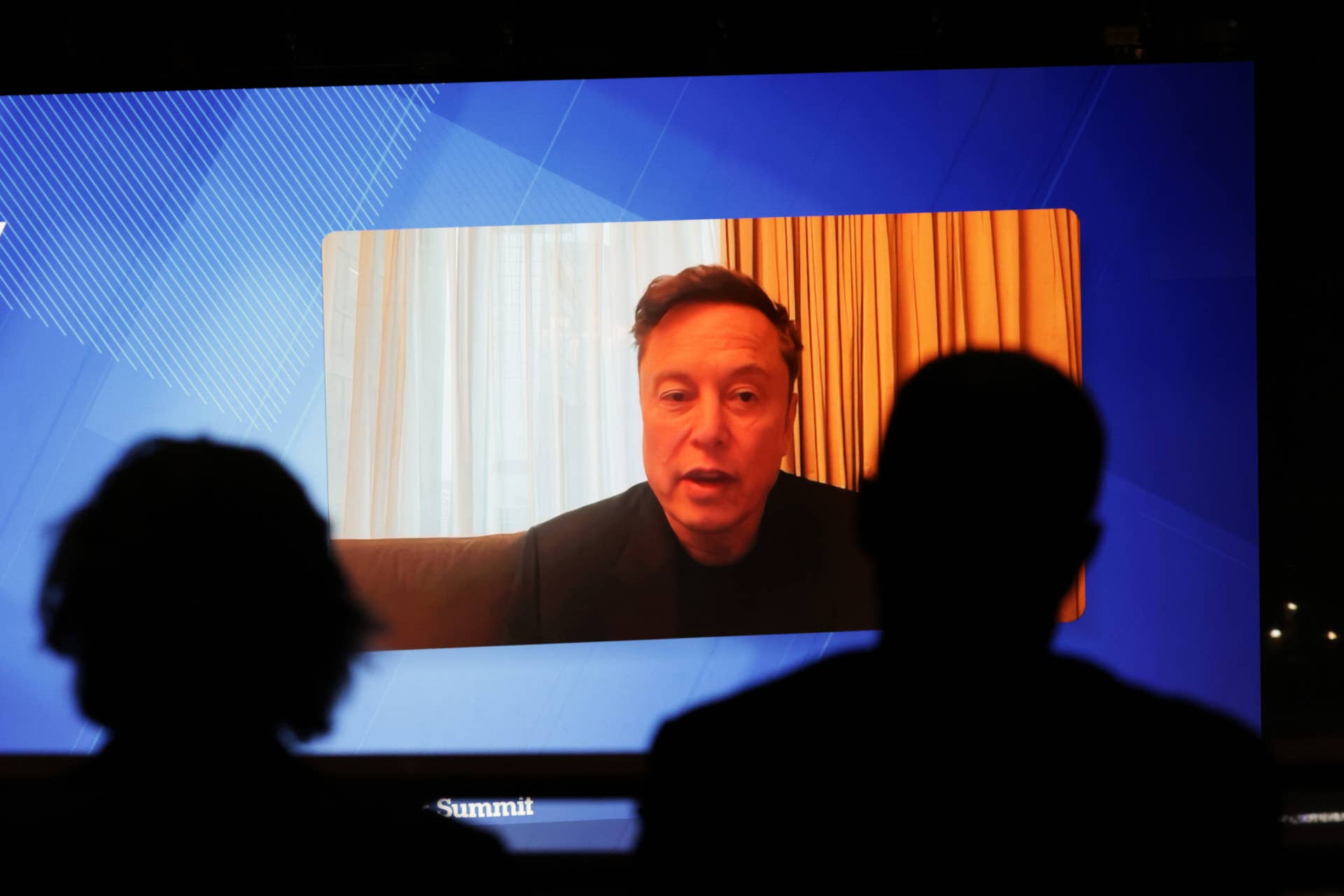 Tesla shareholders face a surprising $3.5 trillion dilemma
Tesla’s existing SpaceX relationship shows what could change
The businesses already do a lot of business with each other.
According to Tesla’s September quarterly SEC filing, the Company recognized $626 million in revenue from SpaceX’s purchases of its Megapack energy storage systems during the first nine months of 2026. That included $221 million in the third quarter alone.
Additionally, as of Sept. 30, Tesla reported $729 million in accounts receivable from SpaceX, which included reservations and billings for energy storage items that had not yet been delivered.
These numbers show that the link is not only theoretical but also practical.
A combination may streamline certain internal processes and perhaps coordinate investments in energy infrastructure, robots, and AI computing.
However, it would also give Tesla investors a closer look at SpaceX’s expensive satellite and aerospace businesses.
The businesses’ customer interactions, operational risks, and regulatory responsibilities vary.
As a result, Tesla stockholders would have to assess the financial results of a much more complicated company.
What a $3.5 trillion merger means for Tesla investors
Additionally, Wall Street is still split on Tesla’s standalone worth at the time of the proposed purchase.
HSBC analyst Michael Tyndall upgraded Tesla from Reduce to Hold and raised his price objective to $359 in a research note dated Nov.20 that TheStreet saw.
His stand-alone discounted cash flow value, however, was just $212 per share. The higher objective included a scenario in which a possible SpaceX purchase was considered.
This disparity shows how much of the discussion around Tesla’s value is based on the potential for a merger rather than the company’s current automotive operations.
The directors’ evaluation of the deal, any official shareholder-voting proposal, and a negotiated exchange ratio will be the next tangible milestones for investors.
Tesla’s annual shareholder meeting is scheduled for Dec. 3, although the company has not announced a merger vote for that meeting.
Regulatory assessments might pose further difficulties even if the businesses reach an agreement, such as examining Tesla’s Chinese manufacturing operations alongside SpaceX’s US defense-related endeavors.
Currently engaged in discussions, the five directors must decide whether the potential advantages outweigh the risks.
A combined worth of $3.5 trillion would get media attention. However, the percentage of that company that regular Tesla stockholders will eventually control is what matters most to them.
Last related-content card: The math behind the Tesla-SpaceX merger has recently shifted in Tesla’s favor.
Related: Tesla’s Cybertruck exit reveals an expensive gamble
