
Black Friday shoppers have spent years hunting for the biggest discounts. But retailers are finding a new way to make customers pay more without necessarily losing their business.
Artificial intelligence is transforming retailers’ decisions about which things to sell, how much to reduce prices, and when to end discounts. It means bargain hunters may find this year’s holiday shopping season less satisfying.
In a Nov. 23 Reuters report, pricing technology companies described how brands are increasingly using AI to reduce discounts while protecting sales.
It was suggested that one unidentified beauty company lower a planned skin care product markdown from 40% to 30%. A $100 product would then cost $70 instead of $60.
Yet even small additional expenses like this may soon mount for families already struggling with an increased cost of living.
The change also gives retailers an unanticipated opportunity. AI might help businesses maintain profitability without depending on the intense sales consumers have come to expect over the Christmas season, when Americans will spend an estimated $1 trillion or more.
AI is changing how retailers decide Black Friday discounts
To attract shoppers and move excess inventory, traditional holiday sales sometimes include large markdowns.
Retailers may take a more selective approach thanks to AI. To determine how much consumers would pay, pricing software may look at inventory, rivals’ prices, past sales, and client demand.
Retailers may learn from the data that a lesser discount might generate almost the same sales. According to Prashant Agrawal, CEO of Impact Analaytics, the data often advises fewer marketing efforts, shorter deals, and discounts on fewer goods.
For example, Reuters reported that Gap (GAP) uses technology from Impact Analytics to support markdown decisions.
Related: Amazon, Walmart, and Target’s holiday returns hide a catch
Similar technology is being tested by other manufacturers.
In a Nov. 5 announcement, First Insight said companies including Under Armour (UAA) and Family Dollar use its consumer intelligence tools to inform pricing and product decisions, although using AI does not necessarily mean a retailer has reduced its Black Friday deals.
The financial appeal is simple. Consider a $100 product that costs $40 to sell. It sells for $60 at 40% off, making $20 gross profit. A 30% discount raises the price to $70 and gross profit to $30.
If sales volumes remain the same, it amounts to a 50% increase in gross profit per item before other costs.
The $1 trillion estimate for Black Friday increases the stakes.
The National Retail Federation forecasts that November and December retail sales will increase 4.2% to approximately $1.013 trillion. However, increased spending does not always mean customers are purchasing more goods. Sales growth also depends on rising prices.
Affordability continues to be a major concern for consumers. In its October holiday survey, the Federation found that 64% of consumers were likely to wait until Thanksgiving weekend to complete much of their shopping.
As a result, a tension arises between customers anticipating more discounts and retailers attempting to preserve profitability.
AI helps retailers identify items that need significant markdowns while preventing needless cuts to those that are currently selling well. The technology can also assist merchants in lowering surplus inventory, which may become costly to keep and ultimately necessitate clearance sales.
AI pricing isn’t always tailored, however.
Instead of charging different consumers different rates for the same items, retailers may use algorithms to suggest generic pricing.
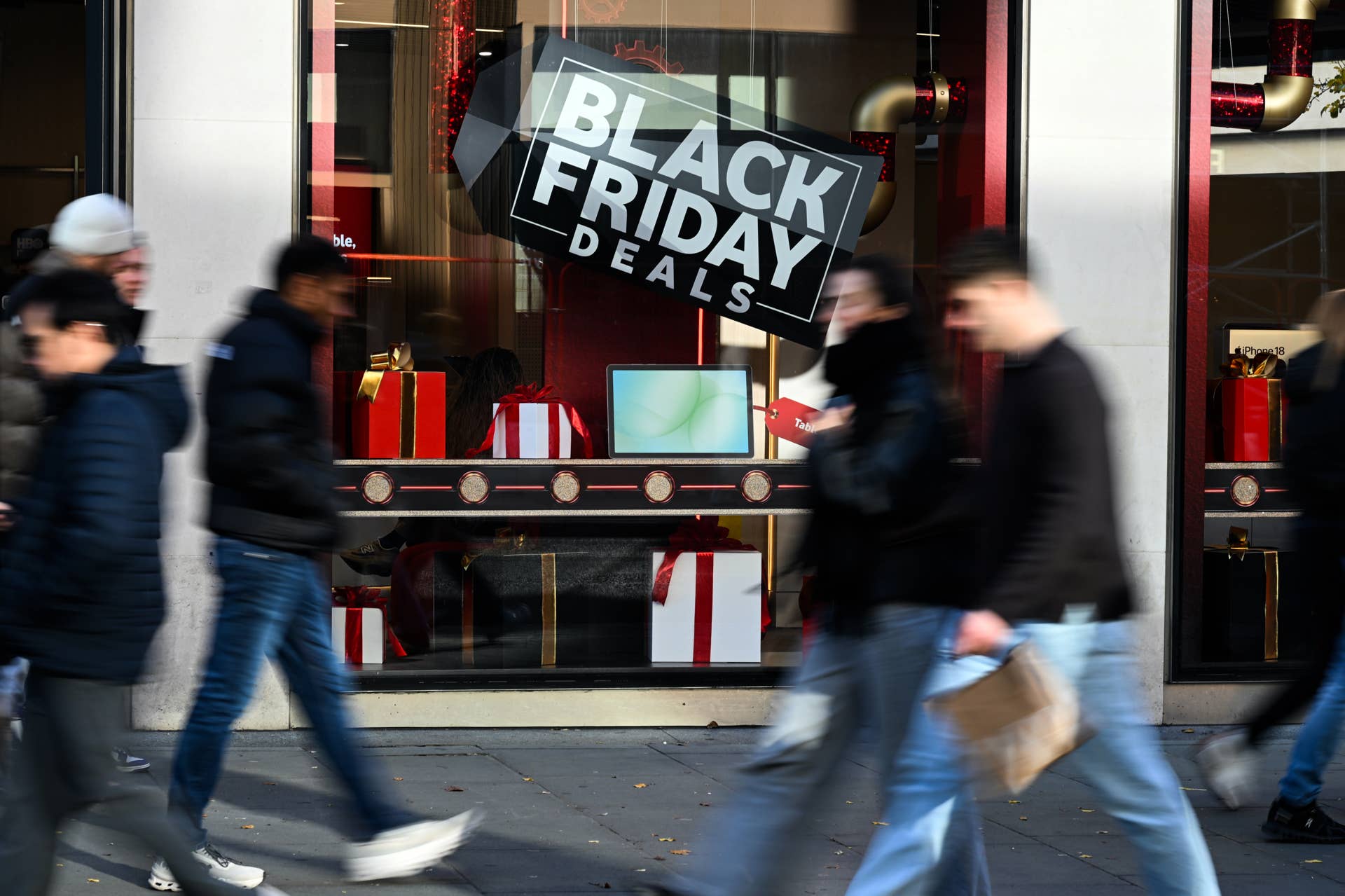 Black Friday deals face an unexpected AI calculation.
Alishia Abodunde / Getty Images
What AI pricing means for Black Friday shoppers
Whether an advertised discount translates into actual savings is the main worry for customers. Although a sale can be appealing, consumers shouldn’t assume that every Black Friday deal is a true bargain.
The Federal Trade Commission recommends comparing prices across sellers and checking return policies and other purchasing conditions.
More Retail:
- Struggling home goods chain closing more stores
- Verizon makes changes to be more like T-Mobile used to be
- Home Depot drops generous offers as customers grow harder to win
The difference is important because businesses are using more advanced technology to determine what consumers are ready to spend.
These solutions might help businesses and perhaps shareholders by reducing pointless promotions and improving inventory management. However, consumers may not receive all of the discounts they had anticipated from significant sales.
The development offers investors a new way to assess retail performance. Sustaining client demand and safeguarding profit margins may now be just as crucial as increasing sales.
The percentage shown on the sale sign is no longer the most helpful figure for customers. It is the difference between the current price and the price of the same item prior to Black Friday.
Related: Amazon’s Black Friday deals have a surprising 19% catch
