
Oil companies often own more infrastructure than they need to. Pipelines, processing facilities, and storage terminals can sit on a balance sheet for years, tying up capital that would work harder elsewhere.
Selling them to a specialist operator tends to make financial sense, as long as you can still access the services.
The math gets more complicated when midstream infrastructure comes with a debt load. Owning a stake in a midstream partnership means the partnership’s liabilities can flow onto your books, and those liabilities become a drag, whether oil prices cooperate or not.
That is the problem Chevron (CVX) just moved to resolve. The company confirmed an agreement to divest its ownership interest and general partner position in Hess Midstream LP, along with crude oil midstream assets in Colorado’s DJ Basin.
The transaction removes approximately $3.7 billion of Hess Midstream debt from Chevron’s consolidated balance sheet.
Also read: Bank of America resets its oil price target with strong warning
Removing $3.7 billion in debt changes Chevron’s financial picture
Chevron will receive $200 million in cash as part of the transaction, but the more significant financial effect is the debt deconsolidation.
Removing $3.7 billion in liabilities from the balance sheet immediately changes how the company looks to lenders and investors evaluating its financial position.
The deal does carry a cost. Chevron expects to record a one-time after-tax loss of approximately $3 billion to $4 billion at closing. That is a significant charge, but it is the price of cleaning up a balance sheet rather than an indication of operational trouble.
Chevron expects the transaction to be accretive to return on capital employed by 0.5% on an absolute basis. The company also projects the new commercial framework will enhance future earnings through improved long-term midstream contracts.
Bakken midstream costs are getting cut in half
The deal is structured as an exchange rather than a straightforward sale. In total, Chevron receives $200 million in cash and revised midstream contracts in the Bakken across both components of the transaction.
Those revised contracts are expected to reduce Chevron’s Bakken unit midstream costs by approximately 50%.
That cost reduction is the operational payoff. Midstream expenses in the Bakken include gathering, processing, and transportation, and they directly affect production economics. Cutting those costs by half improves the margin on every barrel Chevron produces in the region.
The Bakken, located primarily in North Dakota, is one of the largest shale-oil producing areas in the United States, the Energy Information Administration noted. Midstream infrastructure is critical there because producers depend on pipeline and processing capacity to move crude to refineries and export markets.
Chevron is not exiting the Bakken. It is changing the terms under which it accesses midstream services there.
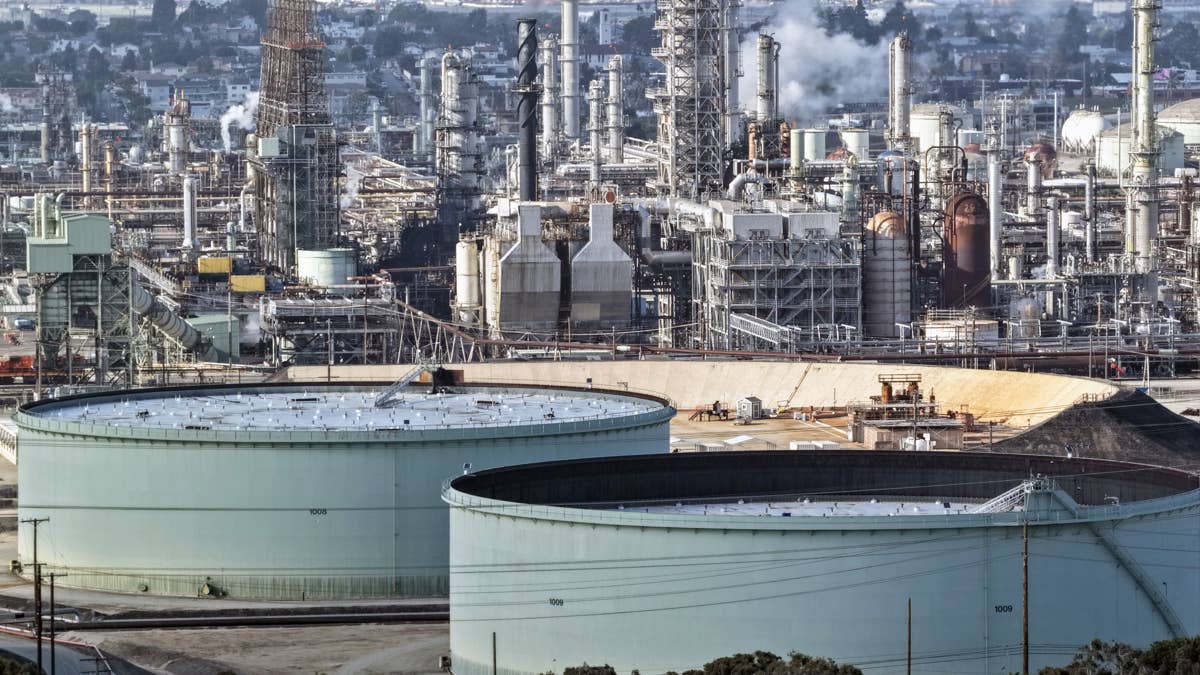 Chevron will receive $200 million in cash as part of the transaction, but the more significant financial effect is the debt deconsolidation.
How Hess Midstream LP becomes a fully independent company
The buyer in this transaction is Hess Midstream LP itself. The publicly traded partnership, which trades on the New York Stock Exchange under the ticker HESM, is acquiring Chevron’s ownership interest and GP position, giving it a path to operate as a fully independent company.
Chevron inherited its Hess Midstream position through its acquisition of Hess Corp, according to CNBC. The midstream stake came with the deal, but it was never a natural fit for an upstream-focused major.
Divesting it completes one piece of the integration work that followed the Hess acquisition.
For Hess Midstream investors, the key question is what changes commercially. The partnership operates crude oil, natural gas, and water infrastructure in the Bakken.
The deal includes new long-term midstream contracts with Chevron in both the Bakken and DJ Basin, which should help support future volumes and cash flows. The pricing terms of those contracts will matter more than the ownership change itself.
Chevron swaps DJ Basin pipelines for service contracts
In Colorado’s DJ Basin, Chevron is selling its crude oil midstream infrastructure outright and replacing it with new service contracts. The structure mirrors what the company is doing in the Bakken: trading asset ownership for contractual access to the same services.
Owning pipelines means paying to keep them running, whether volumes are up or down. Contracting for the same service moves that obligation off Chevron’s books.
More Oil & Gas:
- Goldman Sachs doubles down on oil price forecast for 2026
- Drivers lose control over gas price squeeze
- A big shift in the U.S. energy market is about to happen
What Chevron gets back is fixed pricing, which simplifies planning at the well level. The catch is that volume commitments tend to be baked into those contracts, so if production disappoints, the terms can get expensive fast.
Chevron is not leaving Colorado. Its drilling program in the DJ Basin stays intact. What it shed was the hardware sitting between the wellhead and the market, and that hardware was never the point.
The company has been moving away from infrastructure ownership for years, Energy Intel reported, concentrating its balance sheet on the assets that actually produce oil. This deal is another step in that direction, and the DJ Basin upstream position does not change.
3 numbers that will define this deal’s final value
The deal is expected to close before the end of 2026, pending regulatory sign-off.
The exact proceeds from the DJ Basin midstream asset sale have not been disclosed separately. The terms of the new Bakken and DJ Basin midstream contracts, including duration and pricing structure, will determine whether the cost savings hold up over time.
The one-time after-tax loss, estimated at $3 billion to $4 billion, will hit Chevron’s reported results in the quarter the deal closes.
Nothing here touches Chevron’s production plans in either basin. The wells keep running. What changes is the financial structure around them, and the question now is what Chevron does with $3.7 billion less debt on the books.
The company has kept its dividend growing through a difficult stretch for oil prices, and shareholders will be watching to see whether this kind of balance sheet work accelerates that trajectory or funds something else.
Related: Chevron CEO sends a strong message on oil price and the economy
