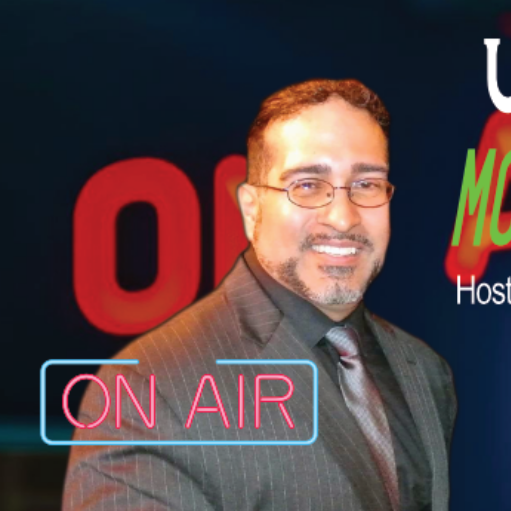
Radio host and bestselling personal finance author Dave Ramsey shares his recommended strategy for American workers who invest in 401(k)s and Individual Retirement Accounts (IRA)s, but his advice comes with a blunt warning.
“The hardest part is investing consistently,” he wrote. “in other words, behaving yourself.”
“But you should only start saving for retirement once you’re completely out of debt and have a fully funded emergency fund in place,” Ramsey added. “If you still have consumer debt lying around, pause all your investing until you pay it off.”
It’s important for me to note that while Ramsey advocates stopping all retirement savings until non-mortgage debt is cleared, many financial planners argue workers should still contribute enough to capture an employer match, as a 100% match provides an instant return that few debt interest rates can match.
Regarding 401(k) accounts, Ramsey urges people to begin contributing right away and take any available employer match. And he recommends using a Roth 401(k) if one is offered, so taxes are already paid and one’s investments grow tax-free.
“If your employer matches your contributions (and most do), that means when you put money into your account, they do too,” Ramsey wrote. “It’s essentially free money added to your investment — so take advantage of it.”
Ashley Akin, CPA at RKO Tax, told me about the negative impact of one mistake people make regarding employee matches.
“If your employer offers a 401(k) match, not contributing enough to receive the full match can mean leaving part of your compensation on the table,” she said. “Before worrying about more advanced retirement strategies, it often makes sense to understand exactly how your company’s matching formula works and what you need to contribute to take full advantage of it.”
Ramsey also suggests another strategy using a Roth IRA.
“The best tool you can use for investing beyond your 401(k) is a Roth IRA,” Ramsey wrote.
“Like the Roth 401(k), a Roth IRA is funded with after-tax contributions — meaning there’s no tax break now, but you do get tax-free growth and withdrawals later,” he added.
IRS explains 401(k), IRA contribution limits
Those contributions do have limits. They are higher for 401(k) plans than for IRAs.
“The amount individuals can contribute to their 401(k) plans in 2026 has increased to $24,500, up from $23,500 for 2025,” wrote the Internal Revenue Service (IRS).
“The limit on annual contributions to an IRA is increased to $7,500 from $7,000,” added the IRS. “The IRA catch‑up contribution limit for individuals aged 50 and over was amended under the SECURE 2.0 Act of 2022 (SECURE 2.0) to include an annual cost‑of‑living adjustment is increased to $1,100, up from $1,000 for 2025.”
Also under SECURE 2.0 rules, employees aged 60 through 63 can make larger catch-up contributions to their retirement plans.
“For 2026, this higher catch-up contribution limit remains $11,250 instead of the $8,000 noted above,” wrote the IRS.
Dave Ramsey clarifies strategy on combining 401(k)s with Roth IRAs
Ramsey shared his strategy for combining one’s workplace 401(k) with a Roth IRA. I will explain Ramsey’s thinking first, and then provide a real world scenario using my own calculations to help illustrate how to use this method with real-world dollar amounts.
To optimize retirement savings, an investor should begin by contributing enough to their 401(k) to capture the full employer match, securing an immediate return on those dollars as essentially free money, according to Ramsey.
Once that match is captured, they should focus on fully funding a Roth IRA up to the annual limit to capitalize on tax-free investment growth and the flexibility of penalty-free contribution withdrawals.
Finally, Ramsey explains, any remaining savings should be redirected back into the 401(k) to continue building tax-advantaged wealth until total retirement contributions reach at least 15% of their annual income.
More on personal finance:
- Charles Schwab, Fidelity alert workers to forced 401(k) rule
- Dave Ramsey warns Americans on 401(k)s, IRAs (he’s not wrong)
- Congress research arm sounds alarm on 401(k), IRA penalty
“When you invest in your workplace 401(k) and a Roth IRA, you combine the power of the match in your workplace 401(k) with the tax-free withdrawals and flexible fund options of a Roth IRA,” Ramsey wrote.
“That’s a winning combo.”
 Personal finance author Dave Ramsey issued a straightforward warning to 401(k) and IRA investors while outlining an essential strategy to maximize their retirement savings.
Shutterstock
Real-world 401(k), Roth IRA scenario
When following the 15% retirement guideline based on an annual salary of $75,000, I calculated that the total target investment comes out to $11,250 per year ($75,000 × 0.15).
First, you would secure the entire employer match by allocating 4% of your salary — or $3,000 — to your 401(k) ($75,000 × 0.04), leaving $8,250 remaining toward your goal.
Next, maximize your Roth IRA by contributing the full $7,500 annual limit, taking advantage of post-tax growth and penalty-free principal withdrawals, which leaves a balance of $750 to be invested ($8,250 − $7,500).
Finally, redirect that remaining $750 back into your 401(k) (bringing total 401(k) contributions to $3,750, or 5% of pay) to hit the complete $11,250 annual savings target.
“Bottom line,” Ramsey wrote. “Your 401(k) and a Roth IRA complement each other really well.”
“Put them to work together to help you make the most of the stock market’s growth, limit your risk, and save for a secure future.”
This article is for informational purposes only and should not be construed as individualized tax or investment advice.
Related: Dave Ramsey warns 401(k), IRA savers on IRS 5-year rule
