
The Trump administration has been trying to close the chip gap with China for most of 2026. Export controls on semiconductors got tightened. Then a new problem surfaced. Advanced chips were getting into Chinese hands anyway, through foreign data centers renting AI compute access to Chinese firms. A new licensing rule came out of the Commerce Department days before Nov. 20. It targeted that specific gap. What President Trump said at the White House press conference that day targeted something much bigger.
He went in front of reporters without having run his main announcement by his own team first. He acknowledged that himself at the podium. The backdrop was a three-day trip to the Philippines and China, a trilateral meeting with Chinese President Xi Jinping and Russian President Vladimir Putin, and a conversation about AI that apparently raised concerns the administration had been sitting on.
The president told reporters the administration would not allow U.S. companies to build data centers in other countries. “We’re not going to allow companies to build data centers in other countries,” he said, raising the prospect of a “tremendous tax” or other penalties on companies that try. There is no rule behind it, no defined tax rate, no list of covered countries, and no definition of what qualifies as a data center under the threat. The companies spending billions on AI infrastructure around the world now have a problem they cannot size.
What data centers have to do with the chip war
The Commerce rule addresses something specific. Nvidia (NVDA) chips built to stay inside U.S. export limits have been reaching Chinese companies anyway. Foreign data centers bought the chips. Chinese firms rented compute access from those data centers. No chip physically crossed into China. The computing capacity did. The licensing rule requires data centers to get U.S. government approval before selling compute access to China-headquartered companies.
Also read: Morgan Stanley sends a strong signal to Google stock investors
The president pushed past that at the press conference. His argument was that U.S. companies building data centers abroad might hand China advanced computing capacity no matter what the chip rules said, just by building in the wrong place. He said China would otherwise “seize all of them.” The Biden administration had looked at similar restrictions. Trump scrapped them when he took office. After the Nvidia loophole came to light, controls came back in a different form. The Nov. 20 threat is a third move in the same fight.
Nobody has written that rule yet. The administration announced the threat before figuring out what it covers. A chip can be tracked through a supply chain. A data center sits on a piece of land, draws from a local power grid, runs software that gets changed regularly, and employs people who come and go. It is not obvious where the line gets drawn, and officials at Commerce have not said.
Trump also said at the press conference that he and Xi had agreed to work on “joint guardrails” for AI, without offering specifics on what that cooperation covers or how it would interact with U.S. efforts to cut off China’s access to advanced computing.
What the cloud industry stands to lose
Amazon (AMZN), Google (GOOGL), Microsoft (MSFT) and OpenAI have pledged billions to build data centers overseas, drawn by cheaper land, cheaper power and lax local regulatory requirements. Enterprise customers in Europe need their data to stay in Europe. Customers in Southeast Asia need local latency. Regulators in a growing number of countries require local infrastructure as a condition of doing business there. A restriction on building abroad does not just raise costs. It cuts off the ability to compete in some markets at all.
Companies trying to plan around the announcement do not have enough information to go on. Land acquisition for a major data-center campus takes months before a shovel goes in. Construction runs another year or more after that. A project already in permitting in Germany or Singapore is not easily paused. Developers that stop now lose their place in interconnection queues and local approval processes that took years to get into. No one making a capital decision this quarter has enough information to make it cleanly.
At the same press conference, Trump praised Anthropic, describing it as the first frontier AI lab to list shares publicly. The New York Times reported it as the largest-ever IPO in history. The White House appeared to be celebrating the domestic AI industry with one hand and threatening to restrict how that industry operates globally with the other.
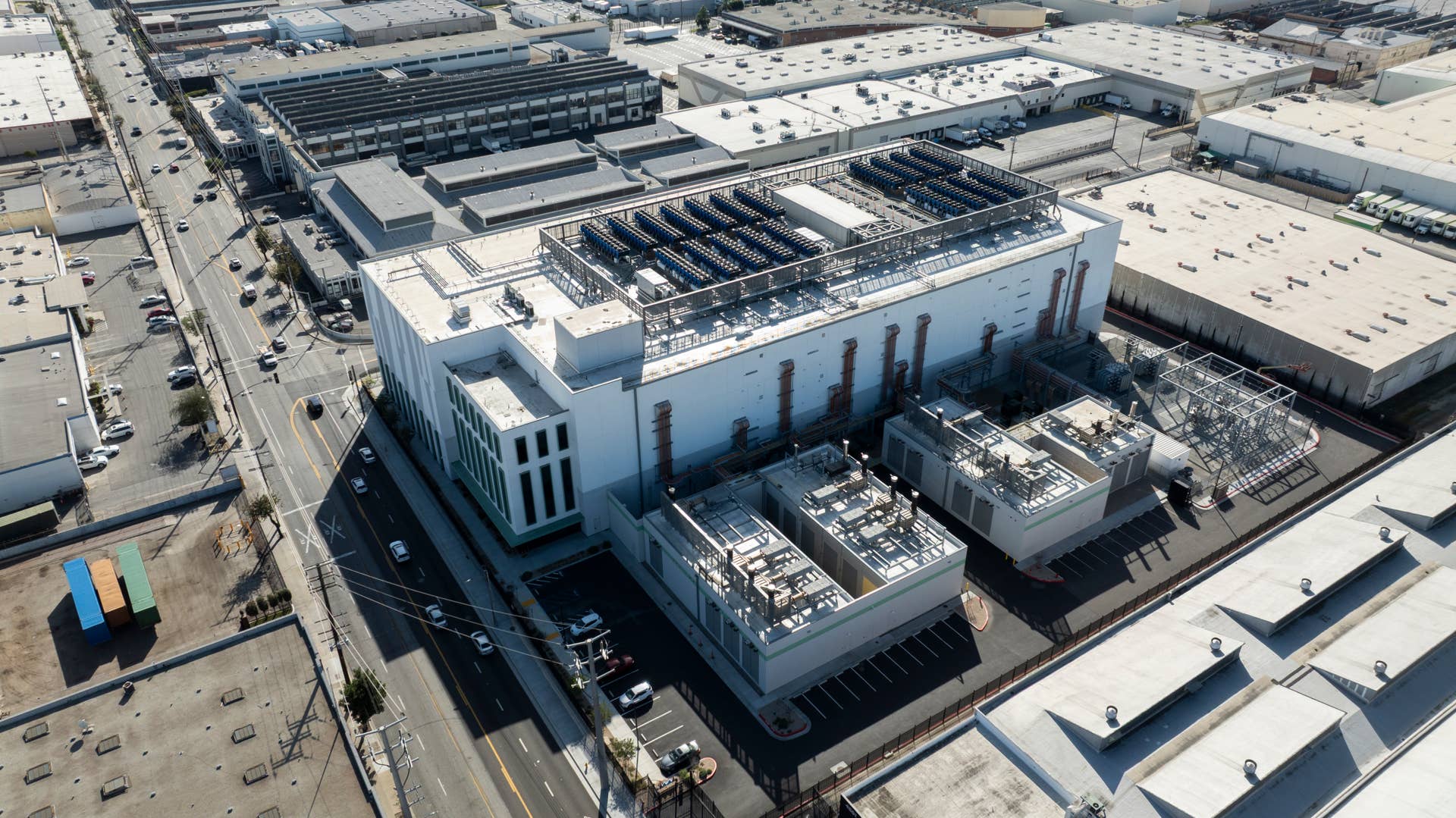 There are companies in the U.S. that want this policy to pass. Data-center developers, construction firms, utilities, and power-equipment suppliers that work domestically stand to pick up business that would otherwise go abroad.
Why the announcement leaves more questions than answers
Trump said he had not previewed the data-center idea with his own team before announcing it. That piece of information is relevant to anyone trying to assess how close this is to becoming an actual policy. Announcements that arrive at press conferences ahead of internal review tend to change shape once agencies, lawyers, and industry lobbyists have worked through them. What the administration eventually issues could look substantially different from what was said Nov. 20.
Trump put a tax at the center of the threat. He raised the prospect of a “tremendous tax” on companies that build abroad, though he gave no rate, no threshold, and no timeline. Beyond the tax, the administration could also restrict federal contracts, tie export licenses to overseas construction decisions, or lean on national-security review authority over foreign investments. Using any of those tools means first defining what a data center is for purposes of the rule, which countries fall in scope, and whether U.S. allies get carved out. That work has not started.
More Nvidia:
- Microsoft just gave Nvidia shareholders a reason to pay attention
- Nvidia has a stake in SpaceX that came from an unexpected place
- Nvidia’s $12.9 billion deal could shape the AI apps you use
A narrow policy aimed at adversary countries at specific compute thresholds could redirect capital toward domestic construction without breaking cloud operations in Germany or Japan. A broad one would hit every major U.S. tech company with meaningful international cloud revenue. The press conference gave no indication of which way the administration is heading. Companies got a threat. The rest is still open.
The domestic opportunity inside the threat
There are companies in the U.S. that want this policy to pass. Data-center developers, construction firms, utilities, and power-equipment suppliers that work domestically stand to pick up business that would otherwise go abroad. The United States is already short on the land, power, and construction capacity that AI companies are chasing. Trump signed an executive order to speed up domestic data center approvals, another signal the administration wants more of that investment to land at home.
The uncertainty is part of it now, regardless. A tech company choosing a site for a new campus has to factor in whether building in Europe or Southeast Asia could expose it to future penalties. A domestic site does not carry that question. Some projects that were heading overseas will end up in the U.S. without a single rule being written.
The Nov. 20 press conference landed after a Commerce licensing rule that covered compute access for Chinese firms through foreign data centers. Before that came chip-export controls. The administration has been moving up the same supply chain in stages. Trump’s team is now on record wanting to control where U.S. companies build AI infrastructure. Getting from that statement to an enforceable rule is the work that apparently had not started when Trump walked out to the cameras.
Related: Bill Ackman points out a problem Nvidia investors can’t ignore
