
Elon Musk tried to rent space on America’s largest phone networks, but he was turned away. Verizon, AT&T and T-Mobile all rejected his earlier requests to let a SpaceX mobile service run on their existing networks. So the 55-year-old billionaire is building around them.
His latest move could reshape how Americans think about their phone bills. Musk called SpaceX’s latest airwaves purchase “the last critical piece of the spectrum puzzle,” and the company said the deal will enable Starlink to become a major mobile carrier in the U.S.
If regulators sign off, Starlink would hold its own airwaves on the ground instead of relying on partners to reach customers.
Regulators open the door to SpaceX’s spectrum bid
On November 10, the FCC’s Wireless Telecommunications Bureau said applications to transfer control of 800 MHz licenses from Grain Management to Starlink Spectrum Holdings, a SpaceX subsidiary, were acceptable for filing after an initial review.
The deal covers 546 licenses across all 50 states, Washington, D.C., Puerto Rico and the U.S. Virgin Islands. The notice treats this as a procedural step, so the transfer itself still has not been approved.
Also read: Elon Musk sends a strong signal to SpaceX stock investors
The reach is what makes the licenses so valuable. The FCC said service built on them would reach approximately 100% of the U.S. population, while SpaceX said it would “ensure all Americans have access to high-speed mobile broadband no matter where they go,” as reported by Moneywise.
The type of spectrum matters just as much. The 800 MHz band punches through walls and travels farther than the higher frequencies most carriers rely on, while the 2 GHz airwaves supported by SpaceX’s satellites could stretch coverage beyond the reach of cell towers.
That fills an obvious hole in Starlink’s service today. Its satellites struggle to reach phones indoors, and lower frequencies travel farther and pass through walls more easily. Grain had bought the licenses from T-Mobile in an August sale before agreeing to sell them to SpaceX on Oct. 9.
A deal that could be worth $8 billion
Neither company disclosed a price when the agreement was announced, but The Wall Street Journal valued it at about $8 billion. AT&T, Verizon and T-Mobile shed roughly $50 billion in combined market value on the news. SpaceX shares, meanwhile, gained about 3% in premarket trading as investors cheered the bigger push into wireless.
The spending fits a plan SpaceX first laid out over the summer. On its first earnings call as a public company on Aug. 4, SpaceX described a hybrid wireless network that pairs Starlink satellites with small ground-based cells, as reported by TheStreet. Instead of building classic towers, it wants to mount those cells on the same hardware that already holds Starlink dishes.
SpaceX has also put a timeline on its ambitions. On the company’s Oct. 20 earnings call, President Gwynne Shotwell said a new spectrum purchase and FCC approval of its next satellites would “pave the way” for Starlink Mobile to become a major carrier, with service on its own airwaves targeted for early 2028.
The company is not starting from zero. Starlink already offers satellite messaging through partners such as T-Mobile, and SpaceX is buying spectrum and developing ground infrastructure to widen its wireless reach. Rivals are moving too, with AST SpaceMobile preparing its own satellite-to-phone service. In an odd twist, AST is both a potential Starlink competitor and a customer that pays SpaceX to reach orbit.
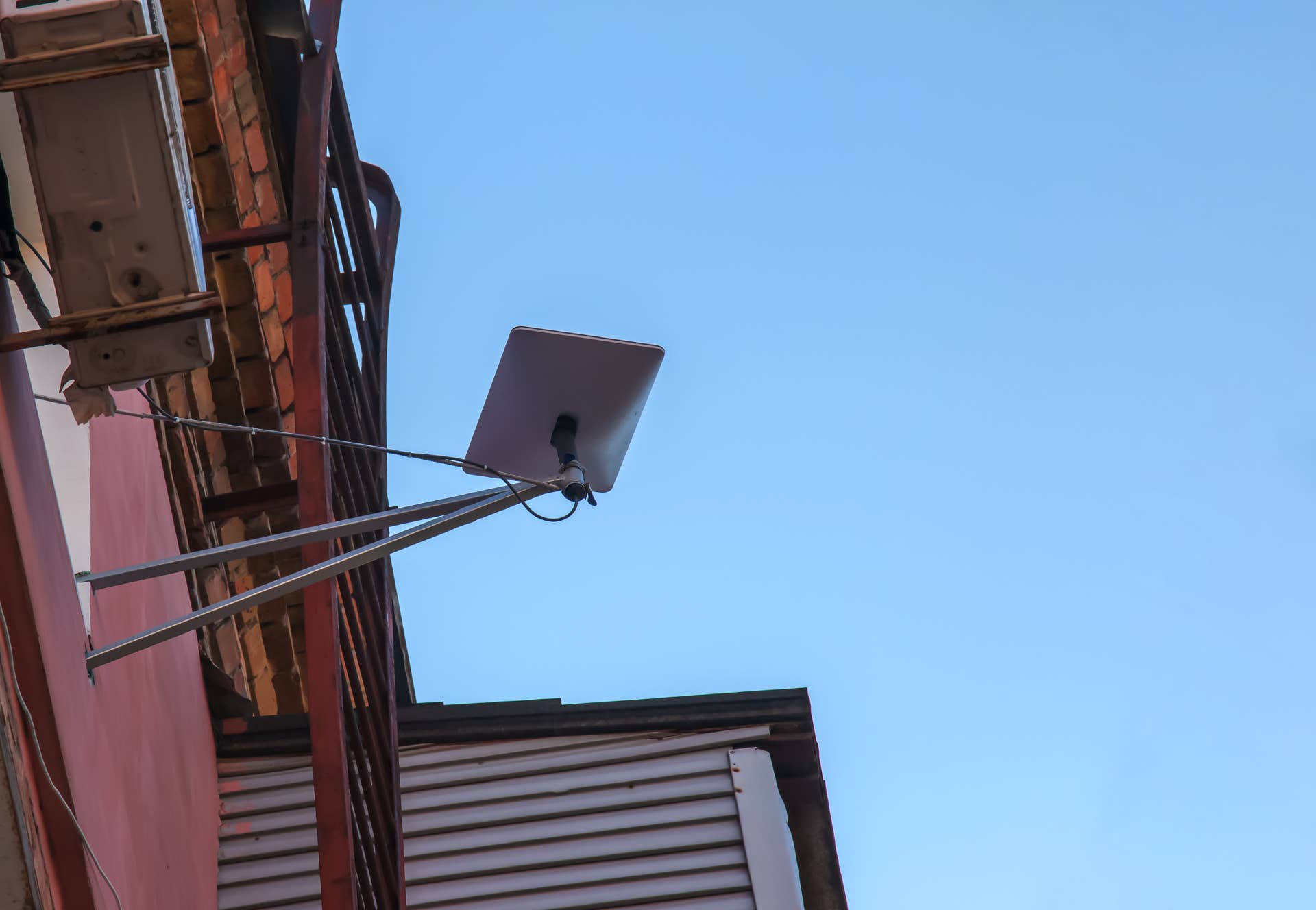 If regulators sign off, Starlink would hold airwaves of its own on the ground instead of leaning on partners to reach customers.
The big carriers said no, so Musk went around them
The rejection from the big three set this chain of events in motion. The Washington Post reported that Verizon, AT&T and T-Mobile each turned down Musk’s requests to let his mobile service use their networks. Through their trade group CTIA, the carriers have also warned the FCC that a wider spectrum buildout could have real consequences for consumers. T-Mobile separately told the FCC that 5G quality could suffer if more spectrum bands are opened up.
Musk has explored other doors as well. SpaceX has looked at buying Boost Mobile, a move that could open up the U.S. wireless market, which MoffettNathanson estimates is worth $235 billion. Those talks show how much Musk wants a faster path to millions of customers while his own network is still taking shape.
T-Mobile is not sounding worried, at least publicly. “We welcome competition because it pushes us to be better and creates more value for customers,” a spokesperson told Moneywise, adding that “spectrum and towers alone don’t make a network,” according to Moneywise. The carrier also argued that satellites complement ground networks rather than replace them.
More Elon Musk:
- Elon Musk reportedly invests $1 billion in media giant
- Elon Musk makes an odd new promise about the Tesla Roadster
- Elon Musk doubles down on the Roadster with SpaceX thrusters
The relationship has grown tense behind the scenes. In an October 28 letter to the FCC, SpaceX accused legacy carriers, including T-Mobile, of opposing new spectrum rules out of a “misplaced desire to harm a competitor,” as reported by TheStreet. T-Mobile’s CEO has ruled out a network-sharing deal with SpaceX for now, even though the two still work together on satellite texting.
What comes next for Starlink Mobile
Filing acceptance is only an early checkpoint, not a final approval. Public comments and petitions on the proposal are due on December 1, with opposition due on December 8. After that, regulators will weigh whether the transfer serves the public interest. Building a network that customers actually trust will take years, even with any regulatory green light.
The carriers are not standing still while they wait. Verizon, AT&T and T-Mobile launched a joint venture in October to expand satellite connectivity and close coverage gaps, while AST SpaceMobile plans intermittent nationwide coverage in key markets, including the U.S., by the end of 2026.
Politics could tip the scales too. FCC Chair Brendan Carr has publicly praised Musk, which could help SpaceX’s case, though approval is not guaranteed. What happens in December’s comment window will show how hard the incumbents are willing to fight.
Related: Verizon CEO lays out one condition for a Starlink partnership
