
Say you’re due for a new iPhone. You check the price of the latest Pro model, wince, and then pretty quickly you spot an offer from your wireless carrier.
Almost always, you get hundreds of dollars off if you trade in your old phone. All of a sudden, upgrading doesn’t seem so painful.
However, that discount usually comes as monthly bill credits, tied to keeping an eligible phone plan for two or three years. The phone may feel cheaper, but you’re making a longer commitment.
It’s a familiar bargain for millions of Americans. And Elon Musk’s SpaceX (SPCX) could potentially change it.
SpaceX is moving beyond satellite internet toward the U.S. cellphone business, where it hopes to compete with the carriers that help Americans finance expensive iPhones.
In a note shared with me, Bank of America says the consequences could reach Apple (AAPL), even if most people stick with their iPhones.
A cheaper wireless plan might save a family money each month, but leave them with a bigger bill when they replace a phone.
So what would consumers prefer? A discounted iPhone or a cheaper plan without the familiar perks?
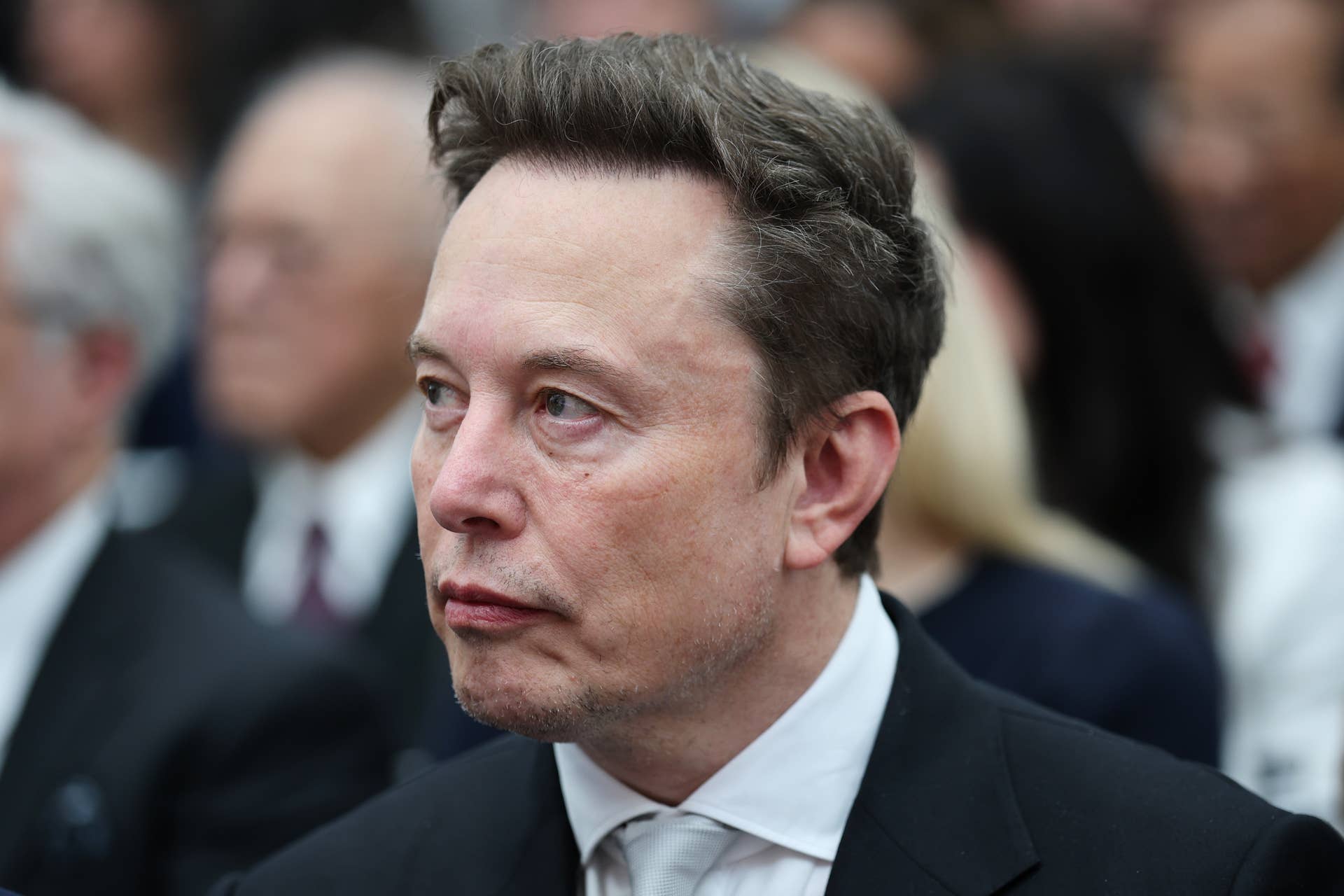 SpaceX’s wireless expansion could reshape carrier promotions that help Americans afford iPhones.
SpaceX’s latest wireless deal puts America’s iPhone upgrade system on notice
Elon Musk’s SpaceX just moved closer to America’s cellphone market on October 8, agreeing to buy Grain Management’s nationwide 800 MHz wireless-spectrum portfolio as reported by Reuters.
More SpaceX:
- Goldman Sachs revamps SpaceX stock estimates before crucial earnings test
- Musk called Anthropic ‘evil’; SpaceX’s deal with it nearly doubled
- Morgan Stanley doubles down on SpaceX stock verdict for investors
The deal is still subject to regulatory approval, but it might help solve a familiar problem: getting a reliable indoor phone signal.
Spectrum is simply the airwaves phones use to connect.
Lower frequencies travel farther and pass through obstacles more easily. SpaceX wants to combine those airwaves with Starlink satellites and ground equipment, potentially challenging Verizon, AT&T, and T-Mobile.
The Grain agreement follows a roughly $17 billion spectrum deal with EchoStar as reported by Morningstar. On October 6, federal regulators also authorized a constellation of up to 15,000 satellites designed for direct-to-phone connectivity.
Most existing smartphones support the low-band frequencies, meaning customers wouldn’t necessarily need special SpaceX hardware to connect.
That doesn’t mean a nationwide SpaceX cellphone service is ready. Building reliable coverage, especially in crowded cities, remains a substantial challenge.
So, where does Apple fit into the discussion?
In an October 12 report shared with me, Bank of America analyst Wamsi Mohan identified an overlooked connection between wireless competition and iPhone sales.
He estimates that about 53 million iPhones pass through the three largest U.S. carriers annually, with an assumed average promotional credit of $800 per phone.
That translates into $42 billion in estimated annual promotional value.
Importantly, that’s not money Apple receives directly. It’s BofA’s estimate of incentives carriers extend to qualifying customers, often through monthly bill credits.
What caught my eye, though, was that SpaceX could eventually compete on cheaper monthly service, without offering equally generous phone discounts. Customers could keep iPhones longer or choose less expensive models.
SpaceX hasn’t announced nationwide consumer pricing, and BofA isn’t predicting an immediate disruption.
But if wireless plans change, so could the familiar promise of hundreds in savings on a new iPhone.
To see why, look at the fine print behind that discount.
Why cheaper cellphone plans could make a new iPhone cost more upfront
AT&T is currently offering up to $1,200 off an iPhone 18 Pro when customers trade in an eligible phone.
That might sound generous, especially for a device that costs over $1,000.
But it’s important to read the fine print.
According to AT&T’s September 10 announcement, the maximum credit arrives over 36 months and requires its Premium 2.0 wireless plan, which is priced at a minimum of $100 monthly before discounts, taxes, and fees.
At that advertised rate, the service alone could potentially total $3,600 over three years before discounts and fees.
Cancel the service early, and the remaining credits disappear while any outstanding device balance becomes due.
It’s easy to see why shoppers like the arrangement. Instead of paying for a premium phone outright, they could spread the cost across monthly bills and potentially offset most of it.
Bank of America estimates roughly $42 billion in annual promotional credits across about 53 million iPhones sold through AT&T, Verizon, and T-Mobile.
Here’s the trade-off I think deserves attention.
A cheaper carrier without comparable promotions might leave customers paying more for the phone itself. Yet $1,200 spread over 36 months works out to about $33.33 per month.
An alternative plan costing $35 less each month would save $1,260 over three years, exceeding that promotional credit.
Americans are already thinking hard about upgrades.
A September Reviews.org survey of 1,000 U.S. adults found respondents replaced phones about every 32 months. Consequently, cheaper plans could change that calculation. First, though, SpaceX needs a network convincing enough to make customers switch.
Bank of America sees a $6 billion Apple risk, but SpaceX has hurdles ahead
Bank of America sees a potential downside for Apple.
If 10% of the major U.S. carriers’ postpaid phone subscribers migrated to SpaceX, analyst Wamsi Mohan estimates Apple could lose around 5 million annual iPhone sales, or nearly $6 billion in revenue.
That’s a scenario, not a prediction. BofA is still rating Apple stock a Buy with a $370 price target and expects limited near-term damage.
Competition could initially help Apple. Verizon, AT&T and T-Mobile might offer bigger discounts to keep subscribers. Apple could steer buyers toward its own financing options. And SpaceX could connect existing iPhones rather than launch a hypothetical Grok-powered rival.
Nevertheless, the obstacles remain.
SpaceX needs regulatory approval for its Grain spectrum deal, substantial network investment and reliable service in crowded cities. Moreover,it hasn’t announced a nationwide consumer plan price yet either. Significant competition might take years.
I’ll be watching actual Starlink Mobile rates, carrier trade-in offers, coverage and how often Americans replace their iPhones.
SpaceX doesn’t have to make a phone to change the iPhone business. Whether shoppers benefit depends on what they save on service versus the device discounts they give up.
Related: Nvidia’s next move could spell trouble for software workers
