
After a year of high gas prices, American drivers may finally see lower prices in 2027. However, the same trends that may help households may hurt one of America’s largest oil companies.
Regular gasoline averaged $4.10 per gallon nationwide on Nov. 5, down 12 cents from a week earlier but more than $1 above its level a year ago, according to AAA.
Now, fresh predictions from JPMorgan indicate the global oil market may be headed for a period of oversupply.
That might ultimately mean further savings for American drivers, especially if international shipping channels stabilize and manufacturing continues to recover.
But there is another side to the tale.
And Exxon Mobil (XOM), which has recorded remarkable earnings lately, is anticipating another $20 billion in share repurchases in 2027. A prolonged slump in petroleum prices would stress the company’s capacity to continue that pace while supporting dividends and new expenditures.
Customers would welcome cheaper oil. The ramifications are far more problematic for Exxon stockholders.
JPMorgan sees an oil surplus that could reshape 2027
The global oil market returned to a surplus of 1.1 million barrels per day in September, widening to 1.4 million barrels per day in October, according to JPMorgan research cited by Reuters on Nov. 4.
The bank attributed the growing surplus to recovering Middle Eastern exports, higher production in Latin America, and weaker global demand.
The bank said exports from the Middle East were stronger, output in Latin America was higher, and worldwide demand was down, Reuters reported on Nov. 4.
Middle Eastern oil exports have rebounded to around 20.7 million barrels a day from a March low of 9.8 million barrels a day, although shipments are still below prewar levels.
HSBC raised its forecast for Saudi Aramco’s 2027 crude oil production to 9.8 million barrels per day from 8.8 million barrels per day, according to the same Reuters report. The bank expects production to reach about 10 million barrels per day by mid-2027.
Such factors might put more downward pressure on petroleum prices if demand does not improve at the same rate.
However, geopolitical tensions are a major uncertainty. Renewed supply interruptions might easily alter the scenario.
What lower oil prices might mean for US families
Falling oil prices might deliver a welcome financial boost for American consumers after months of costly gasoline and diesel.
The bank pointed to recovering exports from the Middle East, rising production in Latin America and weaker global demand, according to Reuters‘ Nov. 4 report.
More Oil & Gas:
- Chevron CEO issues stark warning on depleting oil reserves
- World’s biggest oil CEO shares stark oil price warning as pressure builds and supplies run dry
- Bank of America resets its oil price target with strong warning
If gas prices drop another 25 cents a gallon, a fill-up of 15 gallons would cost $3.75 less. That hypothetical drop would equal $180 in yearly savings for a household that uses 60 gallons a month.
If prices drop by 50 cents a gallon, annual savings would double to $360 for the same household.
These are not forecasts, just illustrative computations.
Over time, cheaper fuel may also reduce the cost of transporting products, which would relieve some of the pressure on the prices of delivered items.
But decreasing oil prices alone will hardly provide instant comfort. Damage to refining equipment and interrupted gasoline imports might keep pump prices from falling as quickly as customers would like.
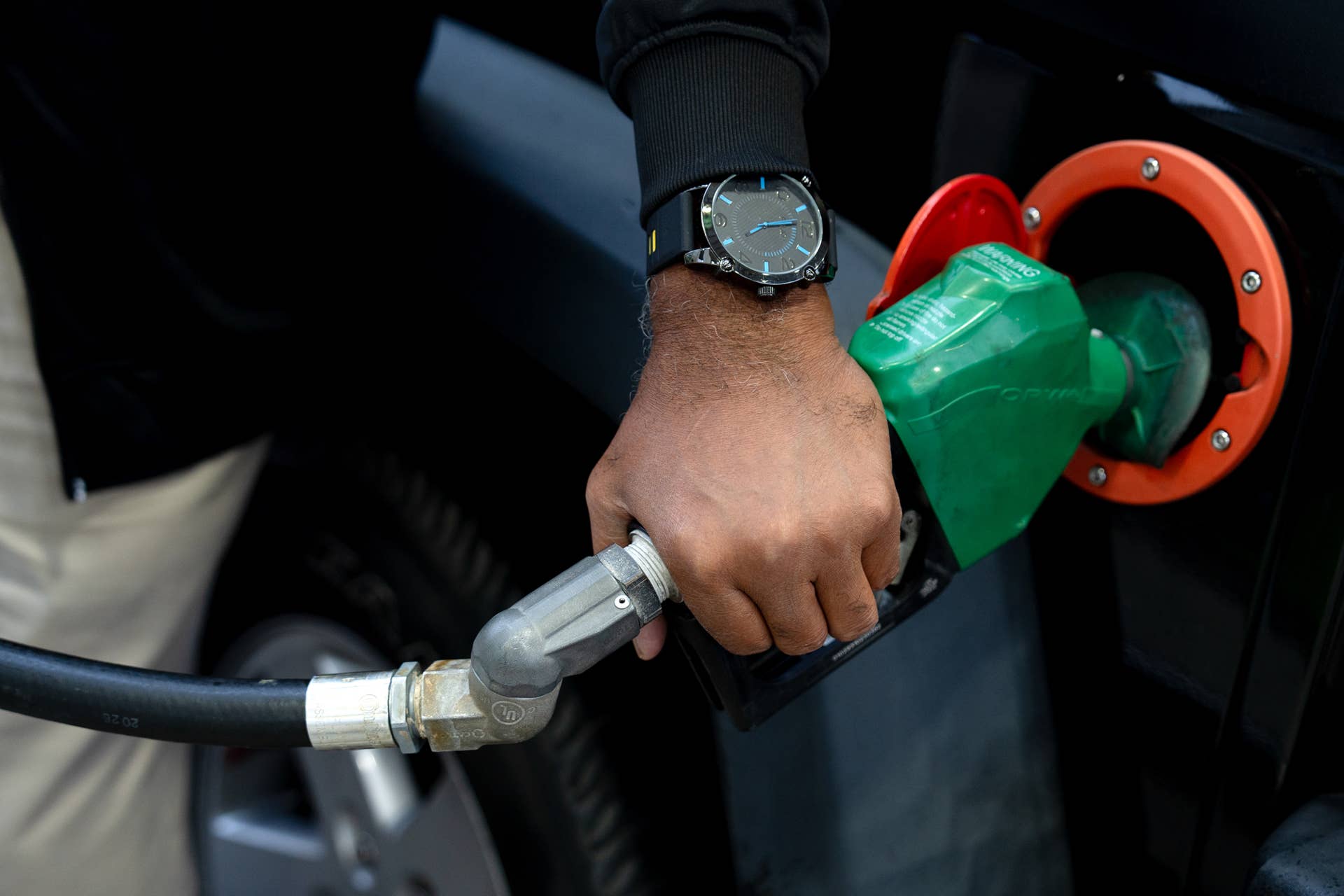 Exxon faces a $20 billion question as gas prices fall
Exxon’s $20 billion buyback plan faces a new question
For Exxon stockholders, the promise of cheaper petroleum poses a different calculus.
Exxon said it earned $15.4 billion in the third quarter, compared to $7.5 billion a year ago. The corporation also recorded free cash flow of $19.1 billion.
Exxon’s Upstream segment reported earnings of $7.09 billion in the quarter, while its Energy Products segment earned $7.17 billion.
The findings illustrate the way in which Exxon’s varied businesses may profit from both crude production and refining activities.
Exxon returned $9.4 billion to shareholders in the quarter, including $5.1 billion in share repurchases, according to its Oct. 30 earnings report.
Exxon also boosted its quarterly dividend to $1.07 a share, extending its run of yearly dividend hikes to 44 years.
Looking forward, the business aims to buy back $20 billion of shares in 2027, assuming appropriate market conditions.
That qualification is key.
Exxon’s upstream revenues might come under pressure if oil prices fall sharply and JPMorgan’s excess continues. Weaker profits may limit the cash available for buybacks after the corporation covers operating expenses, capital investments, and dividends.
But it doesn’t imply Exxon will necessarily decrease buybacks. Exxon could use its production increase, refining performance, and financial flexibility to offset decreased commodity prices.
Share buybacks are also not a guaranteed payout to investors.
Three developments could decide Exxon’s 2027 outlook
In the coming months, it will become clear whether the recovery in oil supply is a durable trend or whether another wave of geopolitical disruptions will alter the market’s direction.
First, investors should watch global crude inventories. If inventories continue to increase, the justification for lower prices would be strong.
Second, refinery recovery will be significant. Consumers would get some relief from lower gasoline prices, but refining profits could come under pressure if damaged plants return to normal operations.
Third, Exxon’s future cash flow forecast may provide a clearer sense of how much flexibility the corporation has to continue its planned repurchases.
The next EIA Short-Term Energy Outlook, scheduled for Nov. 10, may also offer updated projections for crude oil and US gasoline prices.
A persistent global oil surplus might imply real savings for American drivers in 2027.
For Exxon shareholders, the same result might test whether the company’s expanding production and operational improvements are enough to underpin its hefty cash returns.
Cheaper fuel would finally give American families some relief. But it might also demonstrate exactly how robust Exxon’s $20 billion shareholder-return strategy truly is.
Related: Exxon just showed why gas prices didn’t fall with oil
