
AI agents might soon do far more of the internet’s browsing, shopping, and searching for people, and all of that automated activity needs to move through networks that were largely built for human traffic.
That shift is creating a potentially lucrative problem for the companies responsible for keeping the internet fast and reliable.
On the Oct. 1 episode of “Mad Money,” Jim Cramer said Akamai Technologies (AKAM) might be one of the cheapest ways for investors to play it, especially after Anthropic committed $11.6 billion over seven years to its infrastructure.
The surprising part is that Wall Street hasn’t treated the deal like a lasting breakthrough. Akamai initially jumped on the announcement before giving back those gains, even as the company builds smaller, distributed data centers designed to run AI closer to users.
For Cramer, that disconnect between the opportunity and the valuation is precisely what makes the stock interesting.
Why Cramer thinks Wall Street is missing Akamai’s AI shift
The biggest change for Akamai investors is that the company’s AI opportunity is no longer just a spending story.
Anthropic’s $11.6 billion contractual commitment over seven years gives Akamai a massive long-term customer linked directly to the infrastructure it has been building for AI inference.
More Wall Street:
- Wall Street’s AI trade faces its biggest valuation test
- The next Wall Street shift is already underway
- Wall Street sends strong 4-word verdict on the stock market
Cramer calculated that commitment at roughly $1.66 billion a year, which he noted is more than a third of what Akamai is expected to bring in this year.
Yet after initially jumping on the announcement, the stock surrendered those gains.
“Well, that feels like a buying opportunity to me,” Cramer said.
That reaction is noteworthy because Akamai is absorbing the cost of its AI expansion before investors can fully see the payoff.
The company is spending to build out its Inference Cloud, a network of smaller data centers designed to process AI workloads closer to users. Management expects that investment to pressure earnings in the near term, with business improving in Q4 and potentially accelerating further in 2027.
Cramer argued that the valuation already reflects much of that pain. Akamai trades at less than 16 times current-year earnings estimates, versus about 279 times for Cloudflare and more than 50 times for Fastly.
“You’re basically getting the latest Anthropic partnership… for free,” he said.
That leaves the next question: Can Akamai turn one enormous commitment into a broader, repeatable AI growth engine?
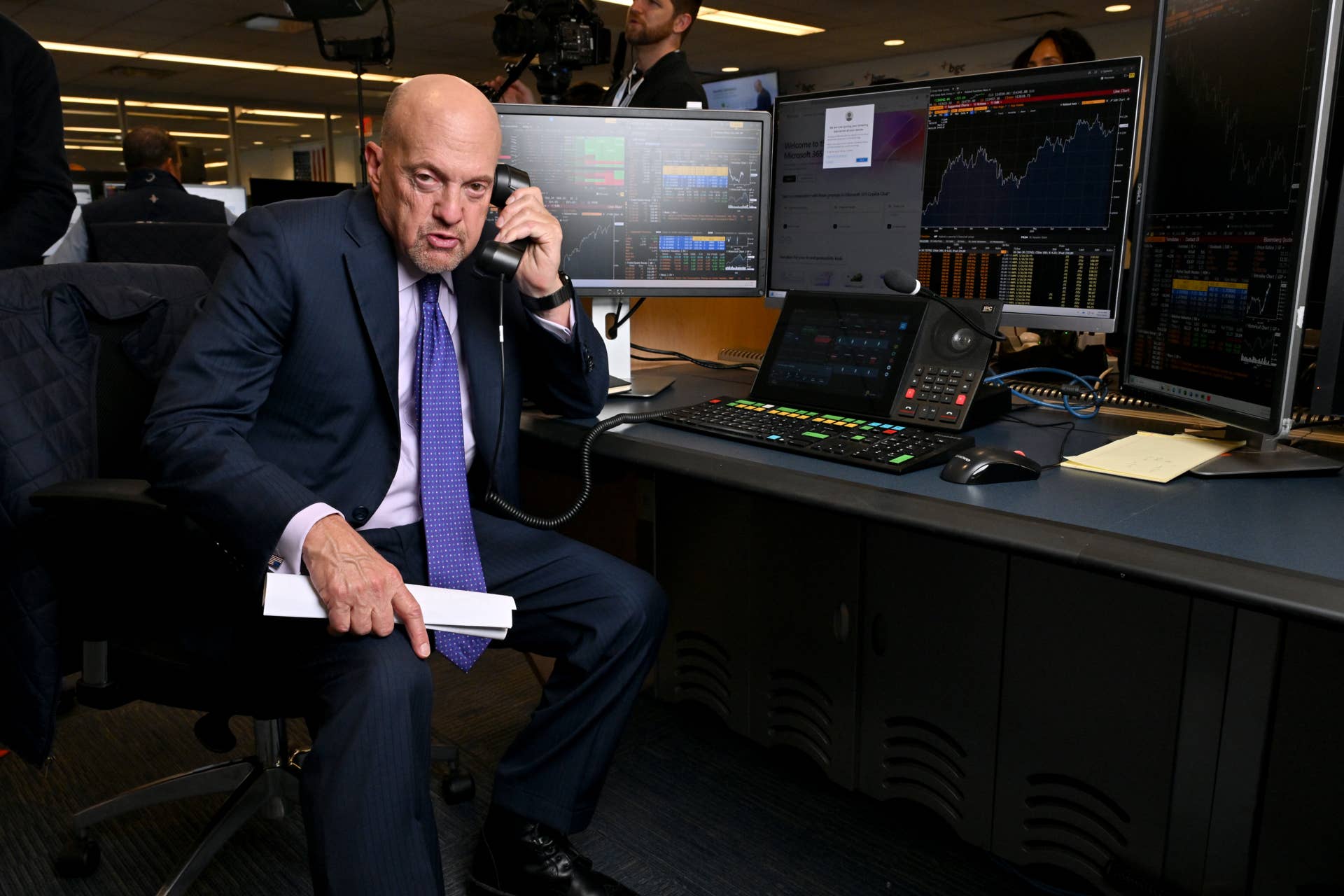 .Jim Cramer backs Akamai stock following its $11.6 billion deal with Anthropic.
AI agents could turn disruption into demand for Akamai
The same AI agents that could disrupt companies such as Airbnb (ABNB) may create an entirely different opportunity for Akamai.
For context, Cramer recently identified Airbnb as arguably the best stock among the casualties of Meta Platforms’ Muse agents. “It’s easier for an agent to book hotels online than it is for them to comb through rental homes and book directly from the owner,” he said.
In my view, that is the more interesting connection in Cramer’s argument.
When consumers hand comparison shopping, travel planning, or other online tasks to an agent, the work does not disappear. It multiplies. Instead of a person checking a handful of websites, an agent can search across thousands of them before returning an answer.
Cramer pointed to Cloudflare CEO Matthew Prince’s claim that “bots have now passed human traffic online for the first time in the Internet’s history,” as Prince’s June 2026 post on X (the former Twitter) stated.
That matters because every additional request still has to move through the internet infrastructure quickly and reliably.
For consumer-facing businesses, agents can pose a threat by weakening habits, changing discovery patterns, or pushing customers toward cheaper alternatives. I made that distinction in looking at Airbnb: An agent may influence where a traveler starts, even if it cannot easily replace the marketplace where the booking ultimately happens.
Akamai sits on the other side of that disruption.
More autonomous browsing means more network traffic, more inference workloads, and potentially greater demand for computing closer to users. That helps explain why Akamai is building smaller, distributed data centers rather than relying entirely on giant centralized facilities.
So the bet is broader than a single Anthropic contract. If agents increasingly do the internet’s work for us, the infrastructure carrying that work could become considerably more valuable.
Akamai’s valuation looks reasonable, but execution now has to catch up
For me, Akamai’s valuation is what keeps Cramer’s AI thesis interesting, rather than purely speculative. The stock trades at roughly 16.1 times forward non-GAAP earnings, well below the sector median of 23.7 times and almost exactly in line with its own five-year average, according to Seeking Alpha data.
In other words, investors are not yet paying an unusually large premium for the AI opportunity.
The momentum picture is more complicated.
Akamai is up 22.6% year to date, comfortably ahead of the S&P 500’s 12% gain, but shares are still down 7.6% over the past six months, even as the index has risen 16.6%, as reported by Seeking Alpha. That disconnect suggests enthusiasm around AI has not translated into consistently stronger confidence in the stock.
Recent earnings explain some of that hesitation. Second-quarter revenue increased 5% to $1.1 billion, while cloud infrastructure services surged 39% and security revenue grew 10%. But non-GAAP earnings per share fell 8%, while non-GAAP operating margin dropped five percentage points to 25% as investment costs weighed on profitability.
That is the trade-off I would watch most closely. Akamai is already showing real cloud growth, but investors still need evidence that its spending can translate into stronger earnings.
The Anthropic commitment makes that path more credible. It does not eliminate the execution risk.
Related: Moody’s economist offers hope on America’s $40 trillion debt
