
I know the McDonald’s menu better than I would like to admit.
On a busy night or when I want a meal that’s easy on the pocket, I pull into the drive-thru, look for a burger deal, and place an order at a McDonald’s (MCD) outlet.
For a lot of people, McDonald’s is the place you go when you want a decent meal without spending much.
That habit is why a new Morgan Stanley note shared with me caught my eye.
The investment firm says McDonald’s may be losing its ability to raise prices without losing customers.
However, McDonald’s maintains that its menu prices sit below those of its rivals.
Also Read: McDonald’s plans major store changes to attract more customers
Why pricing power matters for McDonald’s
Pricing power showcases a company’s ability to raise prices and still retain customers. And McDonald’s has always sold itself on value.
CEO Chris Kempczinski said at the company’s Sept. 23 investor day that founder Ray Kroc built the business around “QSC&V.” The V stands for value.
Related: McDonald’s could soon unlock a major revenue stream
The trouble is that the shoppers McDonald’s counts on are reining in restaurant spending. In its Oct. 15 restaurant preview, Morgan Stanley said fast food “likely remains soft with low-end concerns continuing” and that “lower end remains a focus and challenged.”
Fast food is also the weak spot in the sector. Morgan Stanley said full service “continues to run better overall, QSR weaker.”
QSR stands for quick service restaurant, and McDonald’s sits squarely in that group.
Morgan Stanley’s warning on McDonald’s stock
Morgan Stanley analyst Brian Harbour and his team wrote that McDonald’s “value prop is less attractive and pricing power has eroded.”
It added: “We see lower income consumer headwinds continuing.”
Harbour’s team maintained an “equal weight” rating for MCD stock, which roughly means it expects the stock to perform in line with its peers. Here is the scorecard:
- Price target: $297, versus a $243 close on Oct. 17. That is about 22% upside.
- Pricing power: Tagged “Negative” in the firm’s risk and reward themes.
- Bear case: $215, which the firm labels “Unhappy Meal.”
- Bull case: $387, which it calls “Big Archy.”
Same-store sales track restaurants open at least a year and indicate organic demand as it strips out new store openings.
Morgan Stanley assumes “the balance of the year remains challenged” as management works on “franchisee alignment and NEXT deployment.”
NEXT is McDonald’s new growth plan. For the third quarter, the firm sees U.S. same-store sales slipping 0.2%, while Wall Street expects a 0.4% drop.
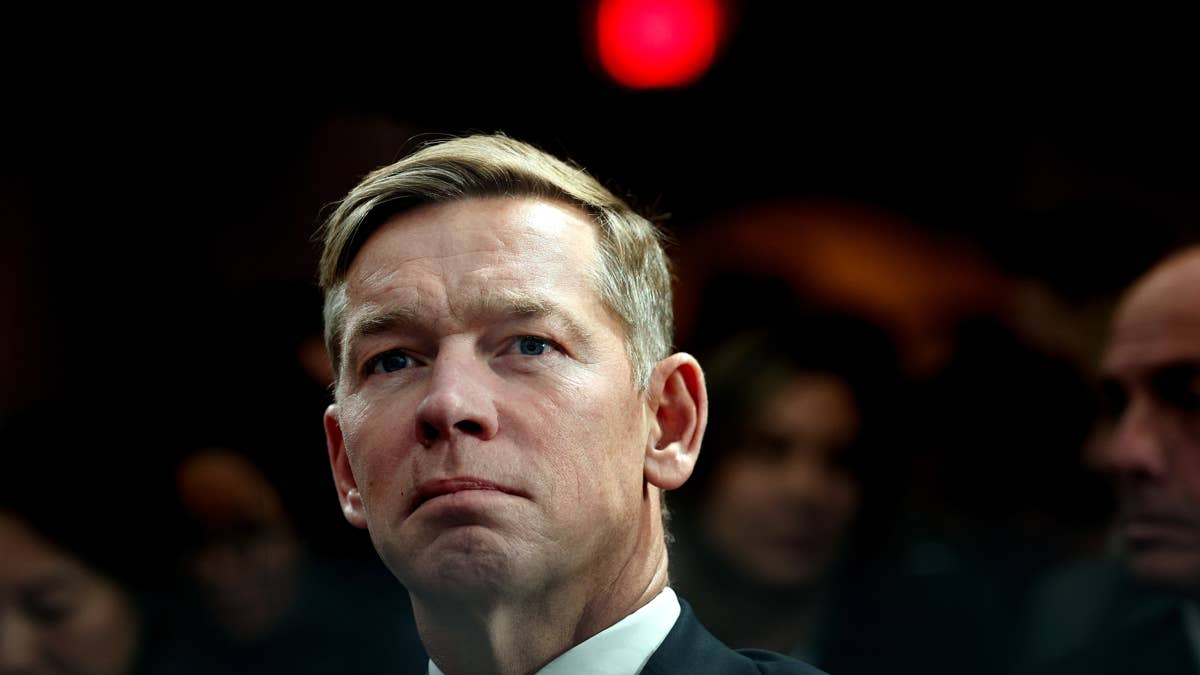 McDonald’s CEO Chris Kempczinski has concerns about slower consumer spending.
What McDonald’s says about its prices
“Our base menu pricing is below our competitors on beef, chicken and beverages and breakfast,” Kempczinski told analysts.
“When you walk in the restaurants, we’re lower than our competitive set,” he added.
He called the $5 meal bundle “the best in the industry” and also said extra value meals carry a 15% to 16% discount.
More Restaurants:
- Hooters closing more restaurants in bankruptcy comeback
- These are the True Food Kitchen locations closing in Chapter 11
- Oprah-backed chain closes 12 restaurants for good after filing Chapter 11
Then came the admission.
“The opportunity that we have is still around that entry level pricing,” Kempczinski said. “And we have that in almost all of our IOM (international operated markets). We haven’t had that in the U.S.”
The company tried 10 items for under $3 in the second quarter. Kempczinski said he has “100% confidence” the U.S. will get a true entry-level offer, calling it the key to winning the lower-income customer.
The U.S. numbers are still soft. CFO Ian Borden noted that sales were slightly negative in July and August. He said he expects September to turn positive, but the third quarter as a whole to finish slightly negative.
Kempczinski added that he expects industry traffic in McDonald’s wholly owned markets to stay flat while inflation remains elevated, a tough mix for any chain leaning on price.
My take on why McDonald’s cheaper is still not cheap
I think both sides are right, and that’s the problem.
McDonald’s may well be cheaper than its rivals. But customers don’t shop against a competitor’s menu.
Morgan Stanley says McDonald’s value pitch has lost some of its pull, while management admits the U.S. still has no true entry-level price.
If McDonald’s closes this gap, it could win back budget shoppers. If it doesn’t, Morgan Stanley’s bear case, the one it calls “Unhappy Meal,” begins to look more likely.
I would start with the Nov. 4 report by looking at U.S. traffic and whether shoppers respond to the cheapest items on the menu.
