
Nvidia’s year-over-year picture looks even stronger than the quarterly one. Revenue is expected to nearly double from a year earlier, while earnings per share are forecast to roughly double as well. EBITDA is projected to almost double too, a sign of how much cash the AI build-out has been generating.
For Burry, those numbers describe deals that were already locked in, not what comes next. His warning lands as Nvidia confirms that Jensen Huang has resigned as CEO, with CFO Colette Kress stepping in as interim chief executive while the board searches for a permanent replacement.
The exit closes one of the most turbulent chapters in Silicon Valley history. Huang co-founded Nvidia in 1993 and built it into a $4 trillion company, but a series of reports tying him to extramarital affairs, including one involving a woman U.S. officials believe worked for Chinese intelligence, made his position untenable. Burry had been watching all of it closely, and he thinks the fallout is far from over.
Why Michael Burry doubts a smooth Huang succession
The board moved quickly once the pressure mounted. It had launched an independent investigation after reports that Huang was targeted by a foreign intelligence effort, saying it had no reason to believe national security or company secrets were compromised, according to ABC News.
That review turned into something bigger. Nvidia brought in outside independent counsel to run the probe, and former SEC Chairman Gary Gensler said the key question was whether Huang misled his board.
Also read: Jim Cramer sends a strong signal to Nvidia stock investors
The departure was confirmed on November 12. Nvidia announced that Huang resigned as president, CEO, and board member, effective immediately. Kress, who has been with Nvidia since 2013, will keep her CFO role while also serving as interim CEO.
Harvey Jones was named the company’s first-ever board chair. The board said it has full confidence in Kress and the leadership team, and earnings on November 17 will go ahead as planned.
Burry had already called this. He said, “The Don has fallen,” and that the coercion at Nvidia seemed to come from the top. He warned that neither Kress nor any outside hire could replace Huang seamlessly, because the company would lose both its leader and its enforcer in one move. Key-man risk at Nvidia, he said, was always the worry, according to Burry’s Substack.
Burry warns Nvidia’s AI funding could slow
Key-man risk is only part of Burry’s case. He warned that Nvidia’s investments in the companies that buy its chips could leave sales exposed if that funding slows, calling the terms of trade and financing structures the secret sauce behind an already dominant technology. He said he has found leverage of up to 76 times in the system and that new investments could become tentative or even lead to write-offs, according to StockTwits.
Those investments have grown fast. Nvidia bought $42.4 billion of equity securities in the first half of fiscal 2027, more than 30 times the amount from the same period a year earlier.
In August, Nvidia went further and partnered with Apollo, BlackRock, Blackstone, Brookfield, Goldman Sachs and KKR to mobilize more than $500 billion in financing for AI infrastructure. The move raised fresh fears that trouble at one major customer could ripple through the whole ecosystem.
The structure also leaves Nvidia carrying part of the risk. Huang has said the company may support up to 25% of an opportunity, and some lenders have pushed for stronger guarantees than Nvidia first outlined, which could shift losses back to the chipmaker if projects fall short, TheStreet reported.
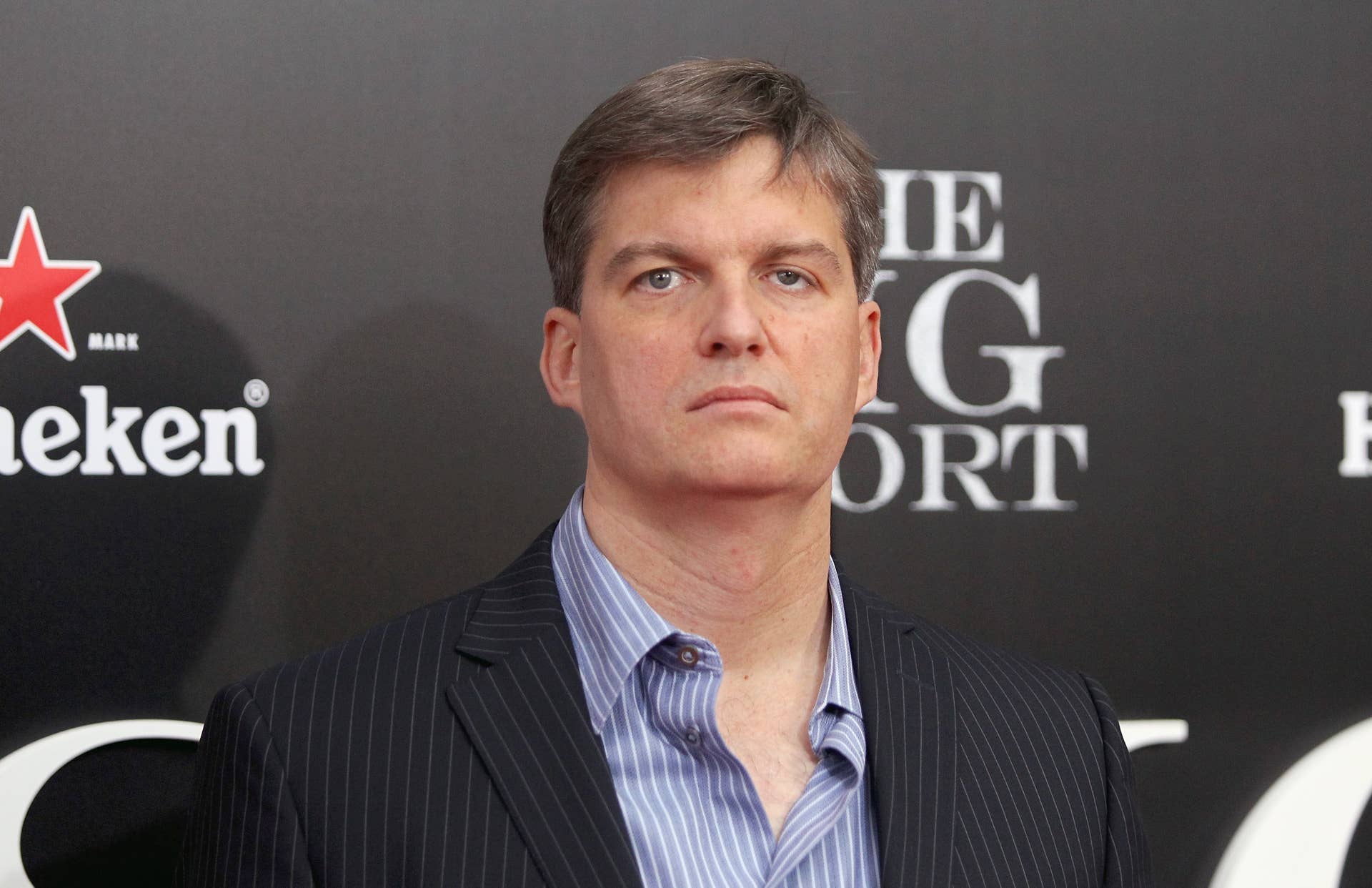 Burry also alleged that Nvidia pushed customers to buy chips before their data centers were ready by threatening smaller future allocations, leaving unused equipment in warehouses.
Michael Burry says customer pushback could squeeze Nvidia margins
Burry also alleged that Nvidia pushed customers to buy chips before their data centers were ready by threatening smaller future allocations, leaving unused equipment in warehouses. He said Huang’s fall gives buyers cover to slow deals, push back, renegotiate terms or simply walk to a competitor.
The warehouse point builds on an earlier warning. Burry wrote that Nvidia chips may be depreciating in economic terms while waiting in warehouses even as their accounting depreciation stays at zero, while stressing that he was not alleging fraud.
More Nvidia:
- Microsoft just gave Nvidia shareholders a reason to pay attention
- Nvidia has a stake in SpaceX that came from an unexpected place
- Nvidia’s $12.9 billion deal could shape the AI apps you use
He believes antitrust scrutiny could make that pressure harder to keep up, exposing the gap between Nvidia’s rapid GPU launches and the time customers need to build data centers. Nvidia’s business will not disappear, he said, but its growth may slow and its margins may fall. Unlike a company whose moat sits purely in its software and hardware, Burry argued, Nvidia is too dependent on those financing and sales arrangements to absorb a CEO’s missteps without feeling it.
Burry sees growing regulatory risks for Nvidia
The Justice Department was already looking at Nvidia before the board crisis began. Its questions about the planned $12.93 billion Hugging Face deal are part of a wider investigation into Nvidia’s investments, acquisitions and sales strategies, including whether it used its leading AI processors to push customers toward more of its products, though an investigation does not prove any misconduct.
Burry expects that scrutiny to return, along with fresh attention on chip sales to China. He said Nvidia’s “mafia-like behavior” has long seemed ripe for antitrust prosecution, questioned the timing of chip purchases by Megaspeed, the customer tied to Huang’s reported relationship with Alice Huang, and warned that “absolute power absolutely corrupts,” as reported by StockTwits.
Lawmakers are already moving. Three Republican House committee chairs asked Huang to attend a closed-door briefing on November 18, according to TheStreet. Burry warned that closer scrutiny of Nvidia’s China chip trade could chip away at its lead over the next five years. With Huang gone and a permanent CEO search just beginning, that scrutiny now has nowhere to hide.
Related: Michael Burry has a surprising new take on Nvidia stock
