
Vistra Corp (VST) is a nuclear and natural gas power producer that has had a rough year. The company’s share price has fallen more than 30% from last year’s high as investors sold to lock in profits after the stock climbed.
Some investors were also worried because of the company’s issues with grid operators, Simply Wall St reported.
Now a new decision from Washington could turn the stock’s situation around. The U.S. Department of Energy plans to lend Vistra about $4.2 billion to produce more electricity from the nuclear plants it already owns.
The government wants to supply AI data centers with steady, uninterrupted power, and the Vistra loan fits directly into that plan.
Inside the Department of Energy’s $4.2 billion loan to Vistra
The DOE’s Loan Programs Office is funding the upgrade of three of Vistra’s four nuclear stations, according to the U.S. Department of Energy.
Two of them, Perry and Davis-Besse, are in Ohio, while the third, Beaver Valley, is in Pennsylvania. The money will pay for what the industry calls “uprates.” Uprates are upgrades that permanently increase a plant’s maximum power output.
Also read: Morgan Stanley spots 3 game-changing Bloom Energy opportunities
It can take more than 10 years to build a brand-new reactor. It could also cost billions, so uprates seem like a better option for Vistra.
Uprates work by improving the equipment that is already present in running plants. They also shorten the time needed to obtain approval from the Nuclear Regulatory Commission.
For a company that makes money by selling electricity, getting more power from the plants it already owns means more revenue without having to go through years of construction.
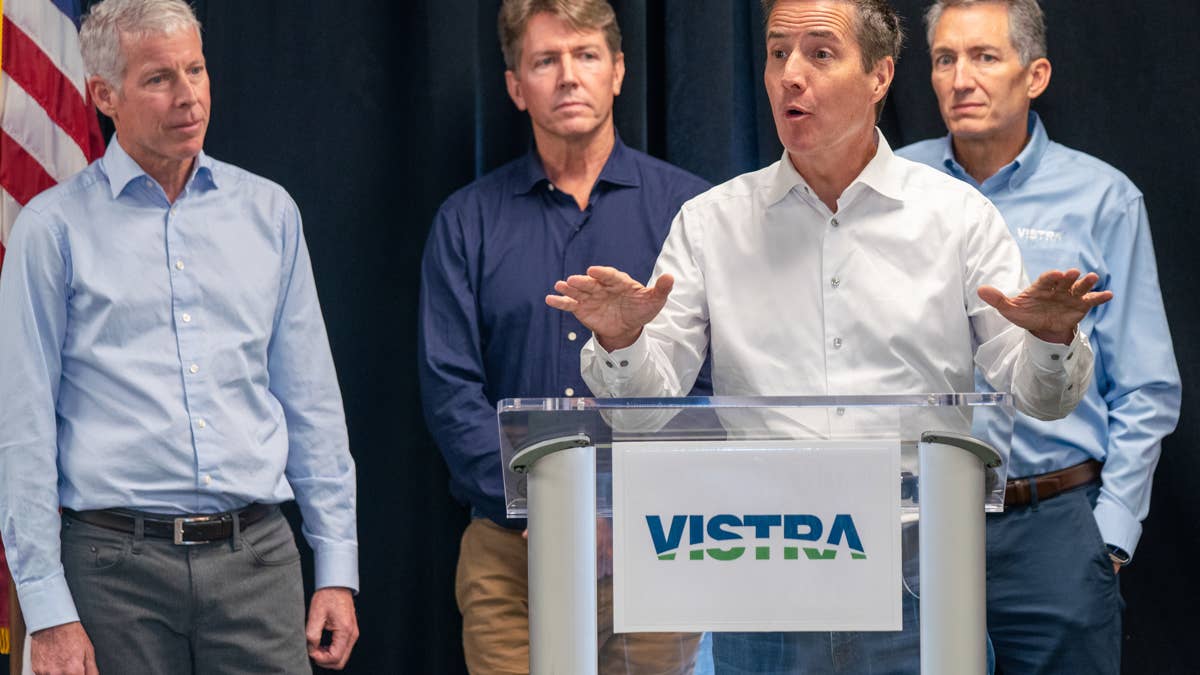 The Department of Energy plans to lend Vistra Corp about $4.2 billion to boost output at three of its existing nuclear power stations.
Why Washington is backing nuclear upgrades right now
The PJM Interconnection, which supplies power for about 67 million people across the Mid-Atlantic and parts of the Midwest and South, has warned about a supply shortage. Most of that shortage pressure comes from AI data center demand for large amounts of electricity.
Vistra CEO Jim Burke told investors on the company’s second-quarter earnings call that the company is observing a “structurally improved demand environment,” due to record-breaking electricity usage across the power grid.
More Energy Stocks:
- JPMorgan strongly recommends buying tumbling energy leader
- Wolfe Research sees nearly 100% upside in crashing energy stock
- Morgan Stanley spots 3 game-changing Bloom Energy opportunities
The White House also wants to quadruple U.S. nuclear capacity by 2050.
According to Bloomberg‘s report on the Vistra deal, cheap federal loans are crucial to achieving that goal because they reduce the cost of adding clean power that runs 24 hours a day.
How the loan changes Vistra’s financial picture
Vistra already has a lot of debt, and some analysts have been cautious because of it. However, because this time the company is borrowing from the DOE at government rates instead of banks and bond markets, it could save a lot of interest costs over time.
Related: Wolfe Research sees nearly 100% upside in crashing energy stock
The increased output capacity also means the company could get more long-term power deals with companies that are looking for clean electricity to run their data centers.
Julien Dumoulin-Smith, a Jefferies analyst who has covered power producers for more than 15 years, has called Vistra’s nuclear fleet a strategic asset that stands to gain from rising tech-driven demand.
What VST stock investors should watch next
VST closed near $140 on Friday, Oct. 2, down from a 52-week high of $217.10. After investors heard the news about the loan, the stock increased by about 6% during pre-market trading, which pushed the shares toward $148.
However, the loan terms are not yet final. Vistra’s pricing issues with PJM also remain unresolved, and the nuclear upgrades will probably still take a few years before they can add new megawatts to the grid.
Morgan Stanley and some other large firms have set their price targets well above the current share price, with some going as high as $298. However, those high targets assume Vistra signs long-term tech contracts with big companies and doesn’t encounter any regulatory problems.
