
As a Star Wars fan, I’ve seen every movie, visited Disney World’s “Star Wars: Galaxy’s Edge” dozens of times, watched all the Disney+ television shows, and have read pretty much every book set in that universe.
If Walt Disney would give me more Star Wars, I’d watch it, buy it, and maybe pay for new platforms in order to get more of it. The same applies to Marvel, although not as deeply with the books, but certainly across films and streaming.
Disney has intellectual property (IP) its fans want, and the company plans to lean into that, according to CFO Hugh Johnston’s remarks at the Goldman Sachs Communacopia + Technology Conference.
Disney plans to lean on its beloved characters
Not every Disney use of its characters and IP brings giant success. “The Mandalorian and Grogu,” for example, “only” made $345 million worldwide since its May release, according to Box Office Mojo.
That’s well below 2019’s “Star Wars: Episode IX: The Rise of Skywalker,” which nearly hit $1.1 billion, Box Office Mojo noted.
But if you listen to Johnston talk about another recent Disney release, you understand that box office is just part of how success is measured.
“Toy Story is a great example of that. ‘Toy Story 5’ was obviously a very successful movie. But in addition to that, it drove strong performance in terms of consumer products. We had our highest growth rate in CP in 20 years,” he said.
ALSO READ: Disney cuts 300 jobs and major overhaul puts hundreds more at risk
The life of the movie also goes well beyond its theatrical release window.
“In addition to that, it was very successful on the streaming service. And obviously, refreshing that story is beneficial to us in the parks and cruises where that IP appears fairly often,” he added.
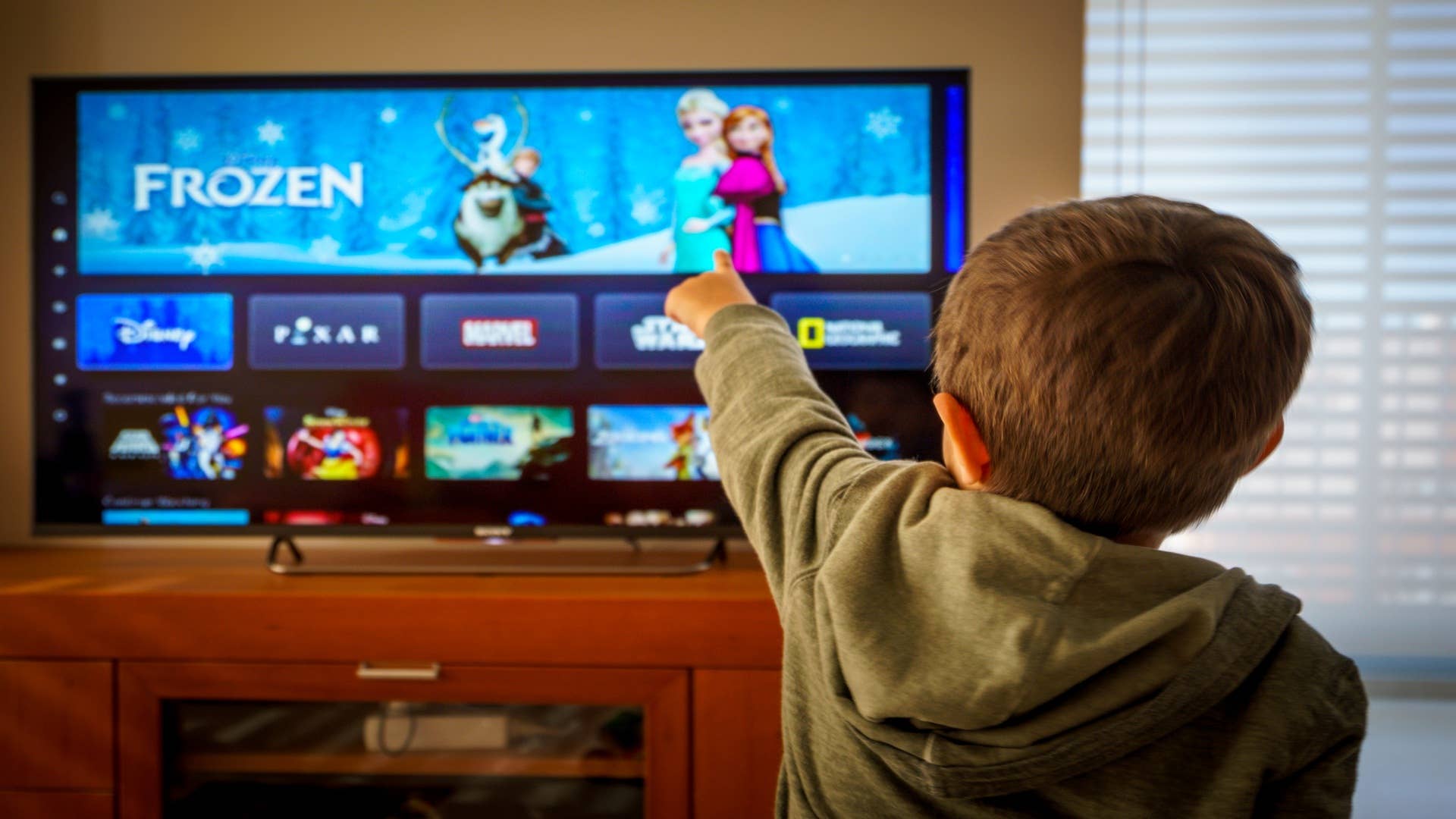 Disney makes money on its IP in a variety of ways.
Disney is going to give fans more
Johnston said one of CEO Josh D’Amaro’s priorities is giving fans more of the stories and characters they love.
“We’re doing that to increase our ability to create new products and to increase monetization of all that great IP that we have as a company. So certainly leaning into that, I think, makes a ton of sense,” the CFO added.
Johnston also sees the company as leveraging its IP as it expands what Disney+ offers.
“Certainly, it’s the normal things like film and TV and video. But in addition to that, you could easily see things like consumer products. You could see parks and cruises on there. You could see interacting with our talent, interacting with our IP in a more substantial way, and even potentially gaming at some point in the future,” he added.
Disney bets big on IP
As a longtime Disney World annual passholder and someone who has taken a Disney cruise, in addition to being a Disney+ subscriber, I’m of the belief that the company can’t really overuse its IP.
What it has to figure out, however, is the line between diehards and casual fans. Too many Star Wars shows, for example, spread the casual audience out, while fewer might make each one more of an event.
Some Disney fans believe more isn’t always better, according to an independent survey from SSRS, which asked 3,364 U.S. adults about Marvel viewing habits and superhero fatigue.
The findings included:
- 78% of U.S. adults consider themselves regular viewers of MCU movies or TV shows (have seen all or most of them) or casual viewers (some, just a few).
- Among those who have seen at least one MCU movie or TV show, 34% believe Marvel has been releasing too many of them, and 29% believe the quality of the MCU movies and TV shows has gotten worse.
“These may be indicators of MCU fatigue among at least a portion of MCU viewers,” the researchers shared.
That’s a challenging line for the company to walk.
Former CEO Bob Iger addressed the “too much of a good thing argument” in comments he made during Walt Disney fourth-quarter 2023 earnings call.
“Quantity can be actually a negative when it comes to quality, and I think that’s exactly what happened,” he said.
Iger started the process of making sure what the company releases meets its standards.
“We lost some focus. And so, working with the talented team at the studio, we’re looking to consolidate, meaning, make less, focus more on quality. We’re all rolling up our sleeves, including myself to do just that. We have obviously great assets, great stories to tell from the assets that we either have or that we purchased,” he added.
Even failures can drive Disney’s success
D’Amaro explained how the company can mine success from what seems like failure during his remarks in the company’s third-quarter earnings call.
“Even when our franchise films don’t meet our box office expectations, as with ‘The Mandalorian and Grogu’ and the live-action ‘Moana,’ our investments in these core properties fuel other parts of our company,” he said.
Every film, he explained, is more than just its box office.
“‘The Mandalorian and Grogu’ drove healthy growth in retail sales for the Star Wars franchise, drew guests to the updated Millennium Falcon attraction at Disneyland and Walt Disney World, and led to significant engagement in gaming as well. And the live-action Moana is expected to be a strong title on Disney+, building on the success of the original film, which is one of the most-streamed movies of all time,” he shared.
RTM Nexus CEO Dominick Miserandino thinks D’Amaro is right.
“Disney is IP,” he told TheStreet. “That’s the whole business.”
ALSO READ: Coca-Cola adds a ‘healthy’ version of Coke and Sprite
