
A fortune built on stock can grow by billions before lunch and give a chunk of it back before the closing bell. That’s the trade-off that comes with owning a company instead of drawing a paycheck.
You don’t need a billion dollars to feel it. If you own an S&P 500 index fund or a target-date fund in your 401(k), you already hold small slices of the tech giants now spending hundreds of billions of dollars on artificial intelligence.
For most of September, those slices looked like a gift. Meta Platforms (META) rallied roughly 36% in the month after launching Muse, its personal AI assistant, and came within one percent of a $2 trillion market value on Sept. 24.
Then one Wall Street note asked the question every AI investor eventually has to face. When does all this spending pay for itself?
Meta founder and CEO Mark Zuckerberg found out what that question costs on Sept. 25. His estimated net worth fell $8.9 billion in a single session, the biggest one-day loss of any billionaire that day, according to Forbes.
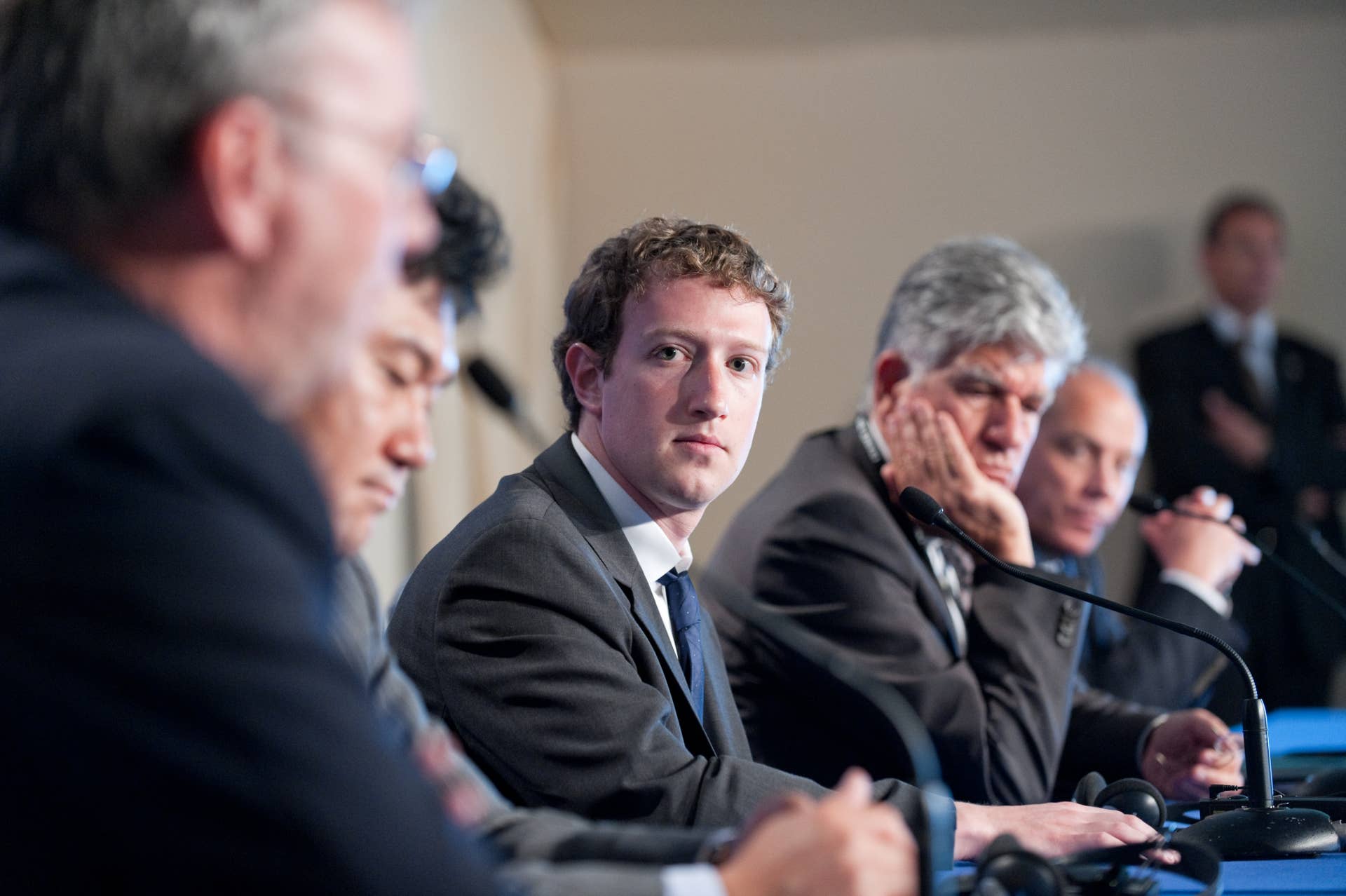 Mark Zuckerberg’s estimated net worth fell $8.9 billion on Sept. 25 to $257.5 billion, according to Forbes.
Meta’s capital spending bill keeps climbing
Meta is one of the biggest spenders in the AI race. The company expects 2026 capital expenditures, including finance lease payments, of $130 billion to $145 billion, according to Meta’s second-quarter earnings release.
Related: Zuckerberg’s stock rebound made him world’s 5th richest at $222B
The quarter itself showed the strain. Meta booked $60.8 billion in revenue, up 28% year over year, while spending $31.08 billion on capital projects in those three months alone.
Free cash flow, the cash left after those investments, shrank to $784 million from $8.55 billion a year earlier, CNBC reported.
In my analysis, that is the number that matters most if you hold Meta in a retirement account. Revenue shows demand, while free cash flow shows whether a business can fund its bets without leaning on its balance sheet.
Muse gave investors a reason to look past that squeeze. The app logged 2.8 million downloads within two weeks of launch and overtook ChatGPT as the top free app in the U.S. and Canada, according to Sensor Tower data cited by Reuters.
Related: Mark Zuckerberg and Nvidia CEO weigh in on Anthropic AI proposal
“Meta has really found lightning in a bottle here,” Michael O’Rourke, chief market strategist at JonesTrading, told Reuters.
That enthusiasm peaked on Sept. 24, when Meta closed at $777.59, its highest close of the year, and Zuckerberg’s fortune reached $266.4 billion, according to Forbes. Three days earlier, a single session had added about $25 billion to his net worth.
Goldman Sachs puts a $300 billion hurdle on AI payback
The reversal traced back to a Goldman Sachs (GS) strategy note. Strategist Ryan Hammond estimated that the largest U.S. AI spenders need about $300 billion a year in AI revenue just to break even on their investments, Investing.com reported.
More AI Stocks:
- Nvidia stock sends investors a $150 billion signal
- MongoDB stock crashes 26% as its CEO jumps ship
- Baird’s strong agentic Al call on Micron is spot on
To earn solid returns, annual spending on AI applications would need to reach roughly $1 trillion, the firm estimated, Benzinga reported.
The scale of the bet explains the nerves. Hammond put 2026 capital spending by the biggest cloud and AI companies at roughly $800 billion, with Wall Street consensus expecting about $1.1 trillion in 2027, Investing.com reported.
Goldman did flag real progress. Cloud revenue at those companies ran at an annualized pace roughly $70 billion above its pre-AI trend in the second quarter, and their announced backlogs top $1.5 trillion, Yahoo Finance reported.
Still, $70 billion is less than a quarter of the $300 billion bar. That gap is what traders sold on Sept. 25.
Goldman told clients to watch the companies buying AI services for proof. “The impact of AI on corporate earnings should become increasingly visible in coming quarters,” Goldman wrote, according to The Motley Fool.
Meta had a second headwind that afternoon. A New Mexico jury found that the company misled state residents in a case tied to the Cambridge Analytica data scandal, Reuters reported, and a Meta spokesperson said the company disagreed with the verdict.
Zuckerberg’s losing day by the numbers
Here’s how the day broke down, according to Forbes real-time data.
- Net worth: $257.5 billion as of 2:30 p.m. ET on Sept. 25, down $8.9 billion.
- Day before: $266.4 billion at the Sept. 24 close.
- Meta stock: down about four percent to $749.26.
- Ranking: No. 6, down from No. 4 at the Sept. 24 close.
- Stake: Zuckerberg owns about 13% of Meta.
- Next-largest loss that day: Larry Ellison, down $1.6 billion.
Index fund investors felt the reversal too
Zuckerberg’s loss is paper wealth, since most of his fortune sits in Meta stock. Your exposure works the same way, just on a smaller scale.
Meta sits inside most broad U.S. stock index funds, alongside Microsoft (MSFT), Alphabet (GOOGL), Amazon (AMZN) and Oracle (ORCL), the peers Forbes said Goldman named in its note.
That concentration cuts both ways. When the AI trade runs, your balance rises with it, and when a major bank questions the payoff, those holdings can fall together.
I’d use Sept. 25 as a stress test for your own account. Check how much of your 401(k) now sits in large-cap growth or tech funds after this year’s run.
If a handful of AI spenders now make up more of your account than you planned, rebalancing back to your target mix locks in some gains while keeping you in the trade.
Third-quarter earnings become the next test for Muse
Meta’s next checkpoint is its third-quarter report, when investors will see whether Muse is showing up in revenue. The company has guided third-quarter revenue to $61 billion to $64 billion.
Related: Mark Zuckerberg says Meta found a way to make more money
Truist Securities estimates Muse could add at least $28.5 billion in annual revenue by fiscal 2030, Reuters reported.
Even that bullish estimate is less than a tenth of Goldman’s break-even bar for the group. The AI boom may still pay off, but Sept. 25 showed that investors now want receipts to go with the downloads.
For your money, the lesson is practical. Own the AI story if you believe in it, and size it so a billionaire’s $9 billion day never becomes a hole in your retirement plan.
