
Insurance is the one purchase you make hoping you’ll never use it. You know the premium before you sign, and the payout is spelled out in the contract.
That certainty is exactly why the word keeps getting borrowed by assets that offer neither.
You’ve heard the pitch all year. Coin dealers sell silver bars as a hedge against a shaky dollar, and crypto apps sell bitcoin as digital gold. The promise is the same either way: buy a little now, and sleep better later.
Then 2026 tested the theory. Gold, silver and bitcoin all slid from their highs, even as the Federal Reserve raised rates in September for the first time since 2023 and payroll growth nearly stalled.
Gold now sits 26% below its January peak. Silver has given back almost half its value. If you bought either metal as protection this winter, you’ve already paid a steep premium for that policy.
Robert Kiyosaki, the “Rich Dad Poor Dad” author, spent the weekend urging his followers to treat all three as insurance anyway.
I ran the numbers on that pitch, and the tax code splits his policy in two. Profits on gold and silver coins can be taxed at up to 28%, while bitcoin gains top out at 20%. On an identical profit, that eight-point gap comes straight out of your pocket.
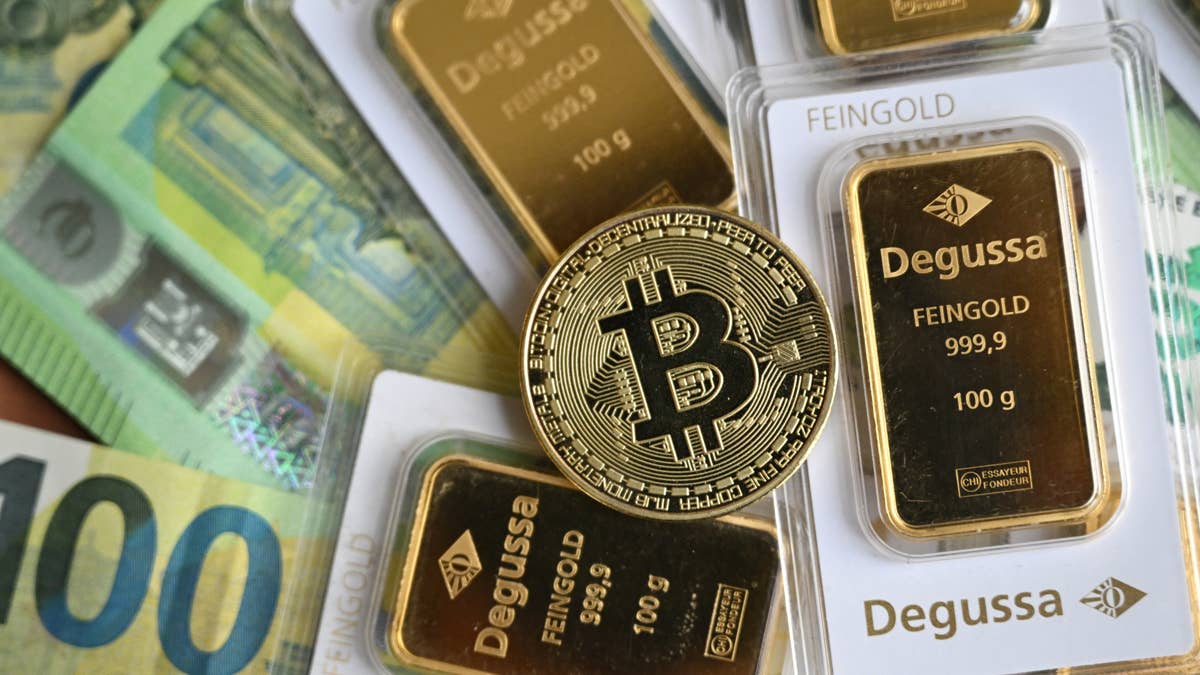 Robert Kiyosaki tells followers to think of gold, silver and bitcoin as insurance.
Kiyosaki’s weekend post on prepping and car insurance
“WHY I AM A PREPPER,” Kiyosaki wrote in a post on X on Oct. 3.
He described telling a group he was a prepper, and a woman asking whether that was pessimistic. “I replied ‘Do you have insurance on your car?’” he wrote.
The same post asks readers whether they own gold, silver or bitcoin and says he only wants money the government can’t print.
It’s a tidy analogy. Car insurance costs a little every year and pays out when something goes wrong.
Related: Your cash now pays 4.10% as Kiyosaki says to dump it
Kiyosaki sells Rich Dad books and courses, and he said in a 2022 post that he bought a gold mine.
He has also said he isn’t a financial planner and earns nothing from his recommendations, as TheStreet’s crypto desk reported on Sept. 28.
Silver, gold and bitcoin slid apart in 2026
The three assets he groups together haven’t moved together.
Gold traded at $4,154.68 an ounce on Oct. 6, up 4.32% over 12 months, according to Trading Economics. That’s 25.92% below the $5,608.35 intraday peak the site recorded in January.
Silver traded at $61.33, up 28.22% over the same 12 months, per Trading Economics data. Its January high was $121.64, so it now sits 49.58% below that level.
Bitcoin changed hands at $86,341.19 on Oct. 6, according to CoinGecko. That leaves it 31.58% below its all-time high of $126,198.07, set exactly a year ago, Yahoo Finance reported.
Here’s what that means for your money. If you had put $10,000 into each asset at its peak, you’d now hold $7,408.03 in gold, $6,841.72 in bitcoin and $5,041.93 in silver.
Insurance doesn’t usually cost you half the policy.
Why the IRS taxes your coins and bars at a higher rate
Kiyosaki’s insurance label lumps three instruments into one bucket. The Internal Revenue Service sorts them into two.
Section 408(m)(2) of the tax code defines a collectible to include “any metal or gem” and “any stamp or coin,” according to the Government Publishing Office.
More Personal Finance:
- Crypto ETFs promise big gains, but investors ignore 5 red flags
- IRS sends notices about new Saver’s Match worth up to $2,000
- Dave Ramsey emphasizes key warning on 401(k)s, IRAs
That label carries its own rate. “Net capital gains from selling collectibles (such as coins or art) are taxed at a maximum 28% rate,” according to IRS Topic 409.
Bitcoin falls under a different rule. “Virtual currency is treated as property and general tax principles applicable to property transactions apply,” the IRS says in its virtual currency FAQ.
That means a long-term bitcoin gain is taxed like a stock sale, with a top federal rate of 20%, per the same IRS capital gains guidance.
In my analysis, the gap is easiest to see in dollars. On a $10,000 long-term gain taxed at the top rates, the coin owes $2,800 and the bitcoin owes $2,000, an $800 difference on the same profit.
On a $50,000 gain, the gap grows to $4,000. Neither figure includes the 3.8% net investment income tax, which applies to both at higher incomes.
By the numbers, as of Oct. 6
- Gold: $4,154.68, down 25.92% from its $5,608.35 January peak
- Silver: $61.33, down 49.58% from its $121.64 January high
- Bitcoin: $86,341.19, down 31.58% from $126,198.07 on Oct. 6, 2025
- Top federal rate on bullion gains: 28%, versus 20% on bitcoin
- Rebound needed to reach January highs: 98.34% for silver, 34.99% for gold
- S&P 500: 7,826.96, up 16.57% over 12 months
Sources: Trading Economics for gold, silver and the S&P 500; CoinGecko and Yahoo Finance for bitcoin; the IRS for tax rates. Percentage moves calculated by TheStreet.
Where the Rich Dad author wins the argument
Kiyosaki gets one of the three calls clearly right over the past year.
Silver’s 28.22% gain beat the S&P 500, which stood at 7,826.96 on Oct. 6, up 16.57% over the same stretch, according to Trading Economics market data.
Adjusted for the 3.4% annual inflation rate the Bureau of Labor Statistics reported for August, silver returned 24% in real terms. Gold returned just 0.89%.
His price targets are a tougher sell. Kiyosaki has said silver could reach $200 an ounce and set a $27,000 gold target, as I reported in January. Those levels would require gains of 226.1% and 549.9% from Oct. 6 prices.
The London Bullion Market Association’s 2026 forecast survey put the average analyst forecast at $4,500 for gold and $80 for silver. Its most bullish silver call, $125 from Julia Du of ICBC Standard Bank, still falls 37.5% short of Kiyosaki’s target.
IMF researchers say the hedge only works sometimes
The International Monetary Fund studied gold from the viewpoint of central banks, the biggest holders of all.
“Gold is highly volatile,” Istvan Mak and Etienne Vaccaro-Grange wrote in a July 9 IMF note. “Gold offers only conditional hedging and diversification benefits.”
The note also calls gold “ill-suited to the liquidity tranche of reserves,” the slice central banks need to tap quickly. That matters if you’re counting on metal as your emergency backstop.
Conditional is the key word. Over the past 12 months, gold kept pace with inflation, but it gave you no shelter when the Fed raised rates in September.
The only asset in this debate with real insurance is the one Kiyosaki tells you to skip: cash in the bank. Deposits are covered up to “$250,000 per depositor, per insured bank, for each account ownership category,” according to the FDIC.
Smart moves for your metals and crypto holdings now
Know your real tax rate. If you hold bullion in a taxable account, your gains can be taxed at up to 28%, compared with a 20% top rate on stocks and bitcoin. Build that into the profit you think you’re sitting on.
Check how your metal is held. Section 408(m)(3) lets certain coins and bullion sit inside a retirement account without counting as a distribution, but only when a trustee physically holds the metal.
Size your position for a deep drawdown. Silver buyers from January have already absorbed a 49.58% loss, so even a small “insurance” slice can sting.
Don’t overlook cash. The top savings rate on Oct. 6 was 4.27% APY, versus a 0.65% national average, according to Bankrate. That gap is real money on an emergency fund.
Watch the rate calendar. The 10-year Treasury yield closed Oct. 5 at 5.31%, up from 5.24% on Oct. 1, according to the Treasury Department. Those yields have weighed on metals all fall.
September inflation data lands Oct. 14. Futures markets put the odds of the Fed holding rates this month at 80.6%, according to the CME FedWatch reading Yahoo Finance cited Oct. 5.
If inflation heats up and yields fall, Kiyosaki’s three assets get the conditions his argument needs.
The tax bill on two of them stays the same either way. Plan for it now, and your insurance won’t come with a surprise deductible.
