
EchoStar (ECHO) used to be an awkward mix of satellite television, wireless ambitions, spectrum holdings, and a heavy debt load.
Investors should now see it differently, according to JPMorgan.
Reversing the firm’s prior Underweight position, analyst Sebastiano Petti began covering EchoStar as Overweight and set a price objective of $144. That implies roughly 67% upside from where the shares traded when the call was published, according to MarketWatch.
The cause is not an abrupt change at Hughes or Dish.
SpaceX is the company.
EchoStar sold $20 billion in spectrum to SpaceX and multibillion-dollar spectrum to AT&T. These transactions relieve EchoStar’s financial pressure and give it a potentially huge stake in Elon Musk’s SpaceX.
MarketWatch reported that JPMorgan believes investors are valuing EchoStar at roughly a 40% discount to its estimated net asset value, or what its investments and remaining businesses may be worth after accounting for liabilities.
EchoStar may seem less like a satellite firm and more like an indirect, perhaps discounted, method to own Musk’s space company to investors who believe SpaceX has more capacity to grow.
JPMorgan says EchoStar has become a different company
Spectrum is where EchoStar’s transition begins.
In July, the company completed the sale of its 3.45 gigahertz and 600 megahertz licenses to AT&T. EchoStar received $20.25 billion in cash, while AT&T deposited another $2.4 billion into a federally mandated creditor trust, according to an EchoStar filing with the Securities and Exchange Commission.
For stockholders, the SpaceX deal may be even more significant.
EchoStar’s revised agreement values wireless spectrum at $20 billion. Up to $11 billion in SpaceX shares may be paid to settle EchoStar’s spectrum debt.
According to EchoStar’s second-quarter filing, the company now targets the final spectrum acquisition closing for around Nov. 30, 2027.
That is a significant shift from EchoStar’s previous position.
Before these deals, the company was confronting large debt obligations and regulatory pressure over spectrum that the Federal Communications Commission believed was being underused. EchoStar said in its filing that regulators had raised the possibility of license revocations unless the company sold a meaningful portion of those assets.
JPMorgan believes the sales eliminate the balance-sheet problem and leave shareholders with assets whose value may not yet be reflected in EchoStar’s stock price.
JPMorgan called the valuation discount “unwarranted.”
This explains why the bank’s new position is so noteworthy.
After a strong quarter, this is not an analyst pushing a target up by $10. JPMorgan now claims that EchoStar presents one of the most unique value opportunities in telecoms, having previously held a fundamentally pessimistic view prior to its limited time.
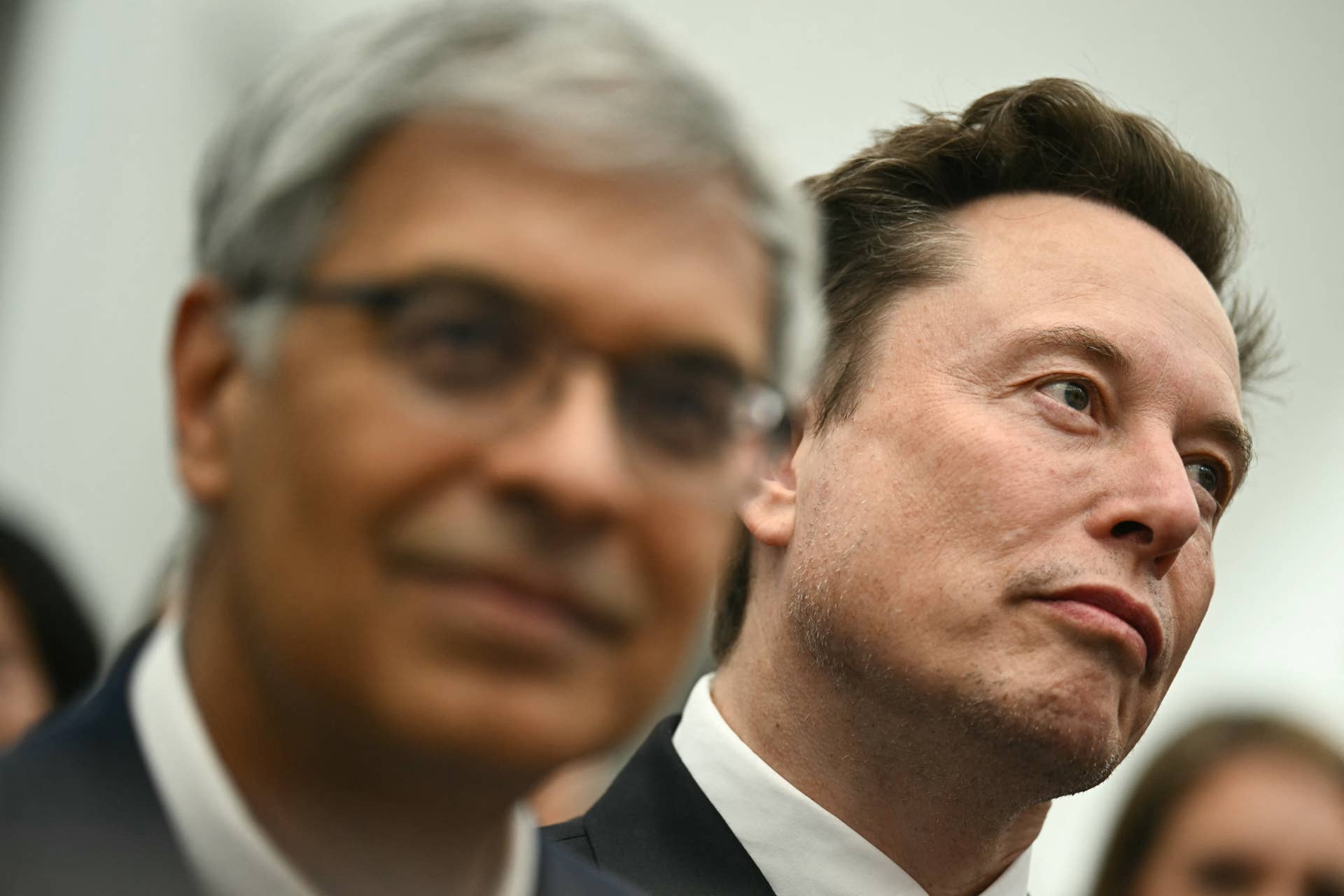 JPMorgan finds a cheaper way to bet on SpaceX.
EchoStar gives investors an unusual way to own SpaceX
The core of JPMorgan’s optimistic thesis is the SpaceX shares.
EchoStar is ultimately anticipated to receive roughly 261.8 million SpaceX shares from the spectrum deal, according to MarketWatch. Based on SpaceX’s current valuation assumptions, Petti values that stake at about $38.9 billion; if SpaceX meets JPMorgan’s own price target, the value is expected to rise significantly.
More SpaceX:
- Goldman Sachs revamps SpaceX stock estimates before crucial earnings test
- Musk called Anthropic ‘evil’; SpaceX’s deal with it nearly doubled
- Morgan Stanley doubles down on SpaceX stock verdict for investors
This leads to a peculiar circumstance.
Purchasing EchoStar entails more than just placing a wager on the company’s surviving businesses. SpaceX shares, remaining spectrum, and other assets determine a large portion of the company’s value, and JPMorgan increasingly sees it as an investment vehicle.
Petti estimates EchoStar’s operating businesses are worth around $6.6 billion, according to MarketWatch. In comparison, the potential SpaceX stake could ultimately become worth many times that amount.
An equity position in another firm is often a side asset that sits next to a bigger, running business.
SpaceX may eventually become the main focus at EchoStar.
This scenario also explains why investors’ willingness to pay for EchoStar may ultimately be significantly impacted by changes in SpaceX’s value.
If SpaceX shares increase, EchoStar monetizes more spectrum, or the business begins repurchasing stock earlier than investors anticipate, JPMorgan thinks there may be further upside.
It’s also possible that the whole tale is unfinished.
As it extends Starlink beyond traditional satellite internet and farther into direct-to-phone connections, SpaceX has been more aggressive in acquiring wireless airwaves. Additional spectrum assets are still in EchoStar’s ownership, so another deal may add even more value.
That gives investors options, but it also generates uncertainty.
EchoStar’s discount exists for a reason
It seems like a clear chance to take 40% off the projected net asset value. It’s not always free money, however.
A large portion of EchoStar’s optimistic assessment is based on assets whose value may fluctuate significantly before shareholders eventually recognize them.
The actual conclusion of the SpaceX deal is not anticipated until late 2027. Meanwhile, the value of the SpaceX shares that EchoStar eventually controls may vary significantly due to regulatory clearances and other closing circumstances.
Additionally, investment-holding firm equities have a fundamental problem.
Markets frequently apply discounts to companies that own large stakes in other businesses. Investors may prefer simply owning the underlying stock directly rather than buying it through another corporation with its own management, taxes, liabilities, and operating businesses.
According to JPMorgan, EchoStar’s discount is now too high.
Other analysts have also become increasingly bullish. UBS upgraded EchoStar to Buy in September with a $150 target, while Morgan Stanley has an Overweight rating and $134 target, according to analyst-tracking data from MarketBeat.
Investors may find it more difficult to disregard the discrepancy between EchoStar’s stock price and the value of its assets if SpaceX’s valuation increases.
The same leverage reverses if SpaceX experiences a significant decline.
I find it remarkable how drastically EchoStar’s investment thesis has evolved.
In the past, investors had to determine if a financially troubled satellite and wireless business could generate enough revenue from its spectrum to meet its commitments.
Wall Street is now discussing whether selling that spectrum was worth so much that it left stockholders with a discounted portfolio that included one of the market’s most sought-after technology firms.
That’s a whole other question.
Additionally, JPMorgan believes the market has not responded to the solution fast enough.
Related: Elon Musk doubles down on the Roadster with SpaceX thrusters
